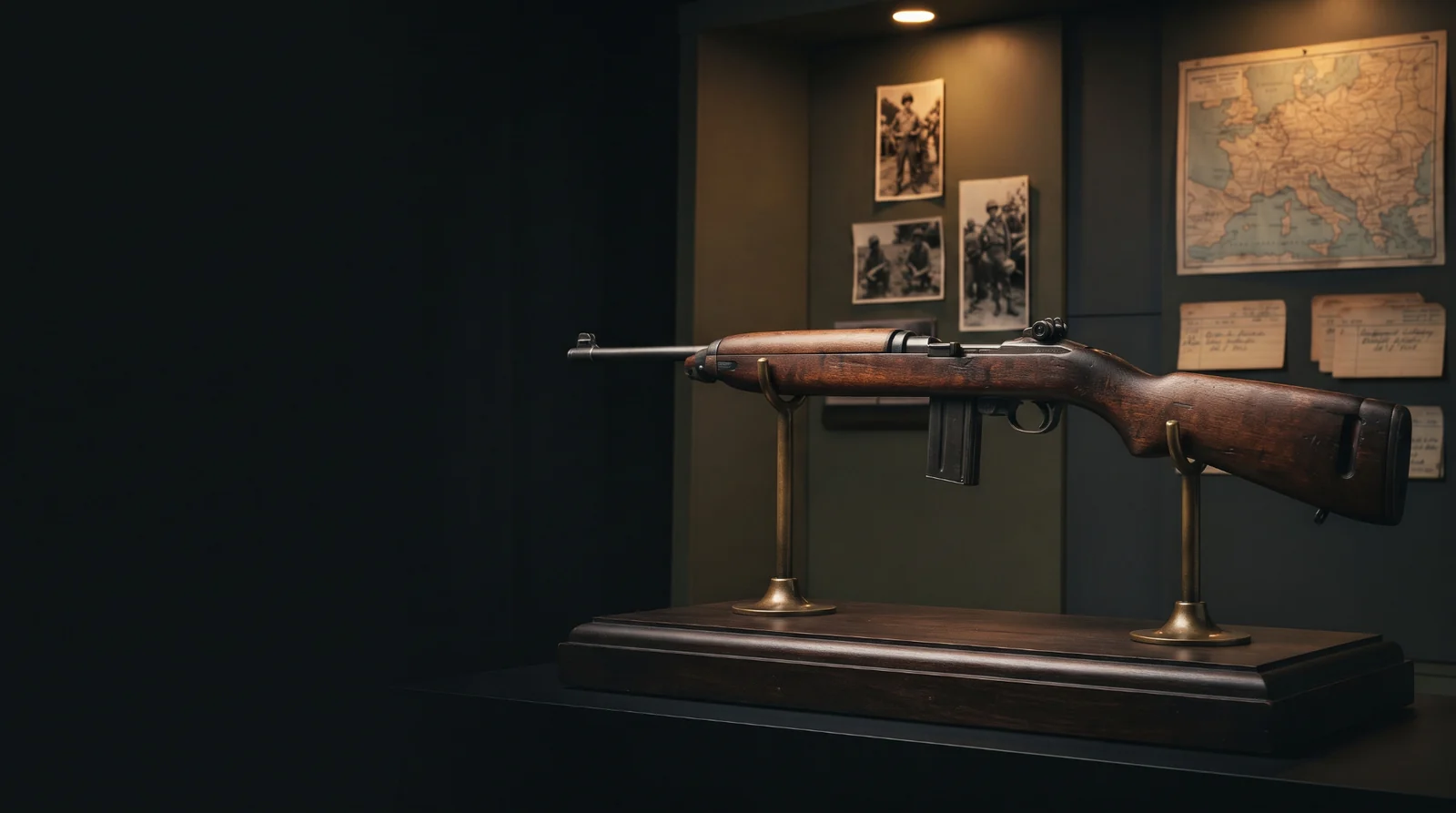
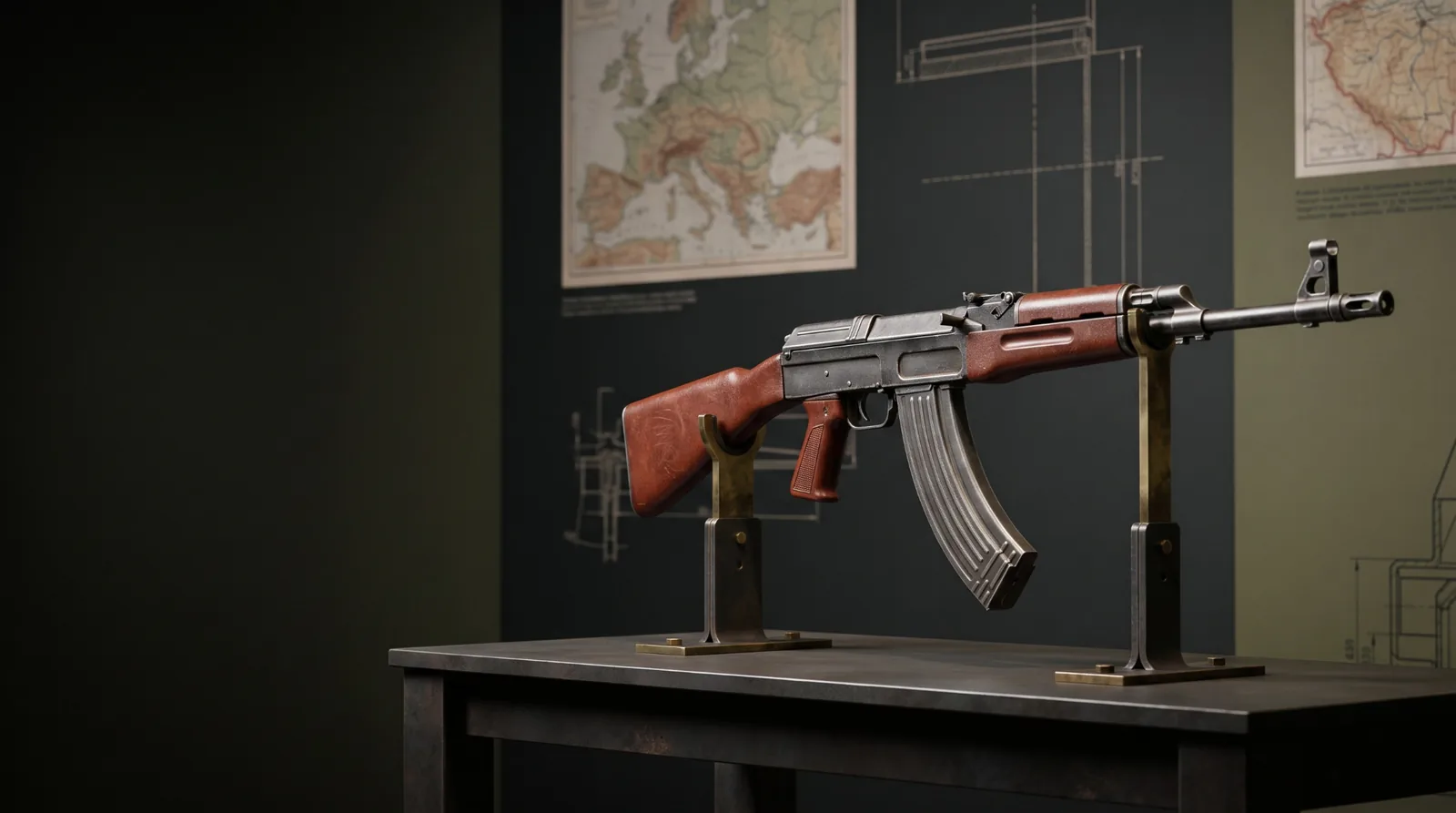
SKS-45 is a rifles history rooted in Soviet Union. First associated with 1945, the design belongs to the wider story of early cold war rifles. Its history is best understood through the people, institutions and events behind its name—not as a present-day product listing.
01 / THE ORIGIN
The SKS belongs to the moment when Soviet doctrine was moving away from prewar long rifles. Sergei Simonov’s carbine entered service as the Second World War ended, but it did not remain the primary Soviet infantry arm for long. Its short front-line role and far longer international afterlife are different stories.
02 / THE HISTORICAL JOURNEY
The carbine later appeared in the histories of China and multiple Warsaw Pact or aligned states, with names and manufacturing histories that should not be flattened into a single Soviet specimen. Surviving rifles may represent very different periods and national arsenals.
03 / NAMES, VARIANTS & IDENTITY
An SKS is not an AK-47. They are separate designs, with different development teams and histories, even though both became recognizable images of the early Cold War.
Names also encountered in historical catalogs and searches include SKS; Simonov carbine; SKS 45. These terms are useful starting points, not proof that two photographed objects share the same maker, date, or military provenance. When reading about a particular surviving specimen, look for a documented institutional collection number, manufacturer record, or contemporary source.
04 / WHY THIS MODEL MATTERS
The SKS makes a useful bridge between the Mosin–Nagant era and the rise of the Kalashnikov family. A biography that ends when the USSR changed its standard rifle misses why this design remains widely recognized.
The broader context is the history of early cold war rifles. Political institutions, supply contracts, and public memory often determine which firearms remain famous and which survive mainly through specialist archives. These distinctions matter more than modern rankings or unsupported claims of superiority.
Read the expanded historical research file →
THE HISTORICAL RESEARCH FILE
The SKS-45 belongs to Simonov’s midcentury Soviet design lineage and had an international life much wider than its initial Soviet service.
01 / Simonov’s carbine and the late-war transition
The Tula State Museum of Weapons links Sergei Simonov's experimental and service work to the SKS-45, identifying the Soviet Army's 1949 adoption of the self-loading carbine. Specialist histories provide context for wartime trials and the wider Soviet search for postwar infantry arms. Because the model name includes “45,” it is easy to mistakenly treat 1945 as the date of full standard issue; historians should distinguish a model designation, wartime work and formal acceptance. The Tula museum is especially valuable as an institutional account tied to the country's own arms-development history. [1]
The SKS belongs beside the AK-47 in the Soviet transition but should not be described as simply a shortened AK. The designs have separate developers and programs even where later military histories place them in the same overall era.
02 / A national model became an international family
The SKS name appears across Soviet, Chinese, Yugoslav and other national production and service histories. A reader searching 'SKS-45' might be interested in the initial Soviet model; another searching 'SKS history' may mean a later national pattern. These should be related through a country-by-country archive while preserving the original state-development chronology. A picture alone usually cannot verify whether a specimen belongs to a particular factory, year or national service program. [2]
The site's atlas could treat Soviet adoption as one milestone and then link national production entries as separate later histories. This gives clearer evidence than an undifferentiated worldwide-users list assembled from enthusiast posts.
03 / A useful corrective to the AK-centered narrative
Stories about midcentury Soviet small arms often jump straight from the Second World War to the AK, erasing related programs with their own institutional record. The SKS represents a chapter where alternative formats were evaluated and used during transition. The museum and specialist source record should make the distinction among trials, adoption and later overseas manufacturing plain. Specific claims about how many examples were made in a country need original factory and state records, not anonymous repeated internet statistics. [1]
AllGuns should connect the SKS to Simonov's broader work, to the AK-47 and to the postwar international manufacturing atlas. This is historical interpretation, not an instruction in operation or modification.
QUICK REFERENCE QUESTIONS
Why is it called SKS-45 if adopted in 1949?
The designation includes the earlier model year; the Tula museum identifies Soviet adoption in 1949.
Are SKS and AK-47 the same rifle?
No. They are separate Soviet programs associated with different designers and development pathways.
THE NEXT ARCHIVAL QUESTION
Verify national production and variant chronologies from factory and accession sources country by country.
Editorial status: sourced historical research draft, not a completed archival verification of all marks, factory totals or service claims. Generated museum artwork is illustrative and not evidence of an authenticated surviving specimen.
THE HISTORICAL TIMELINE
Earliest major introduction or designation associated with this record
The defining historical setting for the model's service and reputation
Variants, national service histories, and museum documentation add important context
Preserved as part of military, sporting or industrial-design history
COMMON HISTORY QUESTIONS
What country did the SKS-45 originate in?
The design's principal origin is Soviet Union. This is an origin label, not a claim that every later example was manufactured in the same country.
When was the SKS-45 introduced?
1945 is the principal milestone used for this record. Prototype dates, military adoption, production, and later models may differ; always check which event a secondary source is dating.
What other names are associated with it?
Common search terms include SKS; Simonov carbine; SKS 45. They may encompass nicknames, related service designations, or model-family references; consult primary documentation before equating specific variants.
EXPLORE CONNECTED HISTORIES
These neighboring biographies help place the model in a broader national or industrial context, without implying they are mechanically identical:
- SKS-45 — Soviet Union
- U.S. M1 Carbine — United States
- Sa vz. 58 — Czechoslovakia
- AK-47 — Soviet Union
SOURCES & FURTHER READING
These links are editorial starting points. Where a linked source concerns a wider model family, a particular example or variant requires its own verification. This page is a historical overview, not an instruction manual.
2 external reading sources currently listed. This biography is a historical research overview; these links are research starting points and may cover a wider model family. They are not a claim that every detail has been independently verified. Our editorial method.
- Historical source: www.nramuseum.org ↗READING
- Additional institutional or historical reference ↗READING
- Tula State Museum of Weapons — Simonov and SKS ↗DOCUMENTED SOURCEEvidence scope: Museum history naming SKS adoption in 1949.
- Small Arms Review — SKS historical account ↗DOCUMENTED SOURCEEvidence scope: Specialist context for Soviet trials and later production.
EDITORIAL EXPANSION: NOVEMBER 2026 · HISTORICAL STUDY · NO SALES, TRANSFERS OR MODIFICATION GUIDANCE.