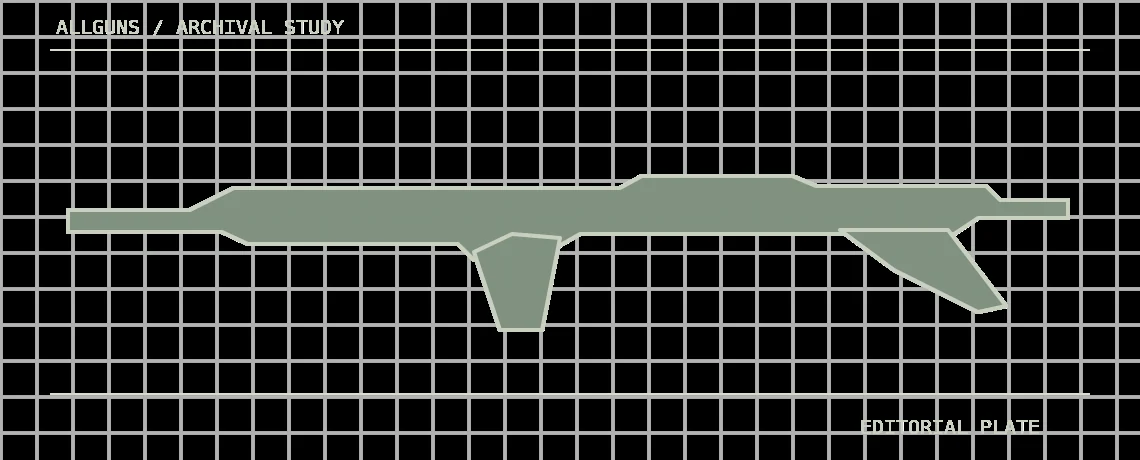
The AR-15 began as a lightweight rifle project and became one of the most recognizable design families in American civilian and military history. Its name now refers to far more than a single original configuration.
01 / THE ORIGIN
ArmaLite developed the AR-15 in the late 1950s after its work on the larger AR-10. Eugene Stoner was central to the engineering story, alongside colleagues and institutional customers whose feedback shaped development. Colt acquired rights to the design and helped turn an experimental platform into a widely distributed commercial and military lineage.
02 / THE JOURNEY
Military versions associated with the M16 brought the design into global view, while civilian semiautomatic models developed a separate commercial history. The popular initials are commonly misunderstood: AR in AR-15 comes from ArmaLite, not “assault rifle.” As companies, standards, and appearances changed, the original model name became a broad umbrella.
03 / THE LEGACY
The AR-15’s cultural meaning differs sharply across communities and countries. It is studied through industrial innovation, military procurement, civilian sporting culture, legislation, and public debate. A useful biography distinguishes the original design from the much larger—and sometimes contentious—world of later AR-pattern firearms.
THE HISTORICAL TIMELINE
ArmaLite development
Colt acquires rights
Military and commercial families expand
A broad design family, not one fixed model
SOURCES & READING
These are starting points for independent research. Where sources cover a broader family, model-specific details should be checked against period records.
LAST EDITORIAL REVIEW: NOVEMBER 2026 · HISTORICAL SUMMARY · NO BUY/SELL CONTENT.