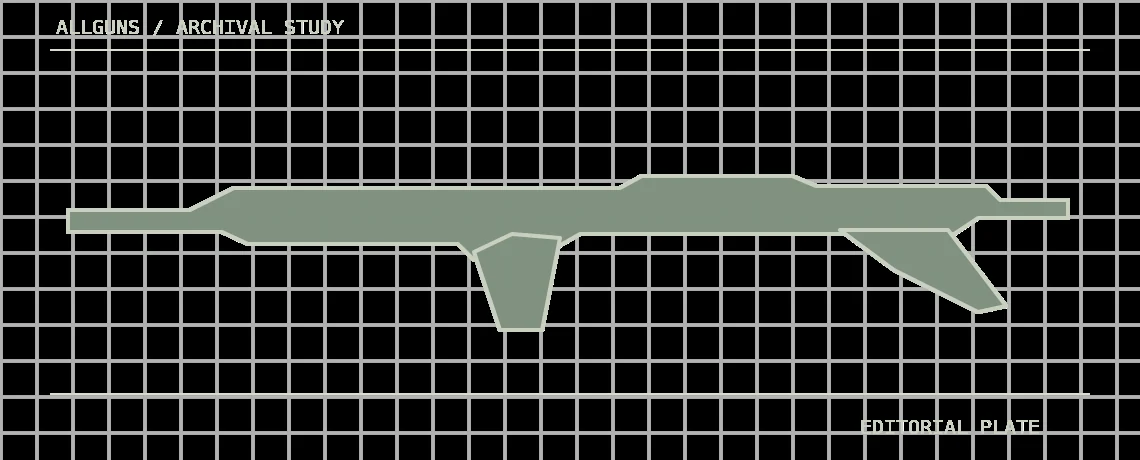
The M1 Garand is inseparable from the history of American manufacturing and the Second World War. Its reputation rests on a long, difficult development process as well as its battlefield visibility.
01 / THE ORIGIN
John C. Garand worked for years at Springfield Armory on a semi-automatic infantry rifle, refining designs as requirements and government priorities changed. The Army adopted the M1 in 1936, making it a major milestone in U.S. service rifle history. The institutional effort behind the rifle combined engineering, standardized production, and an evolving vision of infantry equipment.
02 / THE JOURNEY
As the United States mobilized for World War II, industrial capacity had to catch up with military needs. The M1 became a familiar companion in photographs from Europe and the Pacific. It remained in service through the Korean War, and many rifles later moved into allied inventories or civilian historical collecting.
03 / THE LEGACY
The Garand endures in museum collections, commemorations, and marksmanship history. More than a nostalgic icon, it is a case study in how design deadlines, testing failures, government industry, and wartime production all shape the identity of a weapon. Its biography is that of both an engineer and a national institution.
THE HISTORICAL TIMELINE
Garand experiments at Springfield Armory
Adopted by the U.S. Army
Large-scale wartime service
Remains prominent through Korea
SOURCES & READING
These are starting points for independent research. Where sources cover a broader family, model-specific details should be checked against period records.
- U.S. National Park Service ↗REFERENCE
- Library of Congress research guide ↗REFERENCE
LAST EDITORIAL REVIEW: NOVEMBER 2026 · HISTORICAL SUMMARY · NO BUY/SELL CONTENT.