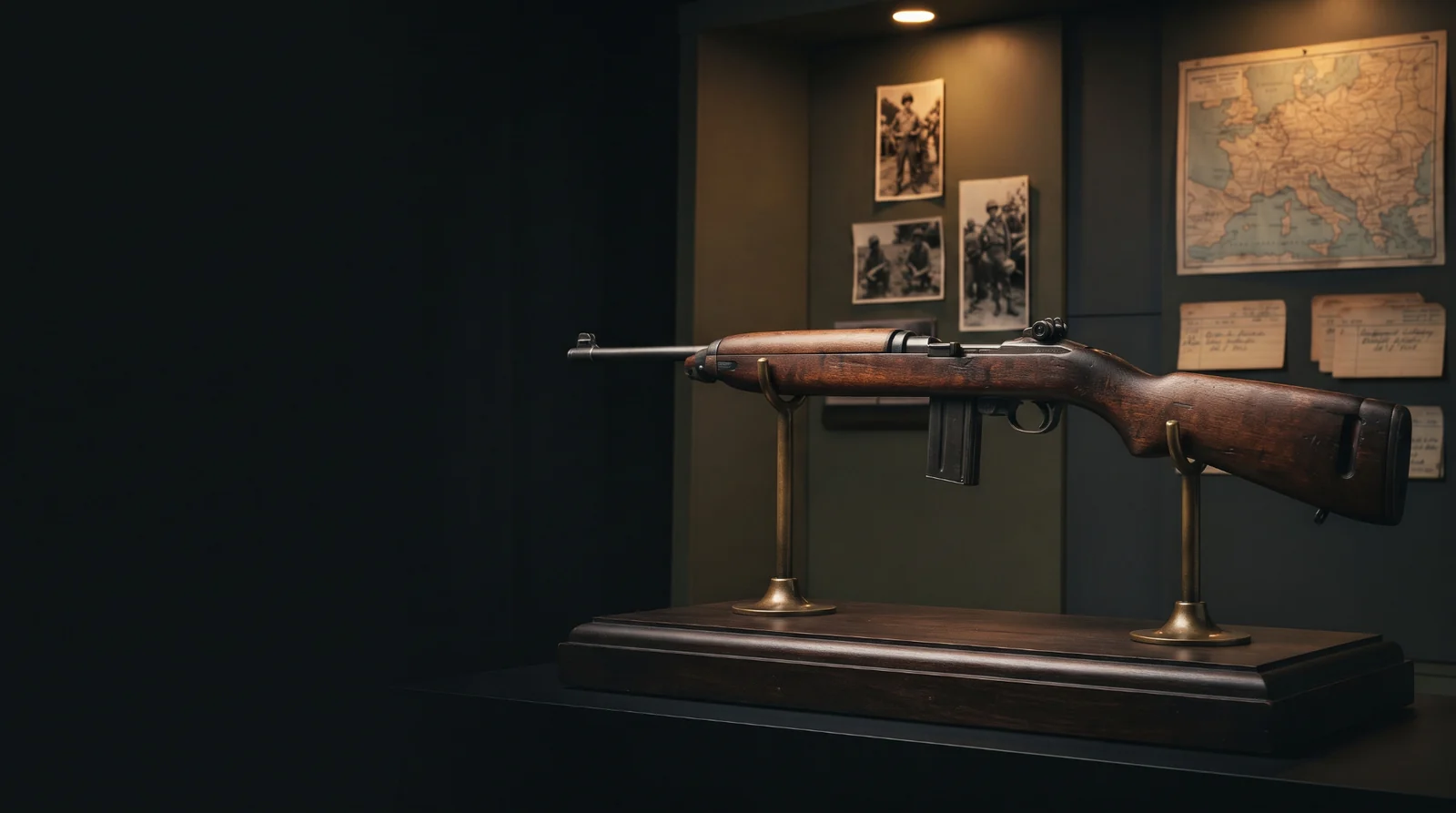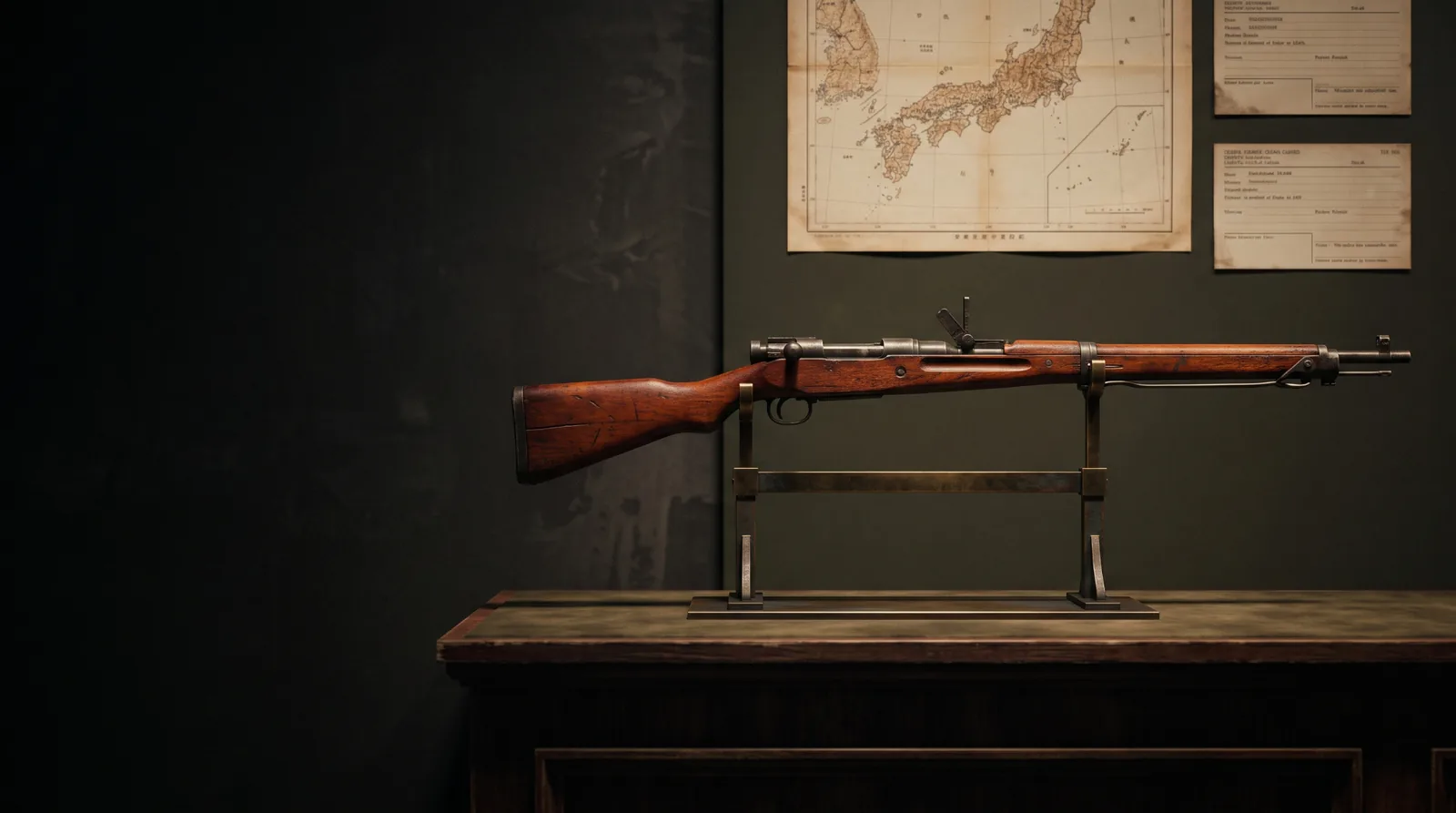
Arisaka Type 99 is a rifles history rooted in Japan. First associated with 1939, the design belongs to the wider story of world war ii rifles. Its history is best understood through the people, institutions and events behind its name—not as a present-day product listing.
01 / THE ORIGIN
Japan developed the Type 99 amid regional conflict and military modernization. The designation refers to the Japanese adoption-year convention, and the rifle stood alongside older designs as production shifted under the pressures of war.
02 / THE HISTORICAL JOURNEY
Examples from different production periods reveal a wider story of Japanese wartime industry. Simplification over time is a historical manufacturing question; a museum label should identify factory, date range, and features before assigning a particular specimen to a phase.
03 / NAMES, VARIANTS & IDENTITY
Arisaka Type 99 should not be confused with the earlier Type 38, and the family name alone cannot establish a rifle’s exact manufacture.
Names also encountered in historical catalogs and searches include Type 99; Type 99 Arisaka; Arisaka 99. These terms are useful starting points, not proof that two photographed objects share the same maker, date, or military provenance. When reading about a particular surviving specimen, look for a documented institutional collection number, manufacturer record, or contemporary source.
04 / WHY THIS MODEL MATTERS
The Type 99’s history extends beyond military service into collections and questions of provenance. Captured and preserved objects may have very different documentation trails.
The broader context is the history of world war ii rifles. Political institutions, supply contracts, and public memory often determine which firearms remain famous and which survive mainly through specialist archives. These distinctions matter more than modern rankings or unsupported claims of superiority.
Read the expanded historical research file →
THE HISTORICAL RESEARCH FILE
Japan’s Type 99 rifle has an unusually rich wartime artifact record; its individual manufacturing periods and late-war variations deserve careful identification.
01 / The Japanese service-rifle transition
The Arisaka Type 99 emerged amid the Imperial Japanese Army's modernization before the Second World War. The Australian War Memorial explains the context of the shift from earlier 6.5mm service rifles toward the larger Japanese 7.7mm program, and its collection contains a Type 99 specimen. The National Museum of the Pacific War offers additional historical interpretation of the rifle's place in Japan's expansion, prolonged war and eventual defeat. These sources support a chronology tied to military history rather than to collectors' terminology alone. [1]
The designation Type 99 refers to a Japanese official model system and a late-1930s introduction. It should not be confused with other Japanese arms that share “Type 99” in their names, nor with earlier Type 38 rifles. Search visitors benefit from a prominent disambiguation near the top.
02 / Factories, wartime changes and surviving objects
An image of a Type 99 can reflect an early wartime specimen, a different arsenal or a later period of emergency manufacture. Such variations are important for historians, but an illustration cannot authenticate them. Auckland Museum has a cataloged Japanese Type 99 short rifle with manufacturing attribution; the Australian War Memorial also preserves rifle and specialized variant records. That is precisely the kind of specimen-level evidence AllGuns should eventually use for a verified gallery. [2]
A common trap is to treat a famous detail on one surviving rifle as a guaranteed feature of all rifles called Type 99. A source-led biography should attribute identifying features to the documented specimen or specific period, and distinguish original wartime state from later alterations.
03 / Beyond the collecting narrative
The rifle's history is inseparable from the war in East Asia and the Pacific. Its service context should be written soberly and not romanticize the empire's campaigns. Museum collection provenance, including how objects reached collections after the war, can contribute valuable historical evidence, but it is not a complete inventory of every battlefield. The broader Arisaka family tree belongs in the site’s Japan atlas, linking the Type 38 and other documented Japanese military designs without conflating designations. [3]
To improve the page further, study Japanese ordnance documentation, arsenal records and accredited museum accessions. The AI illustration can remain a visual aid with a clear disclaimer; it must not stand in for authenticated period photography.
QUICK REFERENCE QUESTIONS
Was the Arisaka Type 99 the same model as the Type 38?
No. The Type 99 belongs to a later Japanese service-rifle program.
Can a Type 99 photograph determine its production year?
Not reliably without factory markings, provenance and a source describing the particular specimen.
THE NEXT ARCHIVAL QUESTION
Build a verified, provenance-labeled museum gallery and check factory-specific details against Japanese ordnance records.
Editorial status: sourced historical research draft, not a completed archival verification of all marks, factory totals or service claims. Generated museum artwork is illustrative and not evidence of an authenticated surviving specimen.
THE HISTORICAL TIMELINE
Earliest major introduction or designation associated with this record
The defining historical setting for the model's service and reputation
Variants, national service histories, and museum documentation add important context
Preserved as part of military, sporting or industrial-design history
COMMON HISTORY QUESTIONS
What country did the Arisaka Type 99 originate in?
The design's principal origin is Japan. This is an origin label, not a claim that every later example was manufactured in the same country.
When was the Arisaka Type 99 introduced?
1939 is the principal milestone used for this record. Prototype dates, military adoption, production, and later models may differ; always check which event a secondary source is dating.
What other names are associated with it?
Common search terms include Type 99; Type 99 Arisaka; Arisaka 99. They may encompass nicknames, related service designations, or model-family references; consult primary documentation before equating specific variants.
EXPLORE CONNECTED HISTORIES
These neighboring biographies help place the model in a broader national or industrial context, without implying they are mechanically identical:
- SKS-45 — Soviet Union
- U.S. M1 Carbine — United States
- Sa vz. 58 — Czechoslovakia
SOURCES & FURTHER READING
These links are editorial starting points. Where a linked source concerns a wider model family, a particular example or variant requires its own verification. This page is a historical overview, not an instruction manual.
2 external reading sources currently listed. This biography is a historical research overview; these links are research starting points and may cover a wider model family. They are not a claim that every detail has been independently verified. Our editorial method.
- Historical source: www.awm.gov.au ↗READINGEvidence scope: Museum item and historical context for Japan’s rifle transition.
- Additional institutional or historical reference ↗READING
- National Museum of the Pacific War — Arisaka evolution ↗DOCUMENTED SOURCEEvidence scope: Historical interpretation across the rifle family.
- Auckland Museum — Type 99 accession ↗DOCUMENTED SOURCEEvidence scope: Specific museum collection example with manufacturing attribution.
EDITORIAL EXPANSION: NOVEMBER 2026 · HISTORICAL STUDY · NO SALES, TRANSFERS OR MODIFICATION GUIDANCE.