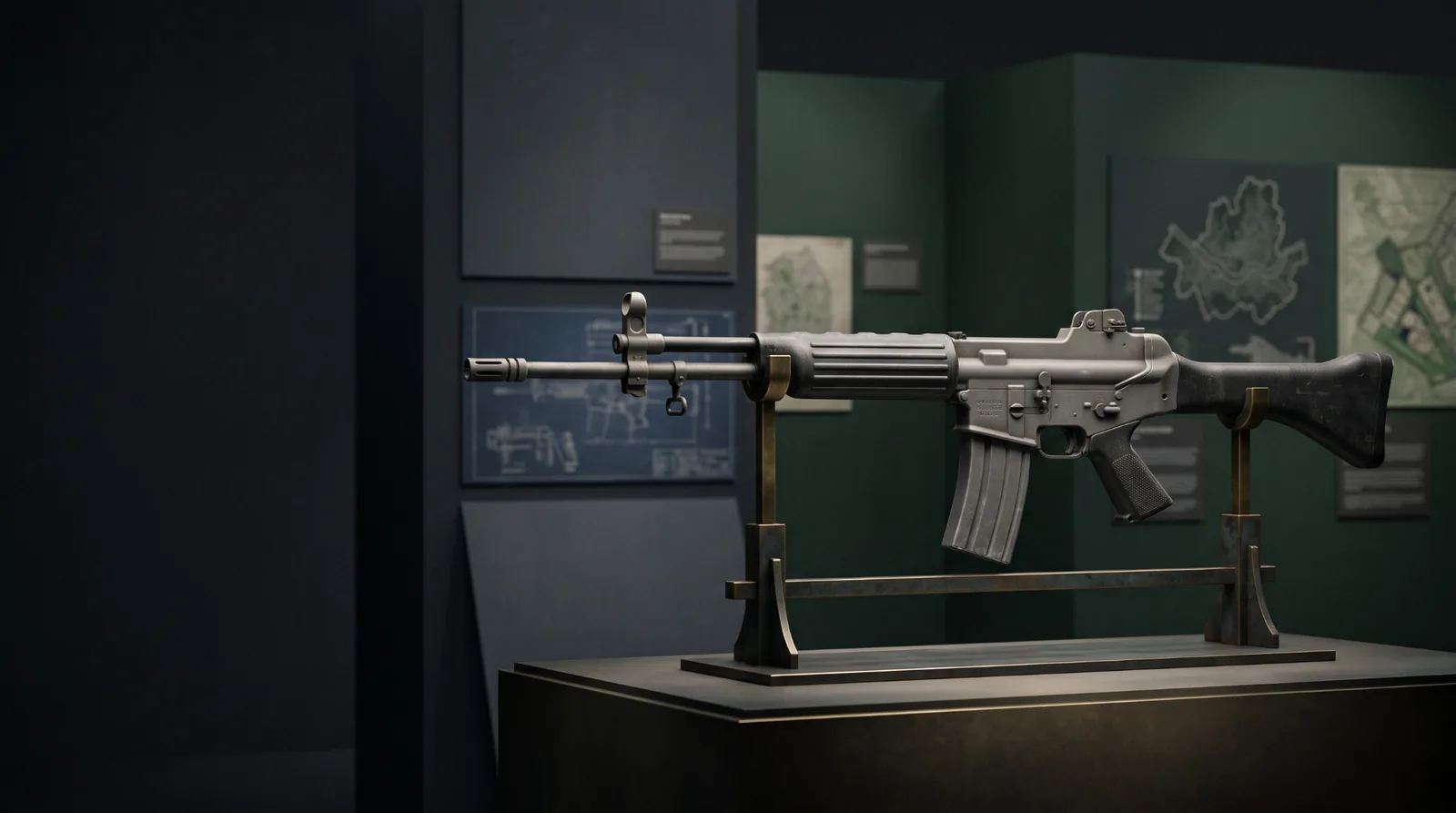
Daewoo K2 is a rifles history rooted in South Korea. First associated with 1984, the design belongs to the wider story of asian service rifles. Its history is best understood through the people, institutions and events behind its name—not as a present-day product listing.
01 / THE ORIGIN
South Korea’s domestic rifle program grew out of a period of licensed production, national security concerns, and expanding industrial capability. The K2 came from that sequence rather than from an isolated single-designer breakthrough.
02 / THE HISTORICAL JOURNEY
The model became a recognizable marker of Korean military production and was later updated in response to changing requirements. It is easy to confuse the K2 with later commercial or modified variants found in international discussions.
03 / NAMES, VARIANTS & IDENTITY
The K2 and later K2C/K2C1 variations belong to a family, but their introductions and official roles are not identical.
Names also encountered in historical catalogs and searches include Daewoo K2 rifle; K2C1; SNT K2. These terms are useful starting points, not proof that two photographed objects share the same maker, date, or military provenance. When reading about a particular surviving specimen, look for a documented institutional collection number, manufacturer record, or contemporary source.
04 / WHY THIS MODEL MATTERS
The K2 is a useful biography for understanding the movement from foreign licenses toward indigenous national design programs in East Asia.
The broader context is the history of asian service rifles. Political institutions, supply contracts, and public memory often determine which firearms remain famous and which survive mainly through specialist archives. These distinctions matter more than modern rankings or unsupported claims of superiority.
Read the expanded historical research file →
THE HISTORICAL RESEARCH FILE
The South Korean K2 is a national defense-industrial biography: domestic service needs, manufacturer identity and the evolution of a distinct Korean rifle family.
01 / A domestic industrial program
The Daewoo K2 emerged from South Korea's efforts to develop and manufacture domestic military equipment rather than relying indefinitely on imported standard small arms. The K2 is normally associated with the 1980s transition in Republic of Korea military equipment. Its place in an encyclopedia should be anchored to Korean procurement and industrial institutions, not just to visual comparisons with American rifles. The manufacturer history is also more complicated than one company name: later corporate identities and defense-industrial reorganizations affect how contemporary catalogues refer to the lineage. [1]
A serious entry should separate the program's origin, public introduction and subsequent national issue. A photograph taken many years later of a K2-looking rifle does not independently establish when the depicted version entered service.
The current SNT Motiv manufacturer catalogue now supplies useful version-specific chronology: it lists the K2 in 1984, the K2C in 2012 and the K2C1 in 2016. These are company-history milestones, not proof that every military unit began issue on those dates. A specialist Small Arms Defense Journal history also warns that the early development record is incompletely preserved. Those two source types complement one another and should be labeled accordingly.
02 / K1, K2 and later variants are not synonyms
The South Korean K1 and K2 are adjacent programs but not interchangeable model names. Later K2C and related labels refer to subsequent developments and must be kept in their own chronology. Because the modern manufacturer brand changed over time, product advertising can obscure the earlier institutional development sequence. That is a research challenge worth explaining directly: a reader trying to identify an older photo may find a current-company catalogue helpful for family naming, but it is not a replacement for early 1980s service records. [2]
The K2 also belongs in a country-based atlas of postwar domestic manufacturing, alongside Indonesian Pindad models, Singaporean SAR-80 and Finnish Valmet/Sako developments. These histories illuminate independent procurement choices without asserting that the designs share one origin.
03 / How to improve documentation
The site's next step should be to obtain Korean-language manufacturer and defense ministry historical releases with publication dates and translations. Public summaries often quote an adoption year but omit whether they mean trials, initial production or routine distribution. An encyclopedia should keep those possibilities separate until the primary record is found. As elsewhere, museum-style AI artwork can communicate the look of the era, but cannot authenticate factory marks, contracts or a particular army specimen. [1]
We should link the Galil ACE and other modern international rifle stories for comparative industrial context, with explicit wording that comparison is about national programs and model evolution rather than operating instructions.
QUICK REFERENCE QUESTIONS
Are the Daewoo K1 and K2 identical?
No. They are separate Korean firearm programs and should not be treated as duplicate model names.
Is “Daewoo” still the only company name in K2 history?
No. Corporate names have changed during the product family’s long history; date any manufacturer attribution.
THE NEXT ARCHIVAL QUESTION
Obtain original Korean-language adoption and factory materials; current institutional pages alone do not prove the precise initial service date.
Editorial status: sourced historical research draft, not a completed archival verification of all marks, factory totals or service claims. Generated museum artwork is illustrative and not evidence of an authenticated surviving specimen.
THE HISTORICAL TIMELINE
Earliest major introduction or designation associated with this record
The defining historical setting for the model's service and reputation
Variants, national service histories, and museum documentation add important context
Preserved as part of military, sporting or industrial-design history
COMMON HISTORY QUESTIONS
What country did the Daewoo K2 originate in?
The design's principal origin is South Korea. This is an origin label, not a claim that every later example was manufactured in the same country.
When was the Daewoo K2 introduced?
1984 is the principal milestone used for this record. Prototype dates, military adoption, production, and later models may differ; always check which event a secondary source is dating.
What other names are associated with it?
Common search terms include Daewoo K2 rifle; K2C1; SNT K2. They may encompass nicknames, related service designations, or model-family references; consult primary documentation before equating specific variants.
EXPLORE CONNECTED HISTORIES
These neighboring biographies help place the model in a broader national or industrial context, without implying they are mechanically identical:
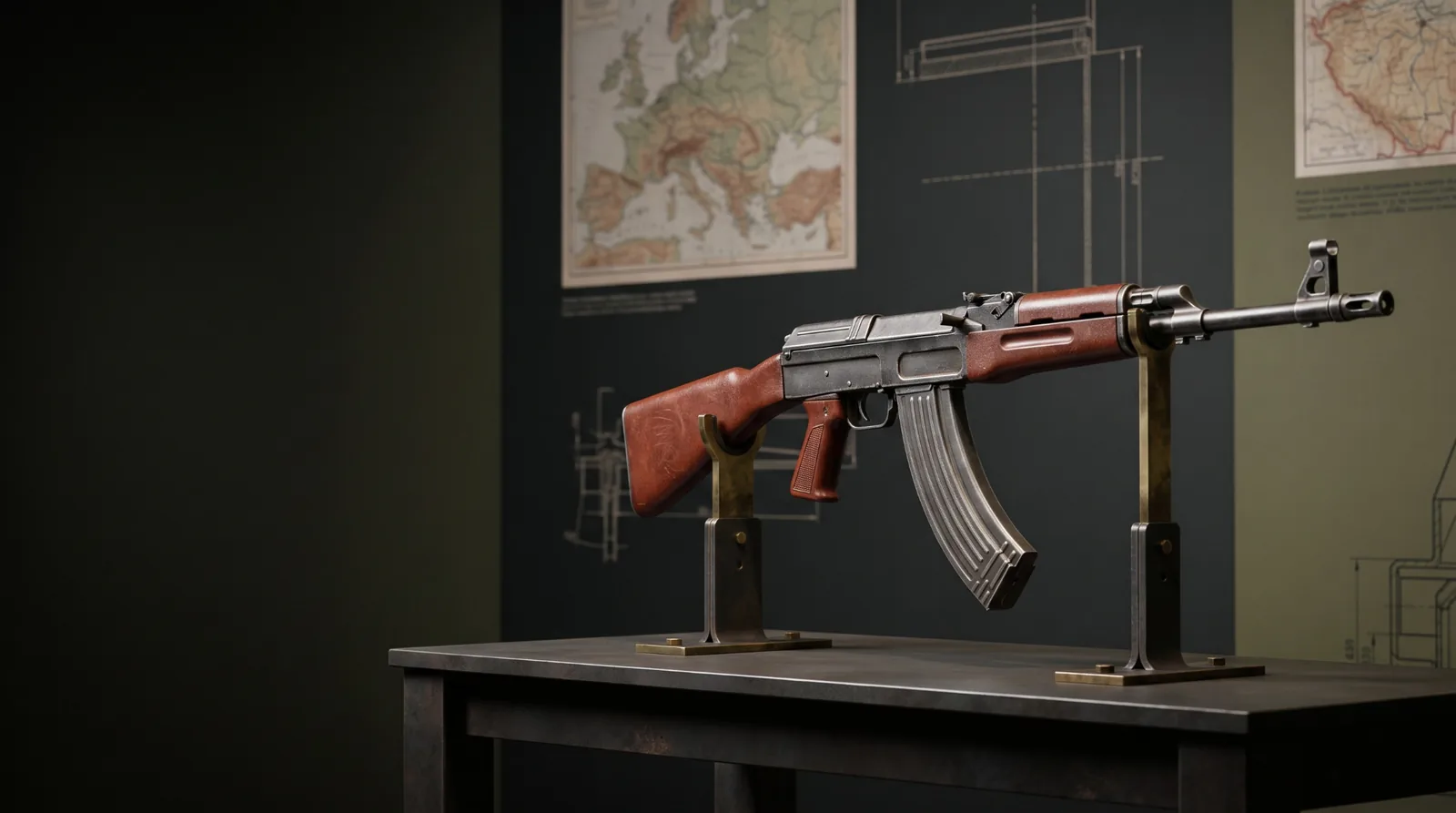
- SKS-45 — Soviet Union
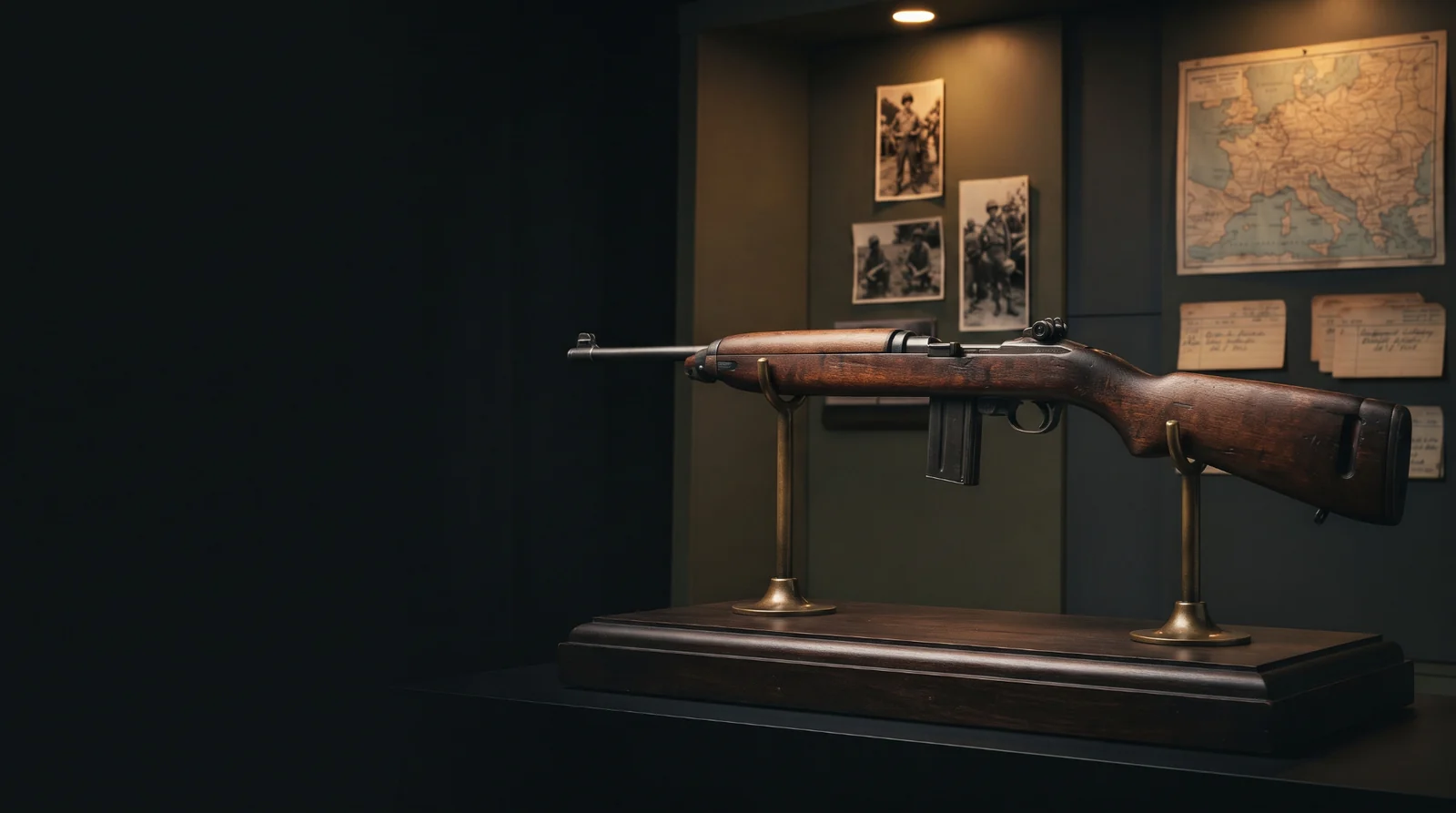
- U.S. M1 Carbine — United States
- Sa vz. 58 — Czechoslovakia
SOURCES & FURTHER READING
These links are editorial starting points. Where a linked source concerns a wider model family, a particular example or variant requires its own verification. This page is a historical overview, not an instruction manual.
2 external reading sources currently listed. This biography is a historical research overview; these links are research starting points and may cover a wider model family. They are not a claim that every detail has been independently verified. Our editorial method.
- Historical source: www.sntmotiv.com ↗READINGEvidence scope: Current manufacturer catalogue lists the K2 under 1984, K2C under 2012 and K2C1 under 2016; manufacturer chronology, not independent military acceptance record.
- Additional institutional or historical reference ↗READING
- Small Arms Defense Journal — K1/K2 development history ↗DOCUMENTED SOURCEEvidence scope: Specialist historical research notes domestic program development and documentary gaps.
EDITORIAL EXPANSION: NOVEMBER 2026 · HISTORICAL STUDY · NO SALES, TRANSFERS OR MODIFICATION GUIDANCE.