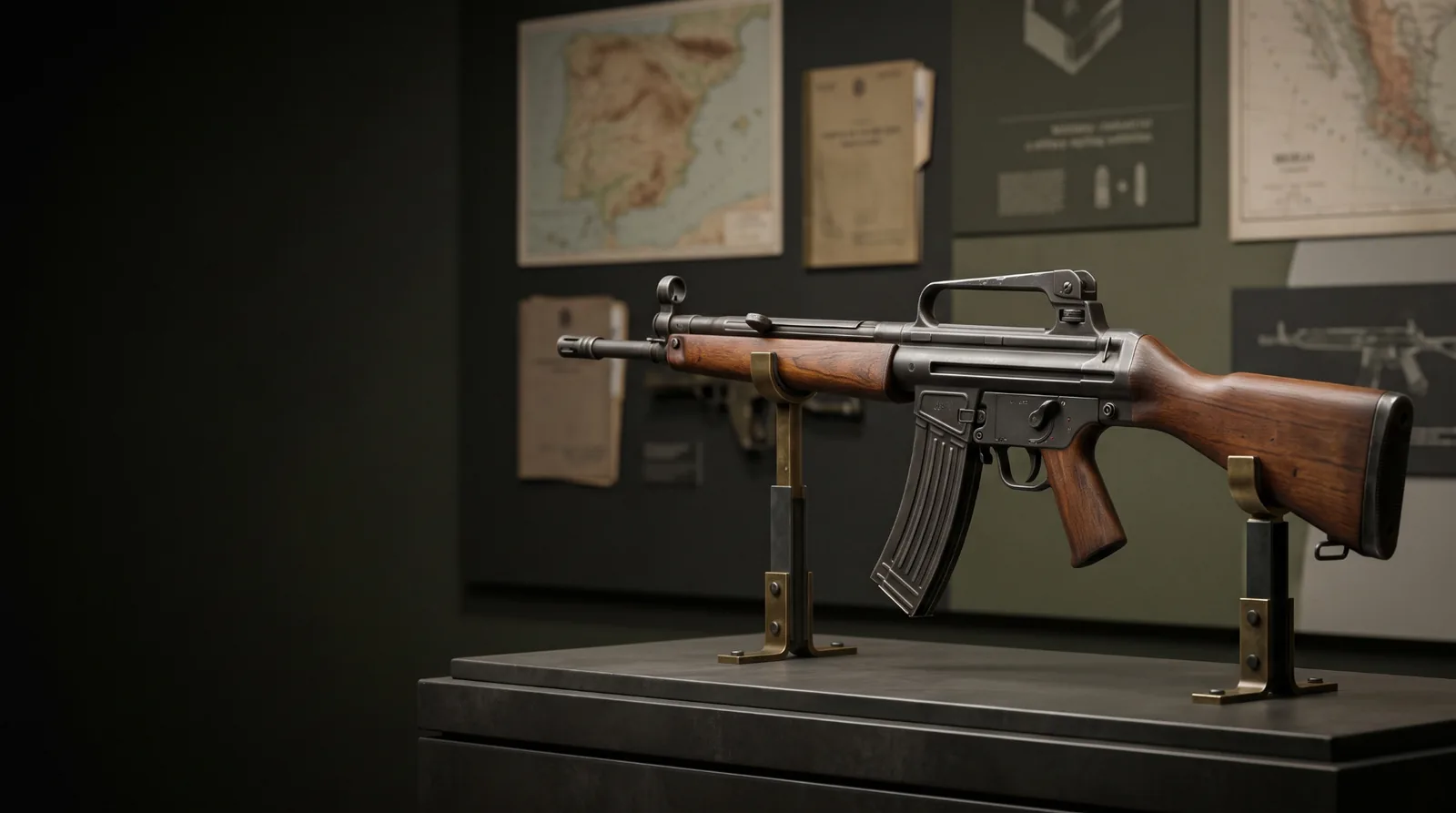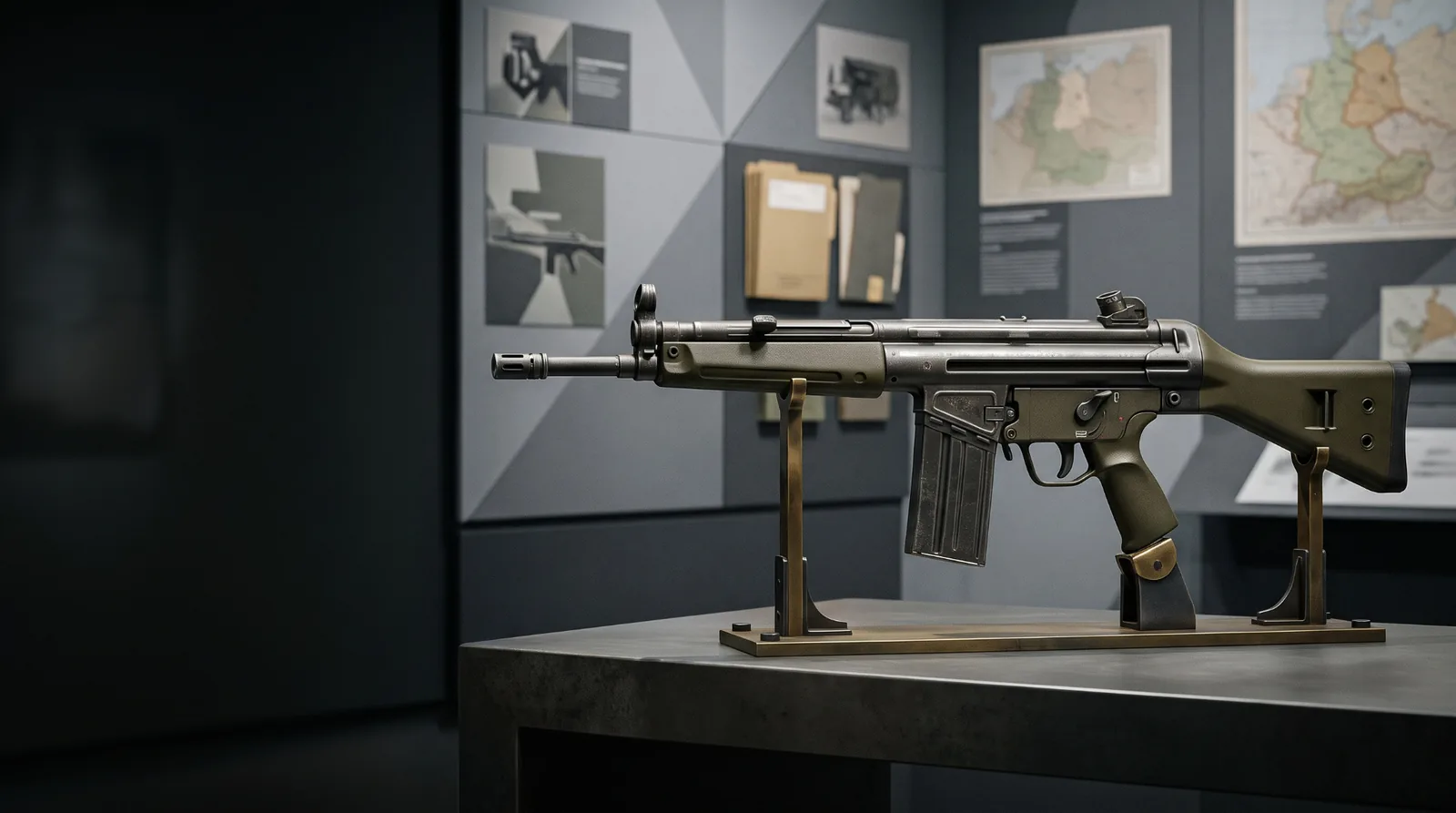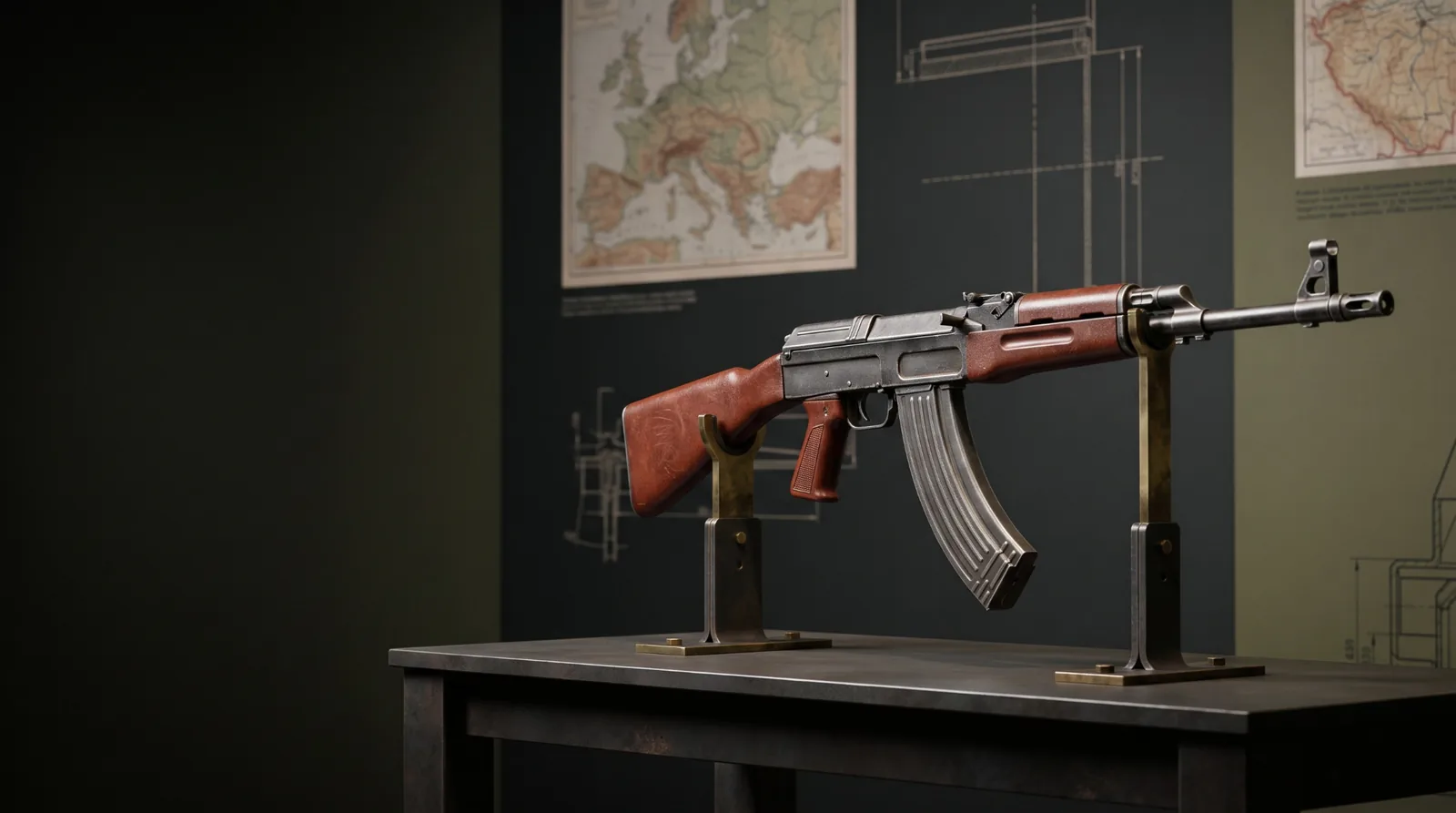
Sa vz. 58 is a rifles history rooted in Czechoslovakia. First associated with 1958, the design belongs to the wider story of cold war rifle alternatives. Its history is best understood through the people, institutions and events behind its name—not as a present-day product listing.
01 / THE ORIGIN
Czechoslovakia developed the vz. 58 under its own engineering institutions during the same period in which AK-pattern rifles spread across the Eastern Bloc. The visual resemblance is real, but the assumption that it is simply a Czech AK is historically misleading.
02 / THE HISTORICAL JOURNEY
The designation became closely identified with the Czechoslovak armed forces and, after the country divided, the military histories of the Czech Republic and Slovakia. Its story also reveals how smaller industrial states preserved engineering traditions within larger geopolitical alliances.
03 / NAMES, VARIANTS & IDENTITY
The vz. 58 is not an AK variant; the distinction is central to its design and provenance history.
Names also encountered in historical catalogs and searches include vz 58; Sa vz 58; Czech vz58. These terms are useful starting points, not proof that two photographed objects share the same maker, date, or military provenance. When reading about a particular surviving specimen, look for a documented institutional collection number, manufacturer record, or contemporary source.
04 / WHY THIS MODEL MATTERS
Its greatest interpretive value is as a challenge to the idea that the Cold War produced only two interchangeable families of service rifles. Local choices, tooling, and institutional culture mattered.
The broader context is the history of cold war rifle alternatives. Political institutions, supply contracts, and public memory often determine which firearms remain famous and which survive mainly through specialist archives. These distinctions matter more than modern rankings or unsupported claims of superiority.
Read the new source-led dossier →
THE RESEARCH DOSSIER
Czechoslovakia’s vz. 58 belongs beside the AK in Cold War history, but it is not an AK variant.
01 / An Eastern Bloc country makes a different choice
After 1948 Czechoslovakia operated within the Soviet-aligned bloc but maintained substantial domestic design and industrial capacity. The vz. 58 was its own national response to service-rifle requirements, adopted under a model designation that reflects 1958. Česká zbrojovka’s published history makes the essential distinction explicit: shared chambering and broadly similar appearance should not be mistaken for common parentage. This biography therefore treats Czechoslovak procurement and production as a separate national narrative rather than a subordinate paragraph in an AK article.
02 / Avoiding the “AK clone” misconception
The rifle’s outline and ammunition helped create a persistent lay impression that it was a licensed AK. In fact the Czechoslovak vz. 58 has a distinct design lineage and internal system. The encyclopedia can explain that historical identity without presenting operational instructions or engineering diagrams. The official terminology “7,62mm samopal vzor 58” is useful here: the historic national designation does not translate neatly into every modern English classification. Both the factory perspective and independent specialist literature support a fuller account of how the model was developed and used.
03 / A collector label is not an archival finding
Some online captions identify all rifles with familiar curved magazines as Kalashnikovs. That shortcut erases an important chapter of Czech and Slovak industrial history. The strongest claims on this page are those tied to the Czech manufacturer’s retrospective and specialist model history; neither substitutes for a serial-numbered museum object or a government acceptance document. Future research should address subvariants and the transition from Czechoslovakia into successor-state inventories, with dated documentation rather than inferred service from appearance alone. The generated portrait is useful for atmosphere but not an identification guide.
Still to verify. Verify changes across military, export and civilian-market vz. 58 designations before treating variant labels as interchangeable. Historical museum images on this page are AI illustrations, not authenticated photographs of a particular object.
THE HISTORICAL TIMELINE
Earliest major introduction or designation associated with this record
The defining historical setting for the model's service and reputation
Variants, national service histories, and museum documentation add important context
Preserved as part of military, sporting or industrial-design history
COMMON HISTORY QUESTIONS
What country did the Sa vz. 58 originate in?
The design's principal origin is Czechoslovakia. This is an origin label, not a claim that every later example was manufactured in the same country.
When was the Sa vz. 58 introduced?
1958 is the principal milestone used for this record. Prototype dates, military adoption, production, and later models may differ; always check which event a secondary source is dating.
What other names are associated with it?
Common search terms include vz 58; Sa vz 58; Czech vz58. They may encompass nicknames, related service designations, or model-family references; consult primary documentation before equating specific variants.
EXPLORE CONNECTED HISTORIES
These neighboring biographies help place the model in a broader national or industrial context, without implying they are mechanically identical:
- CETME Model C — Spain
- Heckler & Koch G3 — West Germany
- SKS-45 — Soviet Union
SOURCES & FURTHER READING
These links are editorial starting points. Where a linked source concerns a wider model family, a particular example or variant requires its own verification. This page is a historical overview, not an instruction manual.
1 external reading source currently listed. This biography is a historical research overview; these links are research starting points and may cover a wider model family. They are not a claim that every detail has been independently verified. Our editorial method.
- Historical source: www.forgottenweapons.com ↗READING
- CZ: Sa vz. 58 is not an AK clone ↗RESEARCHManufacturer account of national development and model distinction.
- Small Arms Review: Czech vz.58 history ↗RESEARCHIndependent historical context for the rifle and its later service.
EDITORIAL EXPANSION: NOVEMBER 2026 · HISTORICAL STUDY · NO SALES, TRANSFERS OR MODIFICATION GUIDANCE.