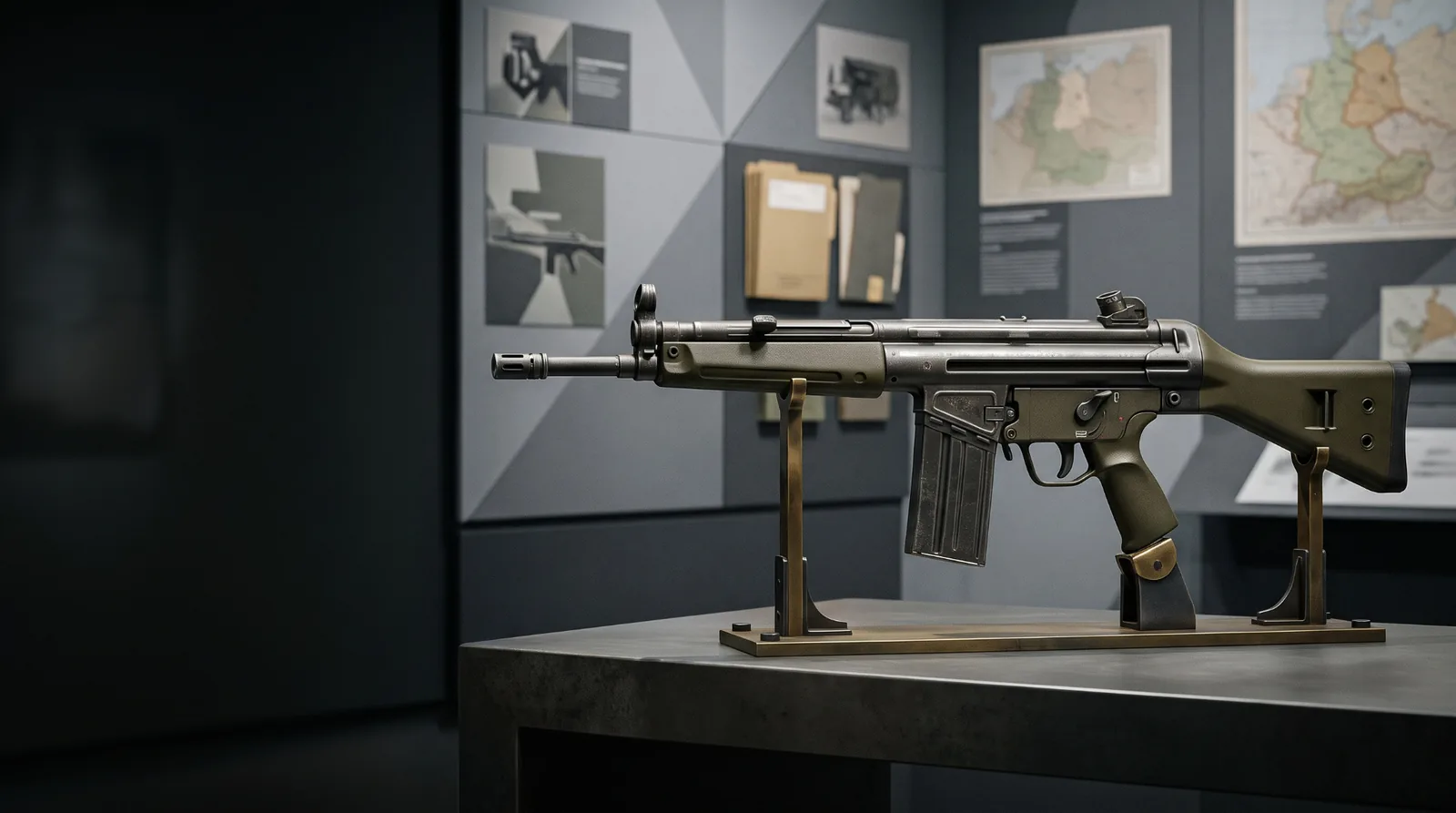
Heckler & Koch G3 is a rifles history rooted in West Germany. First associated with 1959, the design belongs to the wider story of cold war rifle alternatives. Its history is best understood through the people, institutions and events behind its name—not as a present-day product listing.
01 / THE ORIGIN
The G3 emerged from West Germany’s rearmament and the technical lineage that passed through Spain’s CETME research. Heckler & Koch’s adoption and production history made it one of the major European service rifle names of the Cold War.
02 / THE HISTORICAL JOURNEY
Its later international spread—often through licensed production and state procurement—gave the G3 a complicated global record. A single photograph can represent many national production contexts, and careful biographies avoid treating all variants as one undifferentiated rifle.
03 / NAMES, VARIANTS & IDENTITY
G3, CETME Model C, and later H&K commercial derivatives should be distinguished by their national and institutional histories.
Names also encountered in historical catalogs and searches include G3 rifle; HK G3; H&K G3. These terms are useful starting points, not proof that two photographed objects share the same maker, date, or military provenance. When reading about a particular surviving specimen, look for a documented institutional collection number, manufacturer record, or contemporary source.
04 / WHY THIS MODEL MATTERS
The important story is industrial partnership and adaptation: a rifle family that reflects both the revival of West German manufacturing and international standardization debates.
The broader context is the history of cold war rifle alternatives. Political institutions, supply contracts, and public memory often determine which firearms remain famous and which survive mainly through specialist archives. These distinctions matter more than modern rankings or unsupported claims of superiority.
Read the expanded historical research file →
THE HISTORICAL RESEARCH FILE
The G3 links West German procurement, Heckler & Koch’s rise and an international manufacturing history that is often conflated with Spain’s CETME program.
01 / A postwar West German standard
The Heckler & Koch G3 belongs to the Federal Republic of Germany's postwar military standardization. A 2023 HK publication explicitly identifies the G3 generation with 1959 and distinguishes it from later Bundeswehr rifle generations. This anchors a historical transition, not a claim that every surviving G3 was made in 1959 or issued to one national army. As with many Cold War projects, domestic industrial policy, NATO standardization and procurement decisions all shaped the model's eventual identity. [1]
The G3 must be discussed alongside the Spanish CETME program because the developmental relationship is real, but a direct relationship is not the same as two labels being interchangeable. Readers should leave the page understanding why both guns have separate biographies, makers and service histories.
02 / Spanish roots and international chapters
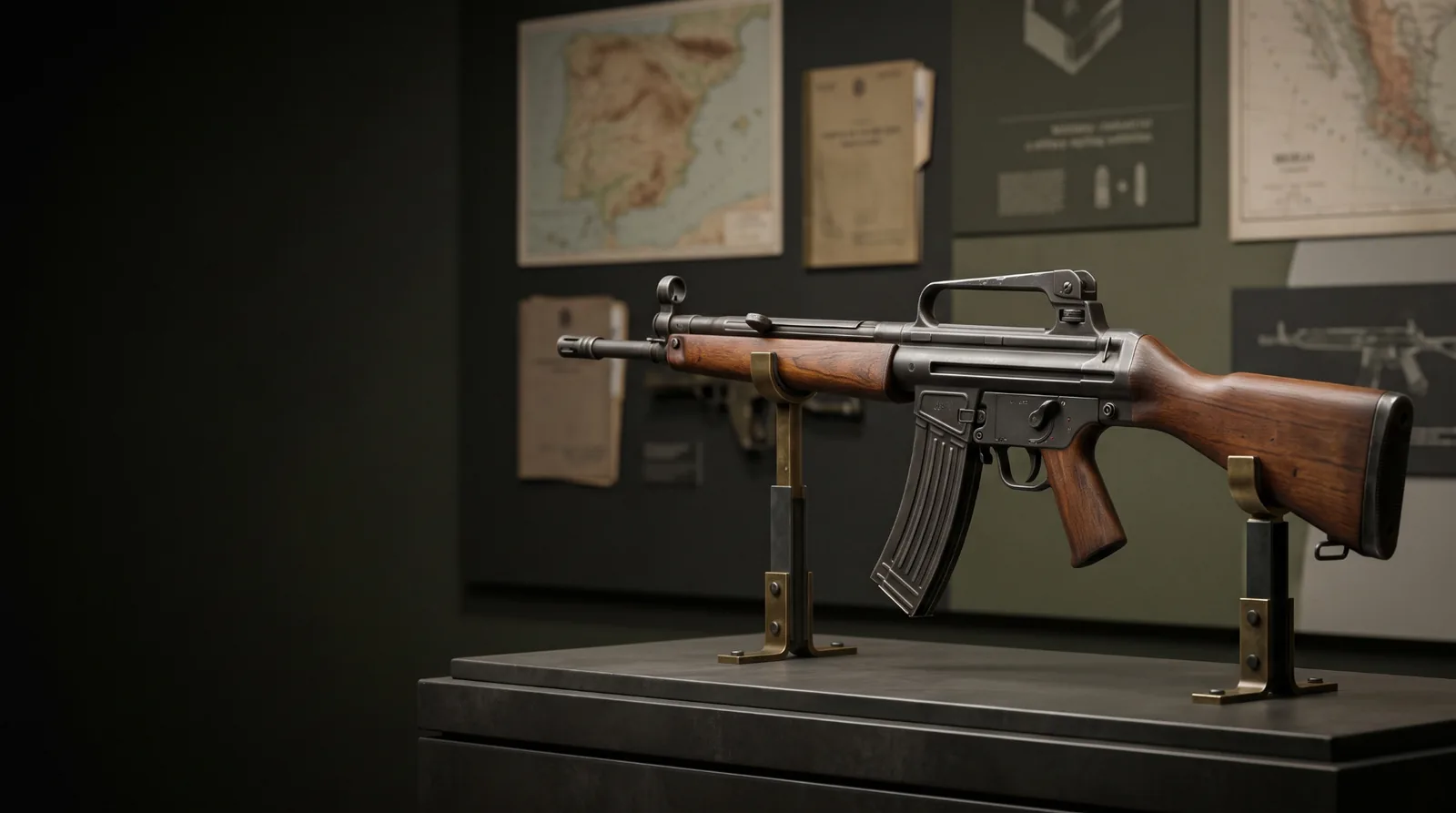
Historical writing on CETME traces postwar engineering work in Spain and subsequent institutional collaboration with German industry. The Spanish CETME Model C and the German HK G3 belong to overlapping but distinct programs. Later national licensing and manufacturing expand the G3's story across additional countries, which should be documented one country at a time rather than asserted in a long unsourced list of users. [2]
For visual research, a modern photograph of a G3-pattern arm may show national features or later refurbishment. The correct caption should name the visible specimen, country, era and evidence source. A user searching “G3 rifle history” may be seeking West German adoption; another searching “CETME G3 origins” wants the relationship between Spanish and German industrial development.
03 / Reference questions that matter
A rigorous encyclopedia needs a distinction between first government acceptance, manufacture by an original firm, subsequent licensed production and use by different armed institutions. HK company material provides one part of that picture; original Bundeswehr archives and foreign licensing records would establish the rest. Claims about exact numbers built worldwide are particularly difficult without defining which national copies and variants are included. [1]
The G3 connects naturally to the FN FAL and CETME entries as Cold War-era service-rifle histories. That comparison is about adoption pathways, not a modern performance ranking. It is more informative and more defensible than repeating popular slogans about one rifle's battlefield reputation.
QUICK REFERENCE QUESTIONS
Is the HK G3 just another name for CETME C?
No. The programs are historically related but have distinct national manufacturers and military designations.
When did the G3 become part of the Bundeswehr story?
Heckler & Koch’s historical publication associates the G3 service-rifle generation with 1959.
THE NEXT ARCHIVAL QUESTION
Locate original Bundeswehr procurement decisions and national licensing archives before presenting a comprehensive worldwide production tally.
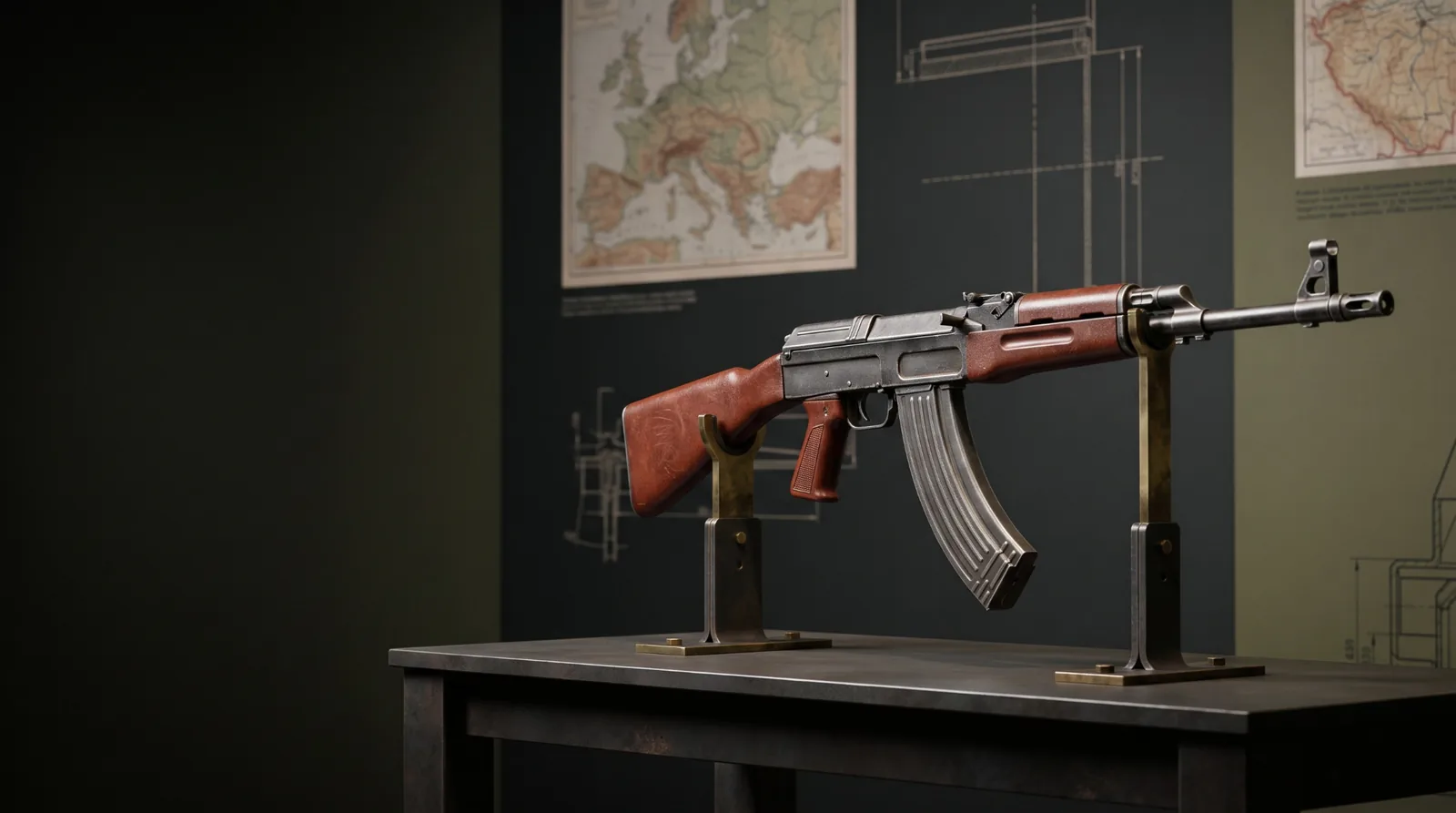
Editorial status: sourced historical research draft, not a completed archival verification of all marks, factory totals or service claims. Generated museum artwork is illustrative and not evidence of an authenticated surviving specimen.
THE HISTORICAL TIMELINE
Earliest major introduction or designation associated with this record
The defining historical setting for the model's service and reputation
Variants, national service histories, and museum documentation add important context
Preserved as part of military, sporting or industrial-design history
COMMON HISTORY QUESTIONS
What country did the Heckler & Koch G3 originate in?
The design's principal origin is West Germany. This is an origin label, not a claim that every later example was manufactured in the same country.
When was the Heckler & Koch G3 introduced?
1959 is the principal milestone used for this record. Prototype dates, military adoption, production, and later models may differ; always check which event a secondary source is dating.
What other names are associated with it?
Common search terms include G3 rifle; HK G3; H&K G3. They may encompass nicknames, related service designations, or model-family references; consult primary documentation before equating specific variants.
EXPLORE CONNECTED HISTORIES
These neighboring biographies help place the model in a broader national or industrial context, without implying they are mechanically identical:
- Sa vz. 58 — Czechoslovakia
- CETME Model C — Spain
- SKS-45 — Soviet Union
- FN FAL — Belgium
SOURCES & FURTHER READING
These links are editorial starting points. Where a linked source concerns a wider model family, a particular example or variant requires its own verification. This page is a historical overview, not an instruction manual.
2 external reading sources currently listed. This biography is a historical research overview; these links are research starting points and may cover a wider model family. They are not a claim that every detail has been independently verified. Our editorial method.
- Historical source: www.nramuseum.org ↗READING
- Additional institutional or historical reference ↗READING
- Heckler & Koch — Bundeswehr rifle generations ↗DOCUMENTED SOURCEEvidence scope: HK published historical summary identifying G3 in 1959.
- Small Arms Review — CETME/G3 industrial history ↗DOCUMENTED SOURCEEvidence scope: Specialist explanation of Spanish-German development relationship.
EDITORIAL EXPANSION: NOVEMBER 2026 · HISTORICAL STUDY · NO SALES, TRANSFERS OR MODIFICATION GUIDANCE.