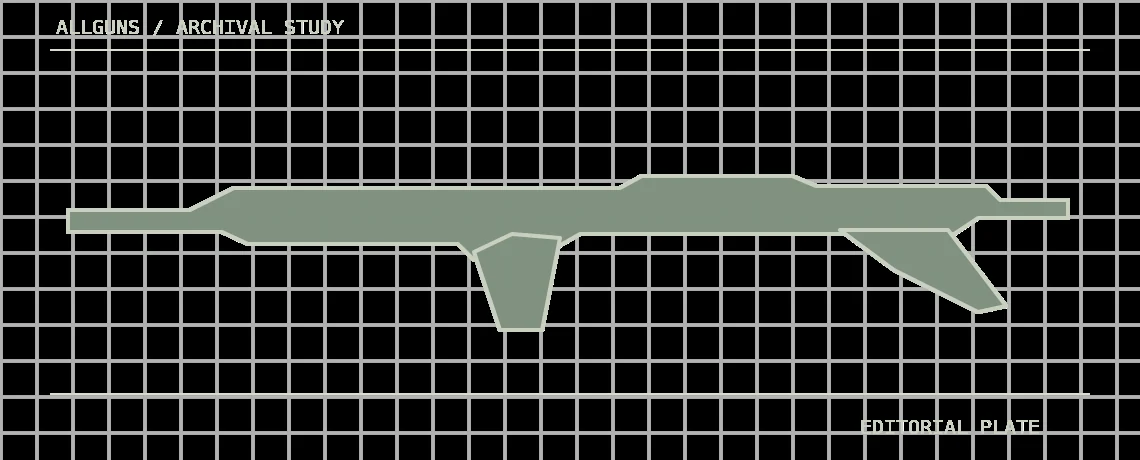
The Belgian FN FAL became a defining rifle of the Cold War. Its international reach offers a vivid map of postwar alliances, industrial licensing, and different national ideas about infantry equipment.
01 / THE ORIGIN
FN Herstal explored postwar rifle designs under engineer Dieudonné Saive. The project developed during debates over military ammunition standardization and the future shape of infantry weapons. Introduced in the 1950s, the FAL emerged as one of the era’s major 7.62mm service rifle families.
02 / THE JOURNEY
From Belgium and the United Kingdom to nations across Africa, Latin America, and the Commonwealth, FAL patterns appeared under different designations and manufacturing arrangements. Britain’s L1A1 Self-Loading Rifle is especially recognizable, but it should not be confused with every FAL version. Licensing produced a family with local identities rather than a single universal object.
03 / THE LEGACY
Its nickname—“Right Arm of the Free World”—captures a particular Cold War self-image more than a neutral technical ranking. The FAL’s story belongs equally to industrial diplomacy, military alliances, and the afterlives of arms in postcolonial conflicts.
THE HISTORICAL TIMELINE
FN postwar development
FAL introduction
International adoption and production
A central Cold War reference
SOURCES & READING
These are starting points for independent research. Where sources cover a broader family, model-specific details should be checked against period records.
LAST EDITORIAL REVIEW: NOVEMBER 2026 · HISTORICAL SUMMARY · NO BUY/SELL CONTENT.