CETME Model C is a rifles history rooted in Spain. First associated with 1964, the design belongs to the wider story of cold war rifle alternatives. Its history is best understood through the people, institutions and events behind its name—not as a present-day product listing.
01 / THE ORIGIN
Spain’s CETME program grew from the postwar search for a modern service rifle and from a complex European network of engineers and institutions. The Modelo C appeared after earlier CETME developments and became a national service rifle with its own Spanish military identity.
02 / THE HISTORICAL JOURNEY
The family’s connection with West Germany is central: cooperation, licensing, and adaptation helped lead to the Heckler & Koch G3. This makes the CETME C valuable as a historical link rather than merely a footnote in G3 discussions.
03 / NAMES, VARIANTS & IDENTITY
CETME C and HK G3 are historically related models, not identical labels for the same factory and national adoption story.
Names also encountered in historical catalogs and searches include CETME C; CETME Modelo C; Spanish CETME. These terms are useful starting points, not proof that two photographed objects share the same maker, date, or military provenance. When reading about a particular surviving specimen, look for a documented institutional collection number, manufacturer record, or contemporary source.
04 / WHY THIS MODEL MATTERS
The rifle demonstrates how military designs moved across borders even when national histories told sharply different stories. It also invites comparisons between Spanish and German industrial institutions, not just outward appearance.
The broader context is the history of cold war rifle alternatives. Political institutions, supply contracts, and public memory often determine which firearms remain famous and which survive mainly through specialist archives. These distinctions matter more than modern rankings or unsupported claims of superiority.
Read the expanded historical research file →
THE HISTORICAL RESEARCH FILE
The Spanish CETME Model C is a national service-rifle history linked to, but distinct from, Germany’s G3 program.
01 / Spanish development and institutions
CETME is part of Spain's postwar defense-industrial story. Historical work by Jean Huon traces the Centro de Estudios Técnicos de Materiales Especiales program and its transition through several named models. The Model C belongs to a later stage than the original Model A and B; an encyclopedic history must preserve those names and approximate service periods rather than flattening them into an undated “CETME rifle.” Spain's own Civil Guard Museum has documented a Model C exhibit through Google Arts & Culture, providing a visible Spanish institutional link to the object. [1]
The public record also contains Spanish-language military historical material describing the Model C in the 1960s. That makes a Spanish name and summary especially valuable for search readers who may know the gun as “fusil CETME C” rather than by the English title.
02 / The G3 relationship without model confusion
The CETME and Heckler & Koch stories intersect through postwar industrial collaboration. Specialist history describes agreements involving Spanish and German parties in 1959 and 1962 and places Model C in the 1964 period. These are useful historical milestones, but the Model C should retain its Spanish identity and its own service history. A photo of a German G3 is not automatically an accurate image of a Spanish Model C, even when the designs appear similar. [2]
An effective comparison for AllGuns will show two parallel chronologies—Spanish CETME A/B/C and German HK G3—along with correctly attributed country and manufacturer sources. The purpose is historical clarity, not a list of parts or instructions.
03 / What surviving records can and cannot prove
The Civil Guard museum exhibit confirms a Spanish museum presentation of the CETME Model C. It does not establish every procurement batch or factory output figure, just as a specialist retrospective is not a substitute for Spanish official acceptance documents. The next archival step is to compare Spanish military periodicals, Oviedo factory records and museum accession materials. This could allow a detailed industrial timeline with historically accurate labels. [3]
The CETME C belongs with the FN FAL and HK G3 in the Cold War section, but the shared editorial subject is postwar national procurement, not interchangeable model identity. Those distinctions create useful internal links for users searching between languages and manufacturers.
QUICK REFERENCE QUESTIONS
What does CETME stand for?
Centro de Estudios Técnicos de Materiales Especiales, the Spanish research organization connected to the program.
Is CETME C a German HK G3?
No. Their histories are closely linked, but they are distinct Spanish and German programs.
THE NEXT ARCHIVAL QUESTION
Verify exact Spanish military adoption and factory production figures against original official records.
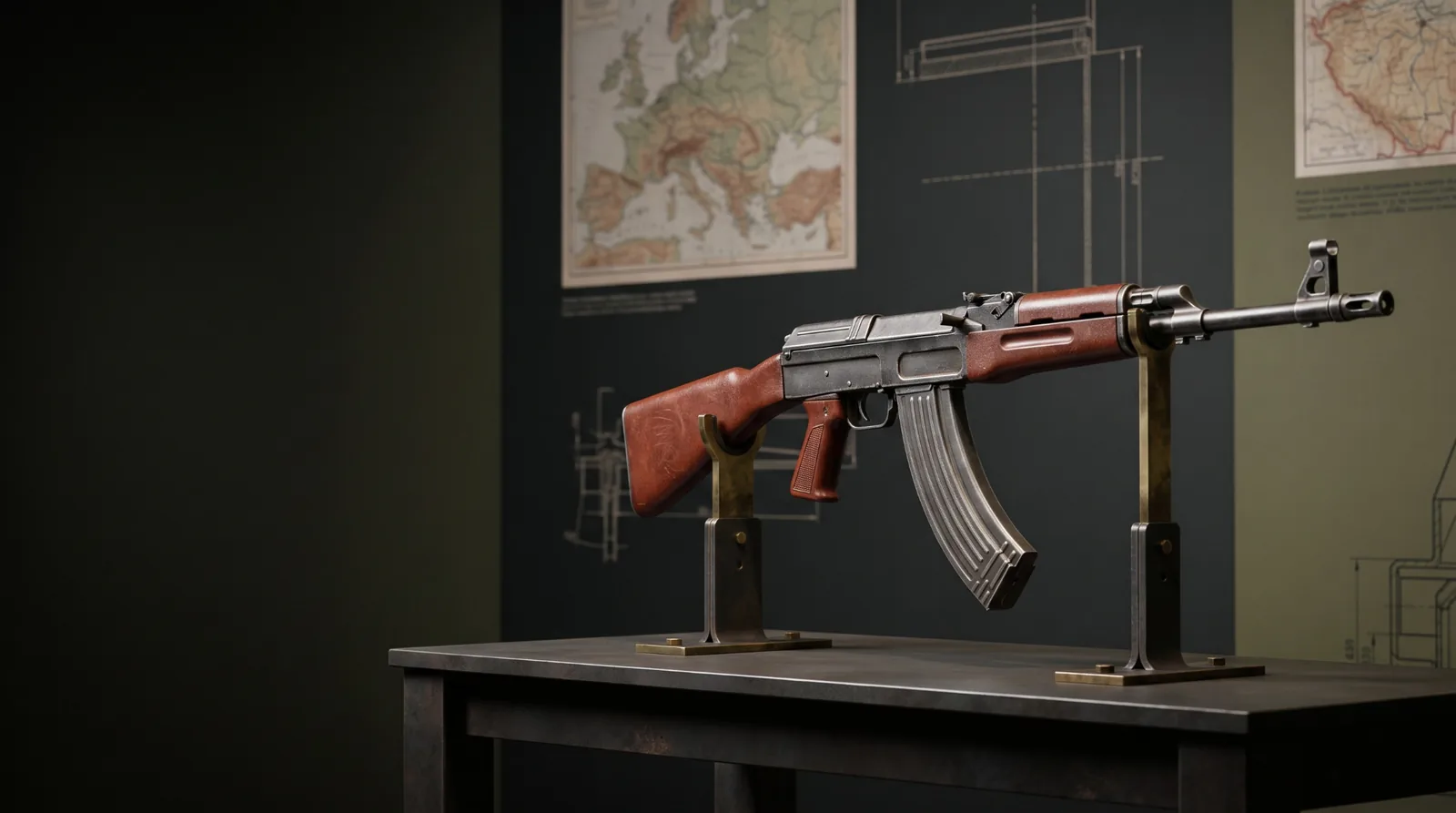
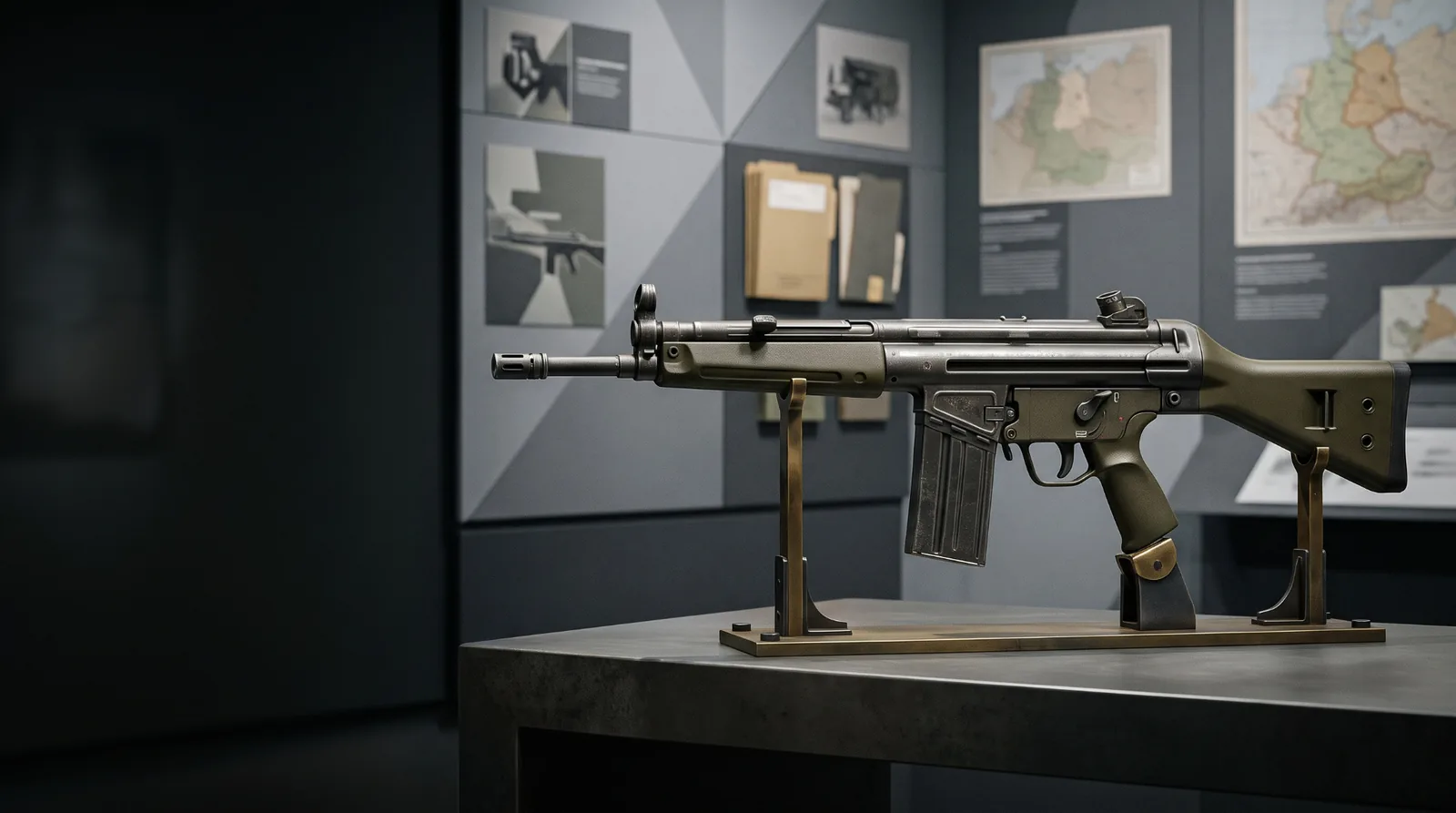
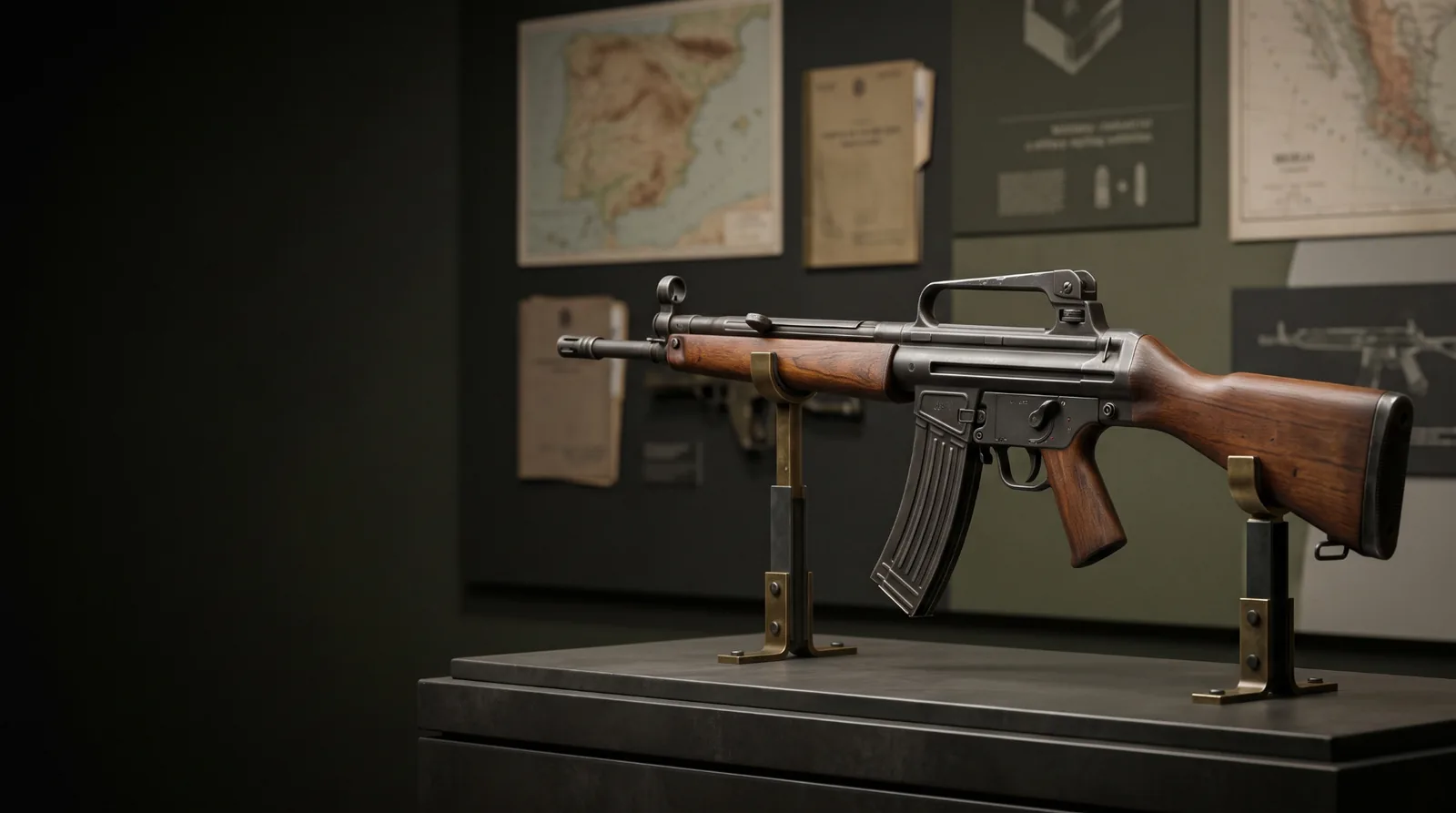
Editorial status: sourced historical research draft, not a completed archival verification of all marks, factory totals or service claims. Generated museum artwork is illustrative and not evidence of an authenticated surviving specimen.
THE HISTORICAL TIMELINE
Earliest major introduction or designation associated with this record
The defining historical setting for the model's service and reputation
Variants, national service histories, and museum documentation add important context
Preserved as part of military, sporting or industrial-design history
COMMON HISTORY QUESTIONS
What country did the CETME Model C originate in?
The design's principal origin is Spain. This is an origin label, not a claim that every later example was manufactured in the same country.
When was the CETME Model C introduced?
1964 is the principal milestone used for this record. Prototype dates, military adoption, production, and later models may differ; always check which event a secondary source is dating.
What other names are associated with it?
Common search terms include CETME C; CETME Modelo C; Spanish CETME. They may encompass nicknames, related service designations, or model-family references; consult primary documentation before equating specific variants.
EXPLORE CONNECTED HISTORIES
These neighboring biographies help place the model in a broader national or industrial context, without implying they are mechanically identical:
- Sa vz. 58 — Czechoslovakia
- Heckler & Koch G3 — West Germany
- SKS-45 — Soviet Union
SOURCES & FURTHER READING
These links are editorial starting points. Where a linked source concerns a wider model family, a particular example or variant requires its own verification. This page is a historical overview, not an instruction manual.
2 external reading sources currently listed. This biography is a historical research overview; these links are research starting points and may cover a wider model family. They are not a claim that every detail has been independently verified. Our editorial method.
- Historical source: www.acami.es ↗READING
- Additional institutional or historical reference ↗READING
- Museo de la Guardia Civil — CETME Modelo C ↗DOCUMENTED SOURCEEvidence scope: Museum exhibit identifies a Spanish CETME C object.
- Jean Huon — CETME program history ↗DOCUMENTED SOURCEEvidence scope: Specialist historical chronology and bilateral context.
- Ejército de Tierra — historical publication ↗DOCUMENTED SOURCEEvidence scope: Spanish military periodical referring to the Modelo C.
EDITORIAL EXPANSION: NOVEMBER 2026 · HISTORICAL STUDY · NO SALES, TRANSFERS OR MODIFICATION GUIDANCE.