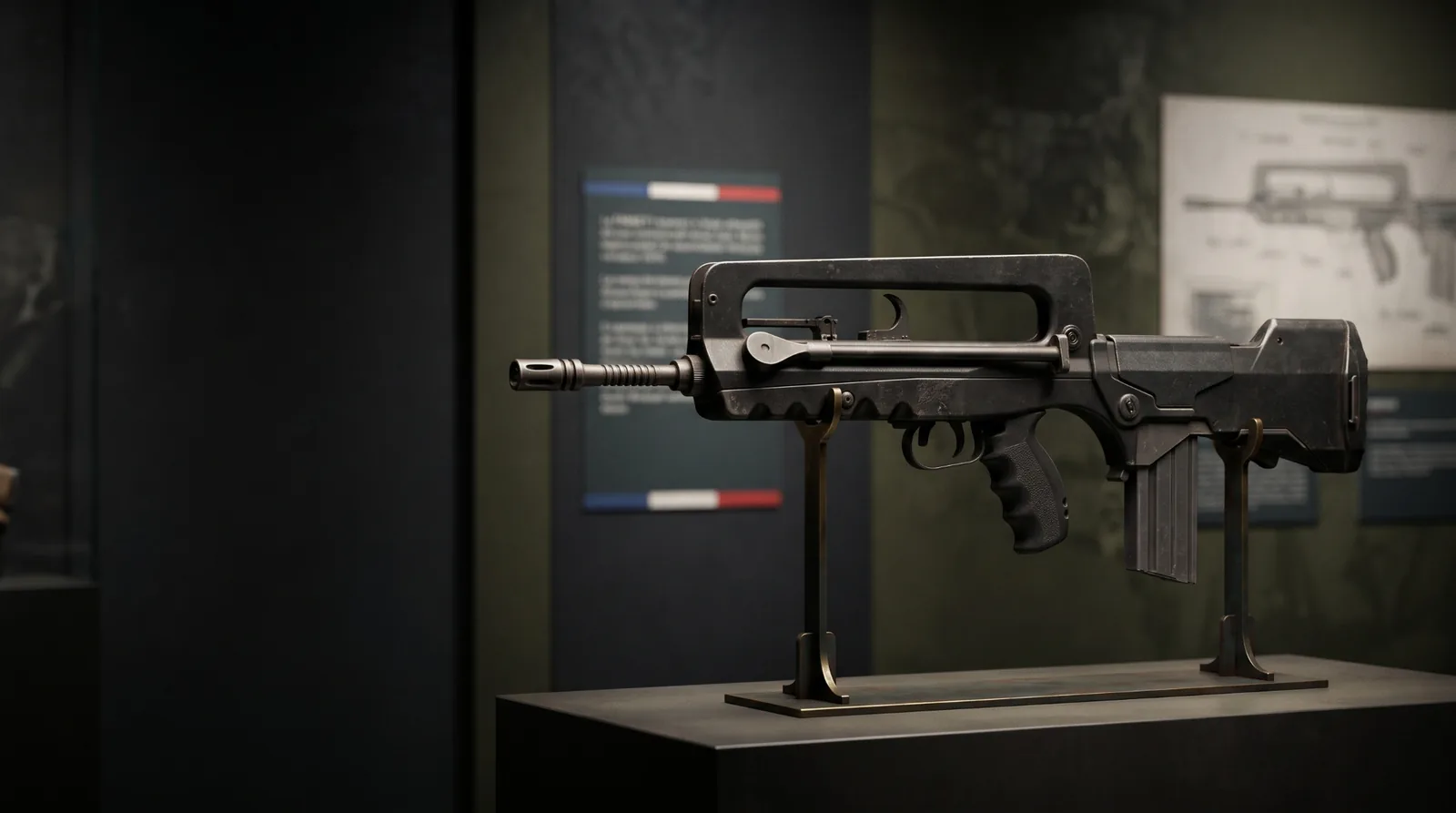
FAMAS F1 is a rifles history rooted in France. First associated with 1979, the design belongs to the wider story of bullpup rifles. Its history is best understood through the people, institutions and events behind its name—not as a present-day product listing.
01 / THE ORIGIN
France’s FAMAS project developed as a national response to changing small-arms doctrine and production capability. The F1 became associated with the French state arsenal at Saint-Étienne and an instantly recognizable silhouette.
02 / THE HISTORICAL JOURNEY
The rifle was inseparable from the image of the late-twentieth-century French armed forces. Its name, and the nickname “le clairon,” appear in decades of photographs, memoirs, and political debates over national manufacturing.
03 / NAMES, VARIANTS & IDENTITY
FAMAS F1 and later G2 discussions should be separated; “FAMAS” is often shorthand for the wider family.
Names also encountered in historical catalogs and searches include FAMAS; FAMAS F1; le clairon. These terms are useful starting points, not proof that two photographed objects share the same maker, date, or military provenance. When reading about a particular surviving specimen, look for a documented institutional collection number, manufacturer record, or contemporary source.
04 / WHY THIS MODEL MATTERS
The FAMAS is especially interesting as an industrial-policy biography: a symbol of state production and national identity as much as an item in a military equipment inventory.
The broader context is the history of bullpup rifles. Political institutions, supply contracts, and public memory often determine which firearms remain famous and which survive mainly through specialist archives. These distinctions matter more than modern rankings or unsupported claims of superiority.
THE RESEARCH DOSSIER
France’s FAMAS F1 as a national industrial and service symbol. This supplemental research section separates sourced historical context from model-family interpretation and questions requiring object-level proof.
01 / A national industrial project
FAMAS stands for “Fusil d’Assaut de la Manufacture d’Armes de Saint-Étienne,” and the name itself preserves an industrial location. The Saint-Étienne Museum of Art and Industry describes the rifle in the context of the city's arms-making history and dates delivery to 1979. That makes the F1 more than a distinctive bullpup silhouette: it represents a state-linked manufacturing tradition that France wished to retain in the postwar era. The same rifle appears in popular culture under the nickname “le Clairon,” a term useful for search, but historical coverage should explain where the name comes from before relying on its familiarity.
02 / Service history without treating every variant alike
France's Ministry of the Armed Forces describes the FAMAS F1 as an individual service weapon, but national service records do not establish that every later FAMAS pattern was identical. The F1 designation matters. Later changes, ammunition discussions and successor procurement are different chapters of the history rather than details that should be merged under one date. Researchers should separate the introduction of the F1, continued institutional use and eventual replacement programs. Museums are particularly helpful in distinguishing the original Saint-Étienne context from the much broader later cultural image of the rifle as shorthand for French infantry.
03 / The end of manufacture is not the end of history
A product can remain nationally symbolic after factory production stops or the military selects a successor. That tension is central to the FAMAS story: domestic industrial capacity, national pride and procurement constraints are visible in official debates and museum narratives. An encyclopedia should avoid framing the change simply as one firearm defeating another; industrial viability and government choices played a role. For a fuller feature, period parliamentary debates, factory records and military procurement announcements would provide a clearer chain of evidence than present-day opinion pieces about whether one rifle was superior.
04 / How to verify a specific FAMAS specimen
A collection record should distinguish the designation, maker, apparent production era and whether a displayed item is a military article, training object or later variant. A generated picture labeled FAMAS is an illustration of a design family, not documentation of one physical artifact. The museum and ministry references on this page establish key institutional milestones; future specialist work should add accession numbers and primary manufacturer documents before describing the precise production history of any individual survivor.
Evidence note. Manufacturer sources establish corporate chronology, while museum catalog entries document particular objects. Historical journalism provides context. The linked records do not verify the provenance or exact construction of our AI illustrations.
THE HISTORICAL TIMELINE
Earliest major introduction or designation associated with this record
The defining historical setting for the model's service and reputation
Variants, national service histories, and museum documentation add important context
Preserved as part of military, sporting or industrial-design history
COMMON HISTORY QUESTIONS
What country did the FAMAS F1 originate in?
The design's principal origin is France. This is an origin label, not a claim that every later example was manufactured in the same country.
When was the FAMAS F1 introduced?
1979 is the principal milestone used for this record. Prototype dates, military adoption, production, and later models may differ; always check which event a secondary source is dating.
What other names are associated with it?
Common search terms include FAMAS; FAMAS F1; le clairon. They may encompass nicknames, related service designations, or model-family references; consult primary documentation before equating specific variants.
EXPLORE CONNECTED HISTORIES
These neighboring biographies help place the model in a broader national or industrial context, without implying they are mechanically identical:
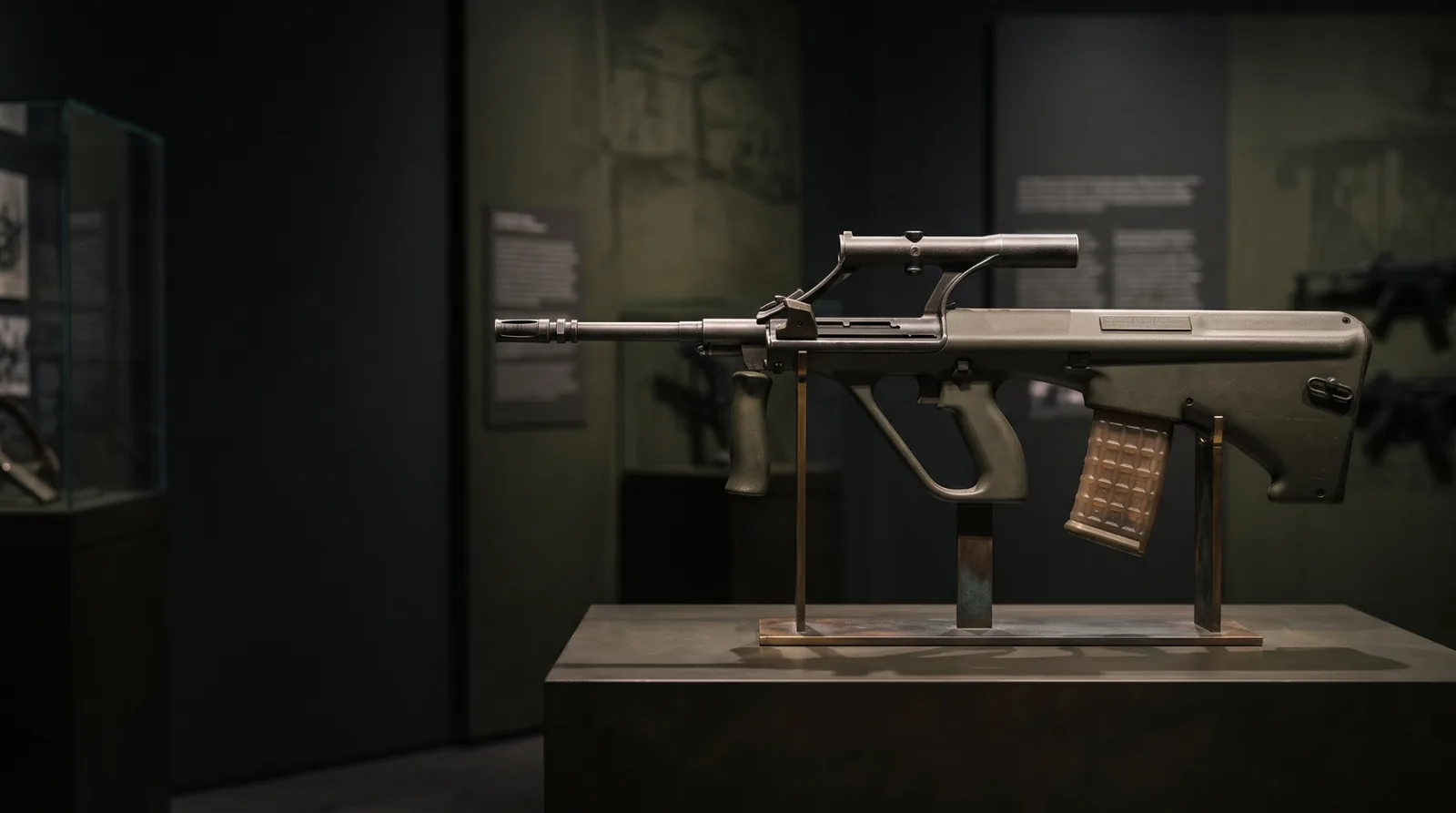
- Steyr AUG — Austria
- SA80 / L85A1 — United Kingdom
SOURCES & FURTHER READING
These links are editorial starting points. Where a linked source concerns a wider model family, a particular example or variant requires its own verification. This page is a historical overview, not an instruction manual.
2 model-focused research references documented in the November 2026 editorial pass. Sources are cited for the claims and time periods described, not as proof of every surviving variant. Review the editorial standards.
- French Ministry of the Armed Forces — FAMAS ↗RESEARCHOfficial French service description
- Saint-Étienne Museum of Art and Industry — FAMAS ↗RESEARCHLocal museum account of Saint-Étienne manufacture and 1979 deliveries
- Historical source: www.forgottenweapons.com ↗READING
REFERENCE DOSSIER EXPANDED: NOVEMBER 21, 2026 · HISTORICAL RESEARCH · NO SALES OR OPERATING GUIDANCE.