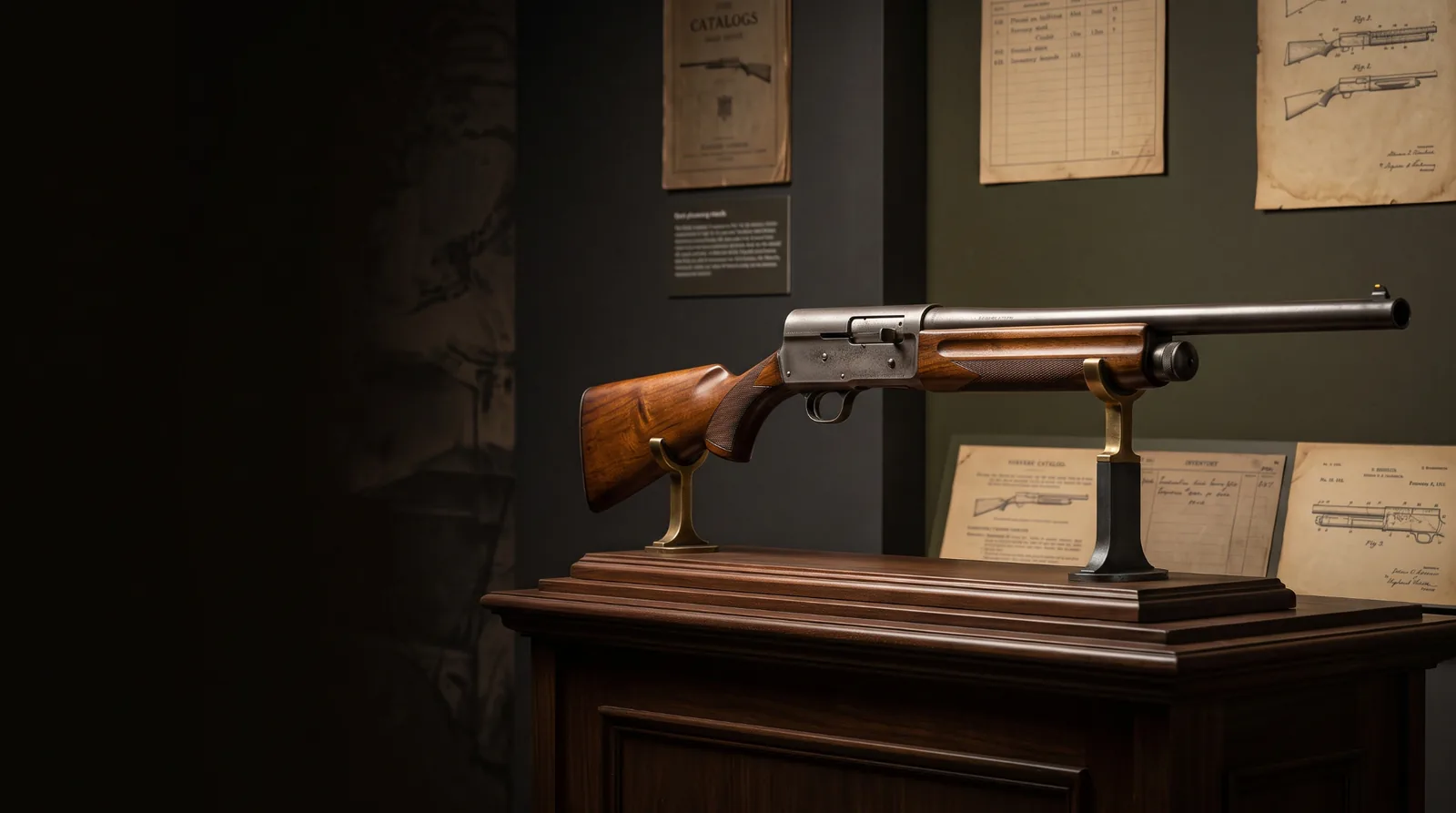
RSC M1917 is a rifles history rooted in France. First associated with 1917, the design belongs to the wider story of early self-loading designs. Its history is best understood through the people, institutions and events behind its name—not as a present-day product listing.
01 / THE ORIGIN
France worked on self-loading infantry rifles before the First World War, and the conflict accelerated the move from experimental programs to limited issue. The RSC Model 1917 is among the notable results of this state-led development effort.
02 / THE HISTORICAL JOURNEY
Its history is entangled with French manufacturing capacity, battlefield disruption, and later reassessment of the technology. A second model, the RSC 1918, is part of the broader family but should not be collapsed into the earlier story.
03 / NAMES, VARIANTS & IDENTITY
RSC 1917, RSC 1918, and the wider French automatic-rifle experiments are historically related but not interchangeable designations.
Names also encountered in historical catalogs and searches include RSC 1917; Fusil Automatique Mle 1917; French RSC. These terms are useful starting points, not proof that two photographed objects share the same maker, date, or military provenance. When reading about a particular surviving specimen, look for a documented institutional collection number, manufacturer record, or contemporary source.
04 / WHY THIS MODEL MATTERS
The RSC is an unusually strong niche subject because it challenges the familiar assumption that the military self-loading rifle began only between the world wars.
The broader context is the history of early self-loading designs. Political institutions, supply contracts, and public memory often determine which firearms remain famous and which survive mainly through specialist archives. These distinctions matter more than modern rankings or unsupported claims of superiority.
Read the expanded historical research file →
THE HISTORICAL RESEARCH FILE
France’s RSC M1917 is an unusually important early self-loading rifle: a First World War service experiment with documented surviving specimens.
01 / War requirements and French institutions
The RSC M1917 takes its name from the French designers commonly associated with the project: Ribeyrolles, Sutter and Chauchat. The broader historical context is France's long attempt to field a self-loading infantry rifle before and during the First World War. Specialist historical writing describes how earlier French semi-automatic schemes were disrupted or redirected by wartime priorities. As with other military programs, identifying a model as “1917” should not imply all soldiers received one in that year; development, acceptance, production and battlefield issue are distinct events. [1]
An important source is the Australian War Memorial's accession of a French RSC Model 1917. Its catalog record documents one surviving piece and an account of how it entered the collection. That provides a firmer anchor than an unattributed photograph, while it does not establish the entire French manufacturing output.
02 / RSC 1917 versus RSC 1918
French semi-automatic rifle accounts frequently mention the later RSC M1918 alongside the M1917. These deserve precise labels in image galleries and search results. The existence of two named models should not invite readers to assume the later version merely changed its title without institutional or material differences. The Australian War Memorial describes a specific M1917 specimen, while specialist articles trace the wider French project and its later evolution. [2]
The reference task is to connect dated factory, inspection and wartime unit sources to each variant. Claims about numbers fielded or exact tactical assignments can vary by publication; source attribution matters. An encyclopedia page earns credibility by openly describing that uncertainty instead of inserting a confidently rounded production total without proof.
03 / What the RSC illustrates about early military innovation
The RSC's historical significance lies partly in the distance between a promising development program and army-wide equipment transformation. France experimented early with advanced infantry concepts, yet older service rifles remained important long afterward. The M1917 belongs with the Chauchat and other French First World War programs in the same museum wing, but those projects had different functions and manufacturing histories. A cross-link should explain the shared context without confusing their names or mechanical lineages. [3]
The Australian museum accession is a valuable beginning, not the last word. A deeper archive needs French military adoption memoranda, surviving factory inventories and safely licensed historical photographs. The site's present illustration is not one of those original documents and should be captioned accordingly.
QUICK REFERENCE QUESTIONS
Does RSC refer to a French designer?
It is associated with Ribeyrolles, Sutter and Chauchat, the names linked with the project.
Is RSC M1917 the same label as M1918?
No. They are related but differently designated French service-rifle models.
THE NEXT ARCHIVAL QUESTION
Verify French manufacturing totals and exact wartime issuance through original factory and military files.
Editorial status: sourced historical research draft, not a completed archival verification of all marks, factory totals or service claims. Generated museum artwork is illustrative and not evidence of an authenticated surviving specimen.
THE HISTORICAL TIMELINE
Earliest major introduction or designation associated with this record
The defining historical setting for the model's service and reputation
Variants, national service histories, and museum documentation add important context
Preserved as part of military, sporting or industrial-design history
COMMON HISTORY QUESTIONS
What country did the RSC M1917 originate in?
The design's principal origin is France. This is an origin label, not a claim that every later example was manufactured in the same country.
When was the RSC M1917 introduced?
1917 is the principal milestone used for this record. Prototype dates, military adoption, production, and later models may differ; always check which event a secondary source is dating.
What other names are associated with it?
Common search terms include RSC 1917; Fusil Automatique Mle 1917; French RSC. They may encompass nicknames, related service designations, or model-family references; consult primary documentation before equating specific variants.
EXPLORE CONNECTED HISTORIES
These neighboring biographies help place the model in a broader national or industrial context, without implying they are mechanically identical:
- Remington Model 8 — United States
- Browning Auto-5 — Belgium / United States
SOURCES & FURTHER READING
These links are editorial starting points. Where a linked source concerns a wider model family, a particular example or variant requires its own verification. This page is a historical overview, not an instruction manual.
2 external reading sources currently listed. This biography is a historical research overview; these links are research starting points and may cover a wider model family. They are not a claim that every detail has been independently verified. Our editorial method.
- Historical source: www.forgottenweapons.com ↗READING
- Additional institutional or historical reference ↗READING
- Australian War Memorial — RSC M1917 rifle ↗DOCUMENTED SOURCEEvidence scope: Accession record for a particular French rifle.
- Small Arms Review — French Model 1917 history ↗DOCUMENTED SOURCEEvidence scope: Specialist overview of the French self-loading program.
- Musée Guerre et Paix — early French self-loaders ↗DOCUMENTED SOURCEEvidence scope: Museum context for surviving French RSC family examples.
EDITORIAL EXPANSION: NOVEMBER 2026 · HISTORICAL STUDY · NO SALES, TRANSFERS OR MODIFICATION GUIDANCE.