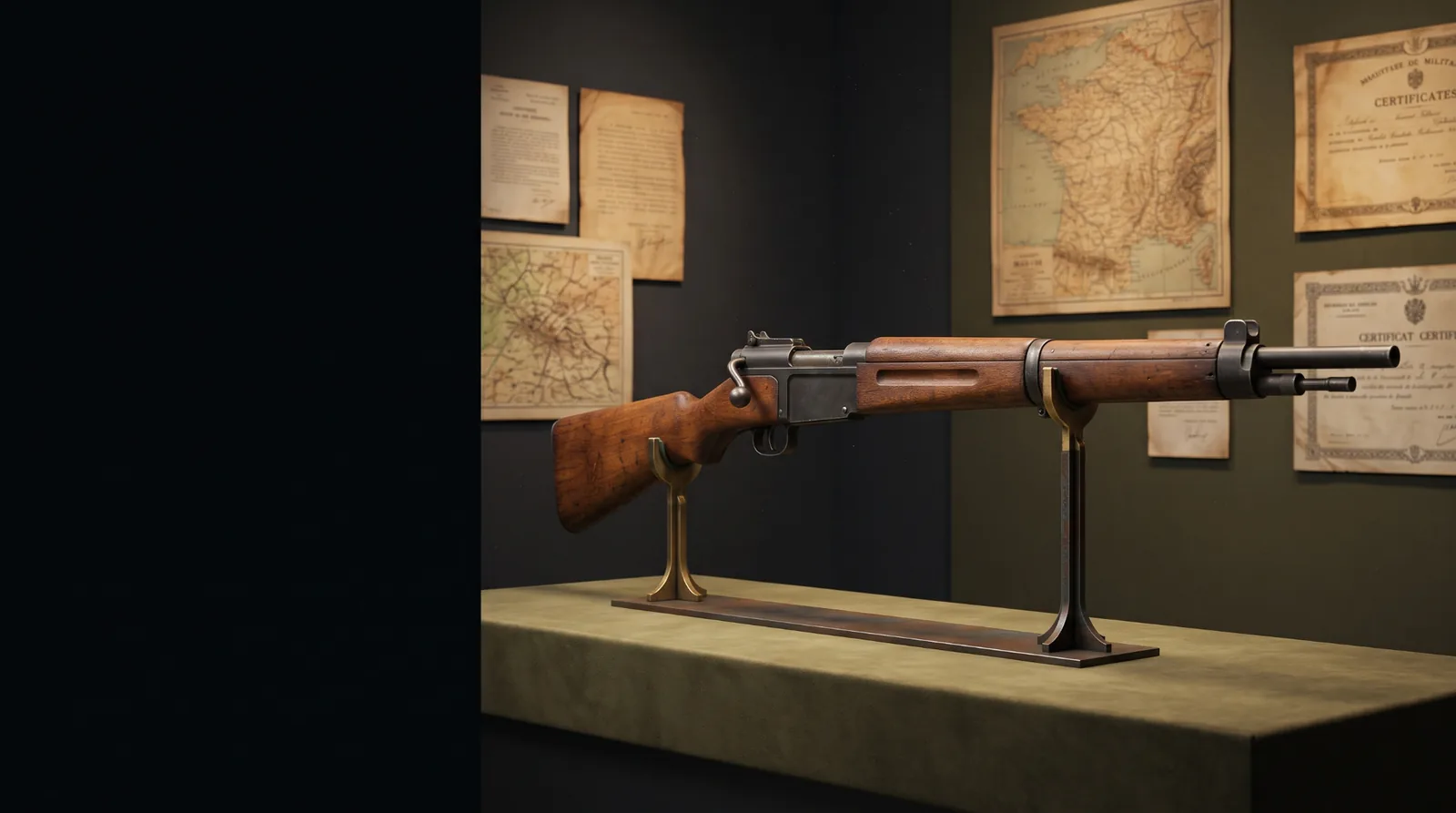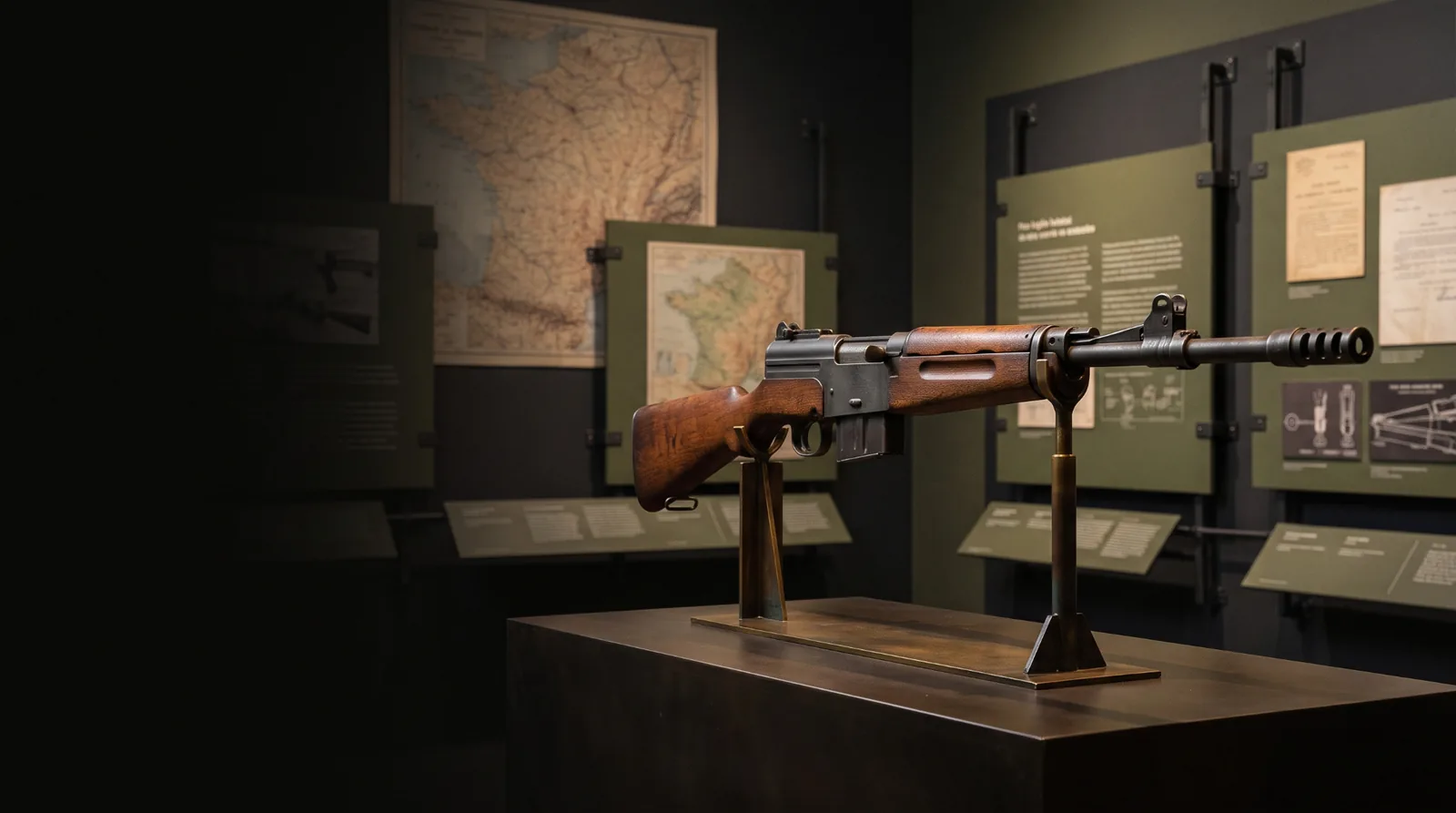
MAS-49/56 is a rifles history rooted in France. First associated with 1956, the design belongs to the wider story of french service rifles. Its history is best understood through the people, institutions and events behind its name—not as a present-day product listing.
01 / THE ORIGIN
France developed the MAS-49 family after wartime disruption, and the later 49/56 reflected postwar service requirements. The state arsenal at Saint-Étienne remained central to the story, giving the model a distinct national identity.
02 / THE HISTORICAL JOURNEY
The 49/56 served through a period in which French military operations and doctrine were changing. It preceded the FAMAS era and is especially useful for understanding continuity between prewar experimentation and late-Cold War national designs.
03 / NAMES, VARIANTS & IDENTITY
MAS-49 and MAS-49/56 are related but distinct designations; the second denotes the later update.
Names also encountered in historical catalogs and searches include MAS 49/56; MAS49/56; MAS-49; French MAS rifle. These terms are useful starting points, not proof that two photographed objects share the same maker, date, or military provenance. When reading about a particular surviving specimen, look for a documented institutional collection number, manufacturer record, or contemporary source.
04 / WHY THIS MODEL MATTERS
The rifle belongs to the wider history of French state manufacturing, not simply a list of semi-automatic service arms. Its name also captures a sequence of model revisions that collectors should date carefully.
The broader context is the history of french service rifles. Political institutions, supply contracts, and public memory often determine which firearms remain famous and which survive mainly through specialist archives. These distinctions matter more than modern rankings or unsupported claims of superiority.
Read the expanded historical research file →
THE HISTORICAL RESEARCH FILE
France’s MAS-49/56 is best understood as a postwar national service-rifle update and a chapter in the Saint-Étienne manufacturing story.
01 / French self-loading continuity after 1945
The MAS-49/56 belongs to a French line of postwar self-loading service rifles associated with Manufacture d'Armes de Saint-Étienne. Specialist historical work traces development through earlier French experimentation and the MAS-49 before the 49/56 revision. The designation should be explained rather than reduced to a mysterious two-number code: the name identifies a later iteration within the MAS service-rifle history. Reporting about its acceptance places the model in the mid-1950s, before France's eventual movement toward the FAMAS family. [1]
The more important research story is institutional continuity. French arsenals did not begin thinking about a self-loading service arm only after the Second World War; earlier programs, including the RSC, provide context across several decades of changing requirements.
02 / The historical place of the 49/56
Readers often encounter the MAS-49/56 in the same search results as MAS-36, MAS-49 and FAMAS F1. They are not alternate names for a single object. The MAS-36 is a distinct earlier bolt-action service rifle; the MAS-49 is a direct predecessor to the 49/56; FAMAS belongs to a later national transition. The differences are historical and administrative even before any description of physical form. The article can therefore offer a concise names-and-eras guide, which makes it useful to readers sorting photographs and museum records. [2]
Period articles assign formal mid-1950s dates to the 49/56, but exact service-scale claims should be checked against original French army documentation. Modern enthusiast sources are helpful pointers, not military acceptance orders.
03 / Building an evidence-based French family tree
This biography should be a bridge between the RSC M1917 and the FAMAS F1 pages, allowing visitors to navigate national continuity without assuming direct one-to-one design inheritance. The broader French story also includes state arsenals, colonial-era service and postwar industrial policy, all of which require careful contextualization rather than simplistic technical rankings. A museum-style image might create the right atmosphere, but a dated, accessioned original is needed to establish a variant's exact configuration. [1]
The next round of archival research should gather French official nomenclature, dated acceptance records and factory inventories. Those documents can resolve precisely how and when the MAS-49/56 moved from development into service and what later stock records reveal.
QUICK REFERENCE QUESTIONS
Is MAS-49/56 another name for MAS-36?
No. MAS-36 belongs to a different, earlier French rifle program.
What does the 49/56 label indicate?
It distinguishes the revised MAS-49/56 within France’s postwar MAS service-rifle lineage.
THE NEXT ARCHIVAL QUESTION
Obtain official French acceptance and depot documentation to verify service milestones and variants.
Editorial status: sourced historical research draft, not a completed archival verification of all marks, factory totals or service claims. Generated museum artwork is illustrative and not evidence of an authenticated surviving specimen.
THE HISTORICAL TIMELINE
Earliest major introduction or designation associated with this record
The defining historical setting for the model's service and reputation
Variants, national service histories, and museum documentation add important context
Preserved as part of military, sporting or industrial-design history
COMMON HISTORY QUESTIONS
What country did the MAS-49/56 originate in?
The design's principal origin is France. This is an origin label, not a claim that every later example was manufactured in the same country.
When was the MAS-49/56 introduced?
1956 is the principal milestone used for this record. Prototype dates, military adoption, production, and later models may differ; always check which event a secondary source is dating.
What other names are associated with it?
Common search terms include MAS 49/56; MAS49/56; MAS-49; French MAS rifle. They may encompass nicknames, related service designations, or model-family references; consult primary documentation before equating specific variants.
EXPLORE CONNECTED HISTORIES
These neighboring biographies help place the model in a broader national or industrial context, without implying they are mechanically identical:
SOURCES & FURTHER READING
These links are editorial starting points. Where a linked source concerns a wider model family, a particular example or variant requires its own verification. This page is a historical overview, not an instruction manual.
2 external reading sources currently listed. This biography is a historical research overview; these links are research starting points and may cover a wider model family. They are not a claim that every detail has been independently verified. Our editorial method.
- Historical source: www.americanrifleman.org ↗READING
- Additional institutional or historical reference ↗READING
- Small Arms Review — French semiautomatic rifle history ↗DOCUMENTED SOURCEEvidence scope: Specialist historical survey connecting MAS development periods.
- American Rifleman — MAS-49/56 historical introduction ↗DOCUMENTED SOURCEEvidence scope: Secondary date and model context; technical portions are not reproduced.
EDITORIAL EXPANSION: NOVEMBER 2026 · HISTORICAL STUDY · NO SALES, TRANSFERS OR MODIFICATION GUIDANCE.