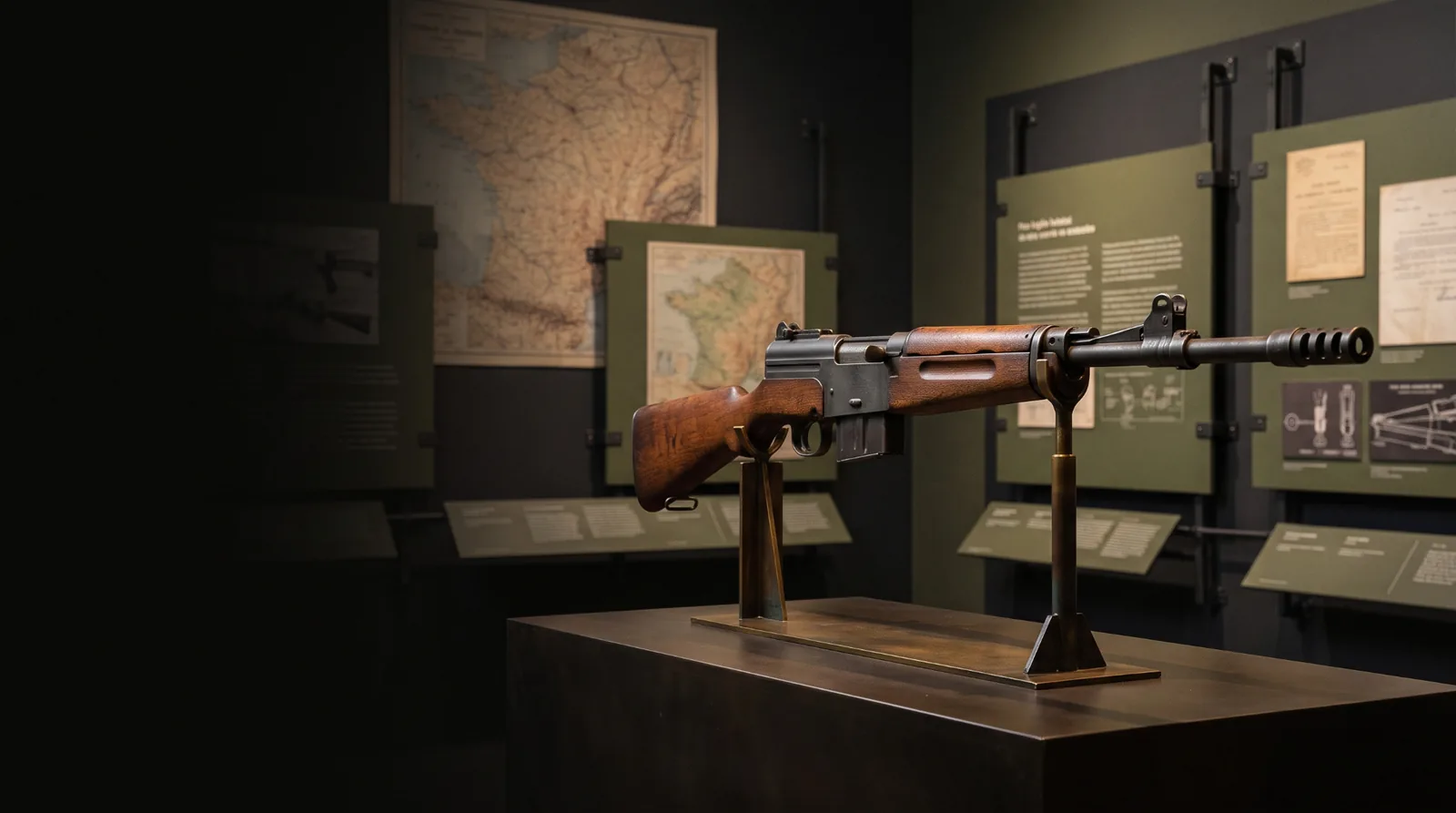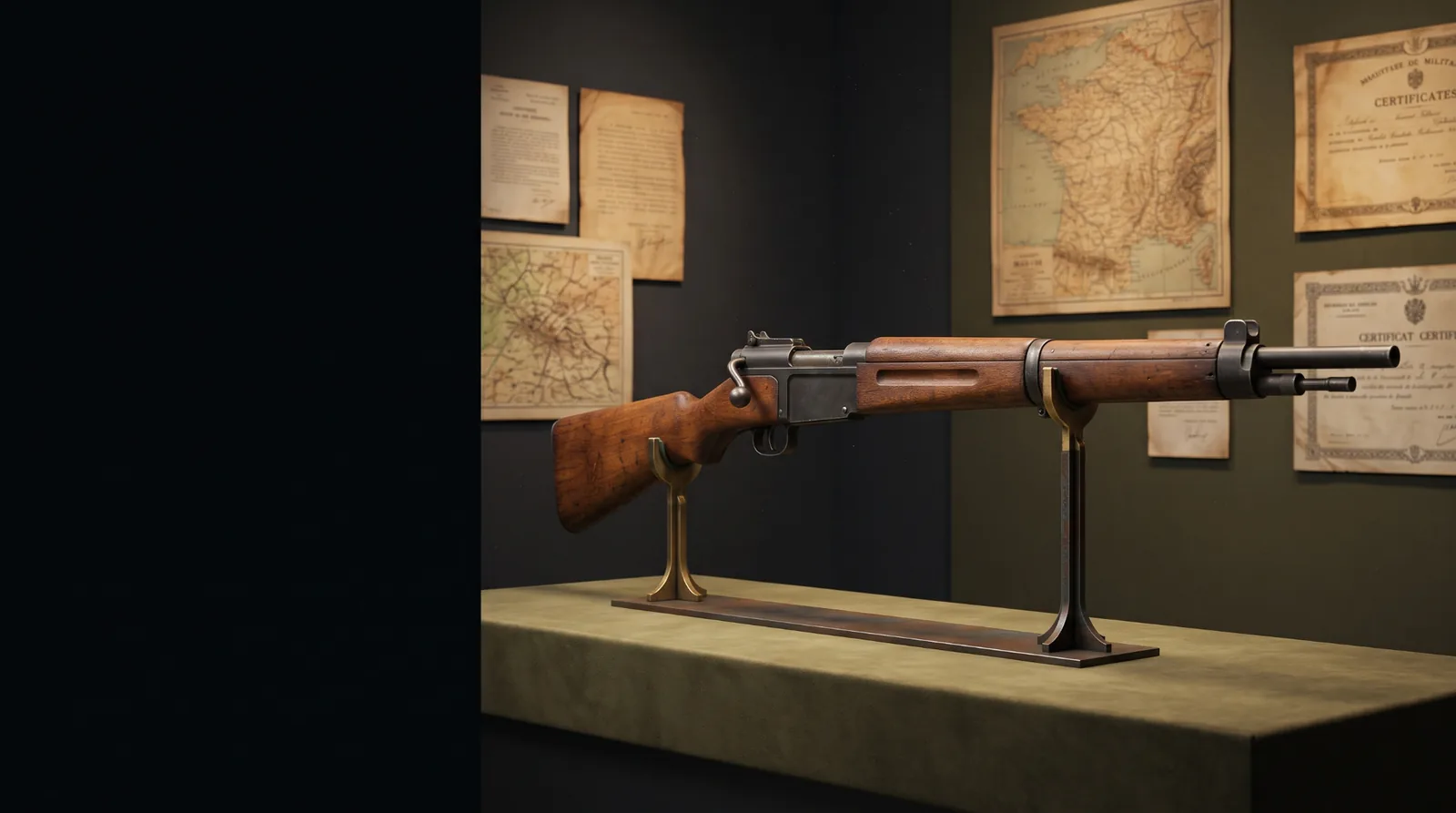
MAS-36 is a rifles history rooted in France. First associated with 1936, the design belongs to the wider story of french service rifles. Its history is best understood through the people, institutions and events behind its name—not as a present-day product listing.
01 / THE ORIGIN
When France adopted the MAS-36, many armies were thinking about self-loading infantry rifles, yet industrial and financial realities made the bolt-action rifle a practical state choice. The MAS-36 is thus a product of timing as much as of design.
02 / THE HISTORICAL JOURNEY
It entered a period defined by the Second World War, occupation, liberation, and postwar imperial conflicts. The national context changed repeatedly while the design continued in service and later in collections.
03 / NAMES, VARIANTS & IDENTITY
MAS-36 and MAS-49/56 belong to different generations of French rifle programs; they are not alternate names for the same firearm.
Names also encountered in historical catalogs and searches include MAS 36; MAS-36 rifle; French MAS 36. These terms are useful starting points, not proof that two photographed objects share the same maker, date, or military provenance. When reading about a particular surviving specimen, look for a documented institutional collection number, manufacturer record, or contemporary source.
04 / WHY THIS MODEL MATTERS
A history of the MAS-36 illustrates how procurement schedules and the lifespan of state arsenals rarely line up neatly with assumptions about technological progress.
The broader context is the history of french service rifles. Political institutions, supply contracts, and public memory often determine which firearms remain famous and which survive mainly through specialist archives. These distinctions matter more than modern rankings or unsupported claims of superiority.
THE RESEARCH DOSSIER
The MAS-36 and France’s interwar infantry transition. This supplemental research section separates sourced historical context from model-family interpretation and questions requiring object-level proof.
01 / An interwar national project
The MAS-36 belongs to France's effort to modernize its infantry arms during the interwar period. Its 1936 designation places the design within a broader reorganization of French military equipment, years before France's later FAMAS story. The Manufacture d'Armes de Saint-Étienne name is itself an important historical signal: national arsenals were central to the country's procurement and industrial strategy. Readers should resist treating the rifle simply as a “World War II gun.” The period in which a type was conceived can be different from the conflict in which surviving examples became familiar.
02 / Object evidence and nomenclature
The Australian War Memorial catalogs a French MAS-36 rifle and records receiver markings that identify it as a specific example. That is the right kind of reference for a museum encyclopedia because it shows what can be verified about one object rather than repeating a generic family label. “MAS-36,” “MAS Mle 36” and later related names can lead to different specimens or modifications, and careless use of an umbrella name obscures chronology. The country, maker and inventory data associated with a particular collection object should be kept separate from the historical summary for the whole model.
03 / The complexity of French service
French small-arms history spans the Third Republic, World War II, postwar conflicts and renewed domestic production. The MAS-36 belongs in that long sequence, so a narrow wartime anecdote cannot explain its entire career. Museums can place the rifle beside earlier French service patterns and later self-loading systems to show industrial continuity. That perspective also counters the common assumption that a bolt-action weapon must have been designed with nineteenth-century doctrine in mind. A rifle's action type alone does not explain the political or financial constraints of its adoption.
04 / Research still to be done
A fuller entry would benefit from period French military instructions, state procurement records and museum catalogs with exact variant identifiers. We have deliberately not attached unsupported claims about total manufacture or every overseas conflict to this general page. For now, the Australian War Memorial object and French industrial context provide a responsible framework: the MAS-36 was a documented interwar national service rifle whose particular surviving specimens require independent provenance.
Evidence note. Manufacturer sources establish corporate chronology, while museum catalog entries document particular objects. Historical journalism provides context. The linked records do not verify the provenance or exact construction of our AI illustrations.
THE HISTORICAL TIMELINE
Earliest major introduction or designation associated with this record
The defining historical setting for the model's service and reputation
Variants, national service histories, and museum documentation add important context
Preserved as part of military, sporting or industrial-design history
COMMON HISTORY QUESTIONS
What country did the MAS-36 originate in?
The design's principal origin is France. This is an origin label, not a claim that every later example was manufactured in the same country.
When was the MAS-36 introduced?
1936 is the principal milestone used for this record. Prototype dates, military adoption, production, and later models may differ; always check which event a secondary source is dating.
What other names are associated with it?
Common search terms include MAS 36; MAS-36 rifle; French MAS 36. They may encompass nicknames, related service designations, or model-family references; consult primary documentation before equating specific variants.
EXPLORE CONNECTED HISTORIES
These neighboring biographies help place the model in a broader national or industrial context, without implying they are mechanically identical:
SOURCES & FURTHER READING
These links are editorial starting points. Where a linked source concerns a wider model family, a particular example or variant requires its own verification. This page is a historical overview, not an instruction manual.
2 model-focused research references documented in the November 2026 editorial pass. Sources are cited for the claims and time periods described, not as proof of every surviving variant. Review the editorial standards.
- Saint-Étienne museum — military arms gallery ↗RESEARCHInstitutional industrial context for French arms
- Historical source: www.awm.gov.au ↗READING
REFERENCE DOSSIER EXPANDED: NOVEMBER 21, 2026 · HISTORICAL RESEARCH · NO SALES OR OPERATING GUIDANCE.