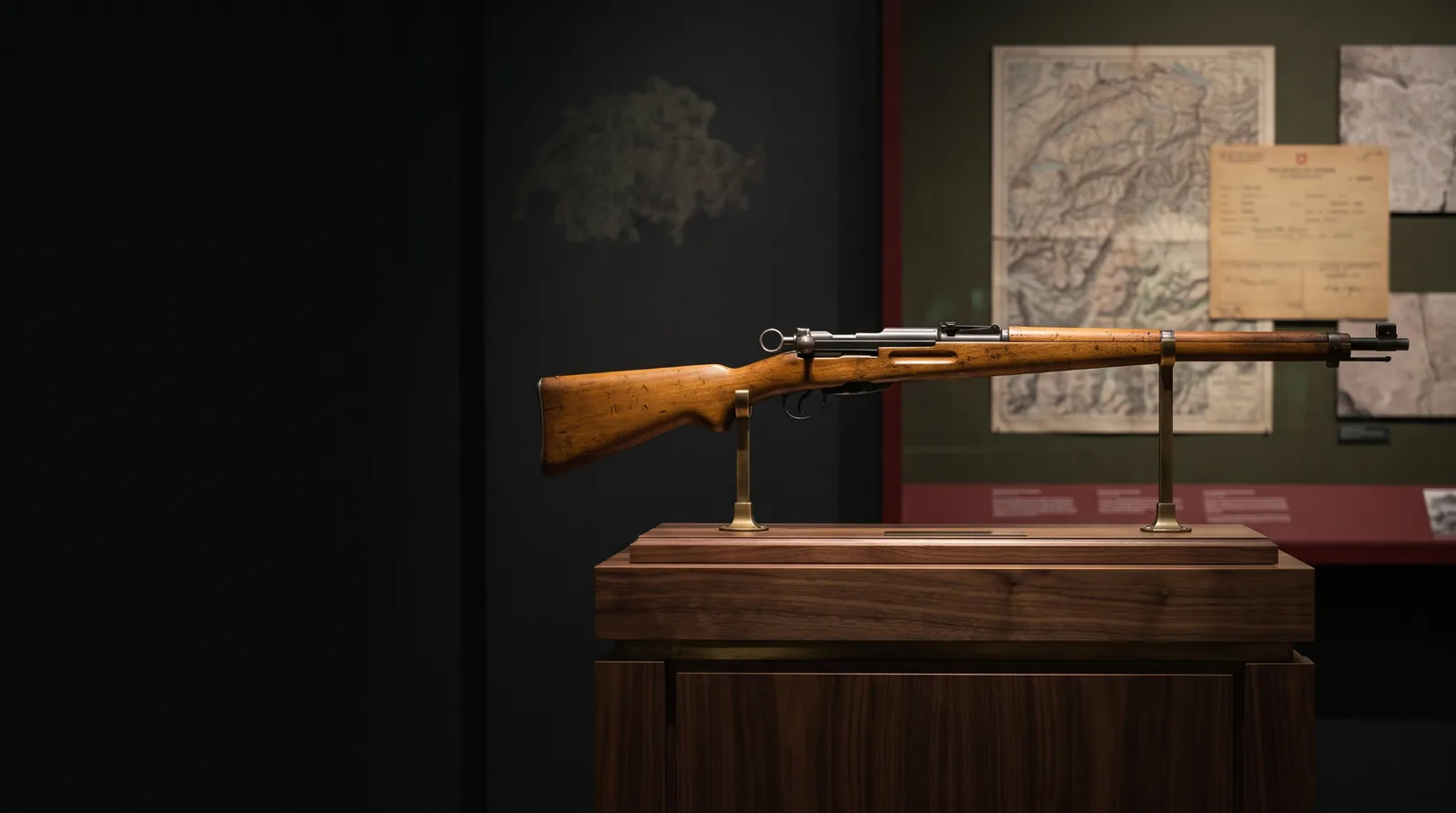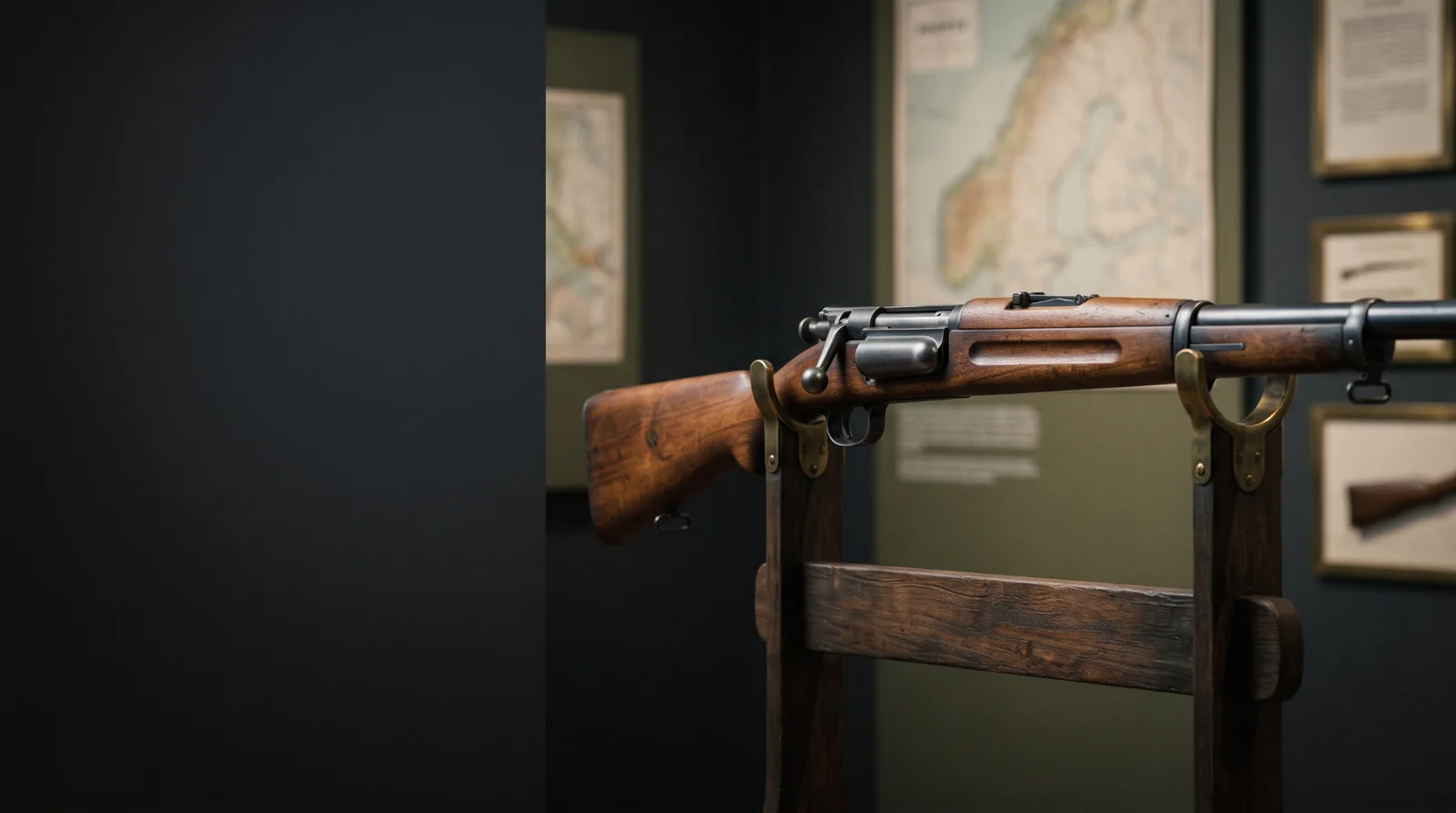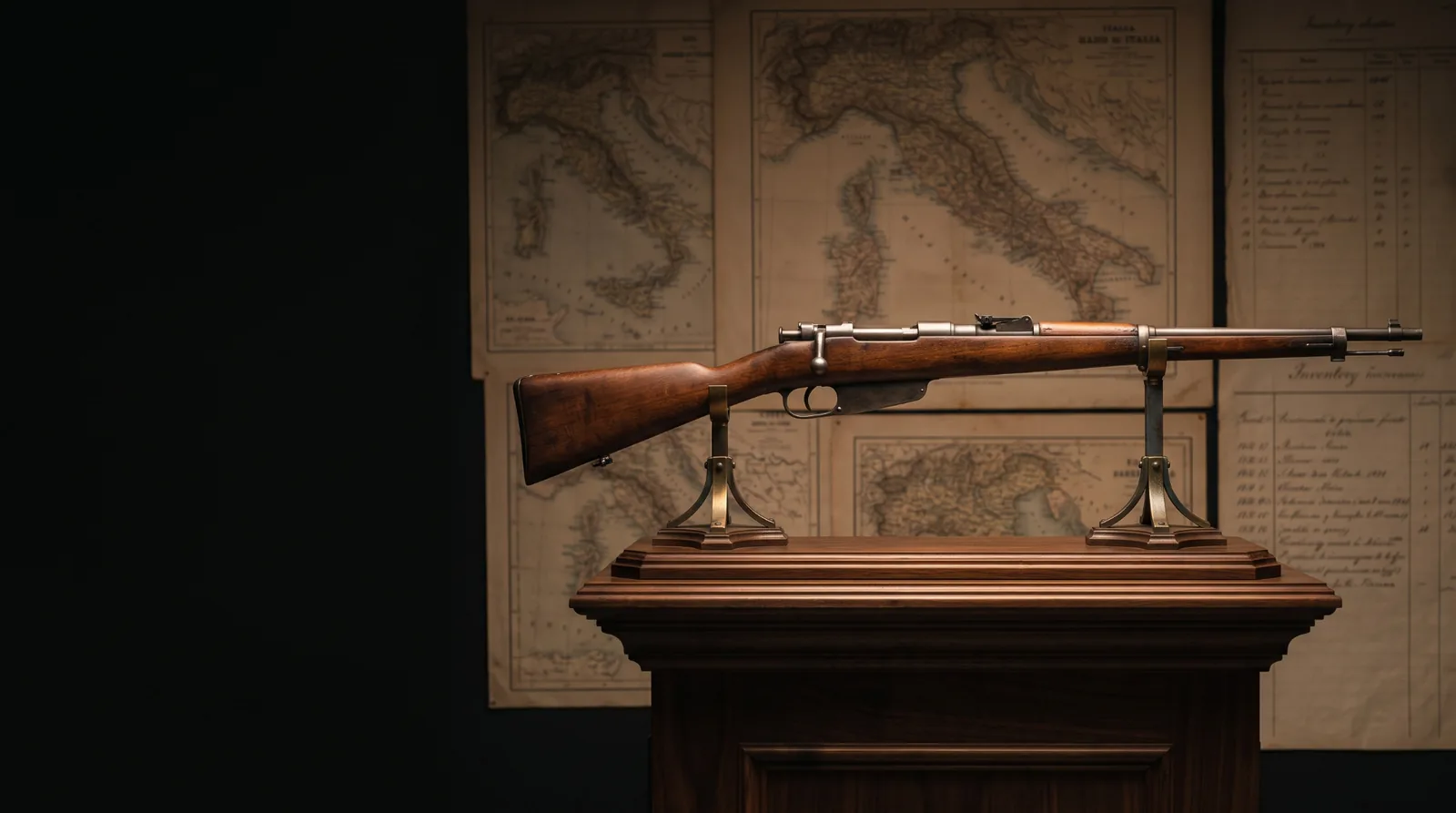
Carcano Model 91 is a rifles history rooted in Italy. First associated with 1891, the design belongs to the wider story of national service rifles. Its history is best understood through the people, institutions and events behind its name—not as a present-day product listing.
01 / THE ORIGIN
Italy adopted the Modello 1891 family during an era when national armies were standardizing newer infantry rifles. It became a long-running foundation for a wide range of Italian military patterns and abbreviations.
02 / THE HISTORICAL JOURNEY
Across decades, the Carcano name became associated with rifles and carbines that varied significantly in context, configuration, and period. Italian military history across two world wars cannot be captured through the biography of a single specimen.
03 / NAMES, VARIANTS & IDENTITY
Carcano M91, M91/24, and TS carbines are not interchangeable terms; the suffixes can signal specific historical variants.
Names also encountered in historical catalogs and searches include Carcano M91; Carcano 1891; Modello 91. These terms are useful starting points, not proof that two photographed objects share the same maker, date, or military provenance. When reading about a particular surviving specimen, look for a documented institutional collection number, manufacturer record, or contemporary source.
04 / WHY THIS MODEL MATTERS
Its legacy is the endurance of a family rather than the mythology of one model. Historical accuracy depends on recognizing original models, later modifications, and carbine designations.
The broader context is the history of national service rifles. Political institutions, supply contracts, and public memory often determine which firearms remain famous and which survive mainly through specialist archives. These distinctions matter more than modern rankings or unsupported claims of superiority.
Read the expanded historical research file →
THE HISTORICAL RESEARCH FILE
Italy’s Carcano Model 1891 belongs to the long life of a national military designation, arsenals and variant naming rather than to a single frozen 1891 specimen.
01 / Model 1891 versus the Carcano family
The Carcano name usually refers to a family of Italian service rifles associated with the Model 1891. The designation matters because it names a historical military standard rather than every later length, purpose or manufacturing variation. Royal and state arsenals produced and altered Carcano-family arms across an extended period that included both world wars. An encyclopedia should distinguish the original long rifle from subsequent carbines and later service variants, rather than relying on stock length or a familiar surname in an image caption. [1]
Italy's national manufacture is central to the narrative: the rifle's biography includes the institutions that produced it, the changing demands of military service and the way successive wartime periods forced the continued use or adaptation of older stocks.
A particularly valuable primary collection record is the Italian Ministry of Culture's catalog entry for a Model 1891 manufactured at Terni in 1896. This gives the article a dated, place-specific anchor: one documented specimen, not a universal year or arsenal for the whole family. The Australian War Memorial separately catalogues an Italian Army Carcano M1891. Both records make better reference points than a generic modern summary of the brand.
02 / Why national and model labels diverge
Collectors and general readers encounter 'Carcano M91,' 'Modello 1891,' 'M91/38' and other related labels. Those terms do not necessarily identify equivalent objects; they may reflect original model adoption, later modification or distinct military subfamilies. An archive should provide an accessible family tree that explains which title the page actually covers and where a specialized variant deserves its own biography. In addition, items observed in collections may have been reworked during service or after the war. A surviving object can be historically authentic while no longer matching its original appearance. [2]
Period Italian manuals and arsenal records would add considerably more value than simply repeating an approximate world-war service range. Until those are checked, claims about production totals or particular national issue should be qualified.
03 / The value of specimen-level comparison
The Carcano is a natural link to the Mauser Gewehr 98 and Arisaka Type 99 entries, not because the rifles are the same system but because their national services produced complex families over time. Users benefit from seeing how names, dates and national factories interact. A clear comparison table could distinguish adoption, later re-designations and common naming errors without making any technical tutorial. This supports legitimate educational search intent, especially where 'Carcano 1891' and a later M91-family specimen are confused. [1]
To elevate this page beyond a first-pass draft, AllGuns needs catalogue records from Italian military museums and archival ministry sources. A photograph or AI rendering should never stand in for that missing documentation.
QUICK REFERENCE QUESTIONS
Does Carcano M91 refer to every Carcano rifle?
No. The M91 label identifies the Model 1891 lineage; later variants and reworks need their own precise designations.
Was the Carcano used only during World War I?
No. The wider Carcano family continued into the Second World War era.
THE NEXT ARCHIVAL QUESTION
Replace general institutional context with accessioned Italian museum objects and original arsenal documentation for each named variant.
Editorial status: sourced historical research draft, not a completed archival verification of all marks, factory totals or service claims. Generated museum artwork is illustrative and not evidence of an authenticated surviving specimen.
THE HISTORICAL TIMELINE
Earliest major introduction or designation associated with this record
The defining historical setting for the model's service and reputation
Variants, national service histories, and museum documentation add important context
Preserved as part of military, sporting or industrial-design history
COMMON HISTORY QUESTIONS
What country did the Carcano Model 91 originate in?
The design's principal origin is Italy. This is an origin label, not a claim that every later example was manufactured in the same country.
When was the Carcano Model 91 introduced?
1891 is the principal milestone used for this record. Prototype dates, military adoption, production, and later models may differ; always check which event a secondary source is dating.
What other names are associated with it?
Common search terms include Carcano M91; Carcano 1891; Modello 91. They may encompass nicknames, related service designations, or model-family references; consult primary documentation before equating specific variants.
EXPLORE CONNECTED HISTORIES
These neighboring biographies help place the model in a broader national or industrial context, without implying they are mechanically identical:
- Swiss K31 — Switzerland
- Krag–Jørgensen — Norway
SOURCES & FURTHER READING
These links are editorial starting points. Where a linked source concerns a wider model family, a particular example or variant requires its own verification. This page is a historical overview, not an instruction manual.
2 external reading sources currently listed. This biography is a historical research overview; these links are research starting points and may cover a wider model family. They are not a claim that every detail has been independently verified. Our editorial method.
- Historical source: www.awm.gov.au ↗READING
- Additional institutional or historical reference ↗READING
- Italian Ministry of Culture — Carcano Model 1891 specimen ↗DOCUMENTED SOURCEEvidence scope: Italian national catalogue documents a Terni-made 1896 Model 1891 specimen; this is one artifact, not the entire production series.
- Australian War Memorial — Carcano M1891 ↗DOCUMENTED SOURCEEvidence scope: Independent collection record for an Italian Army M1891 object.
EDITORIAL EXPANSION: NOVEMBER 2026 · HISTORICAL STUDY · NO SALES, TRANSFERS OR MODIFICATION GUIDANCE.