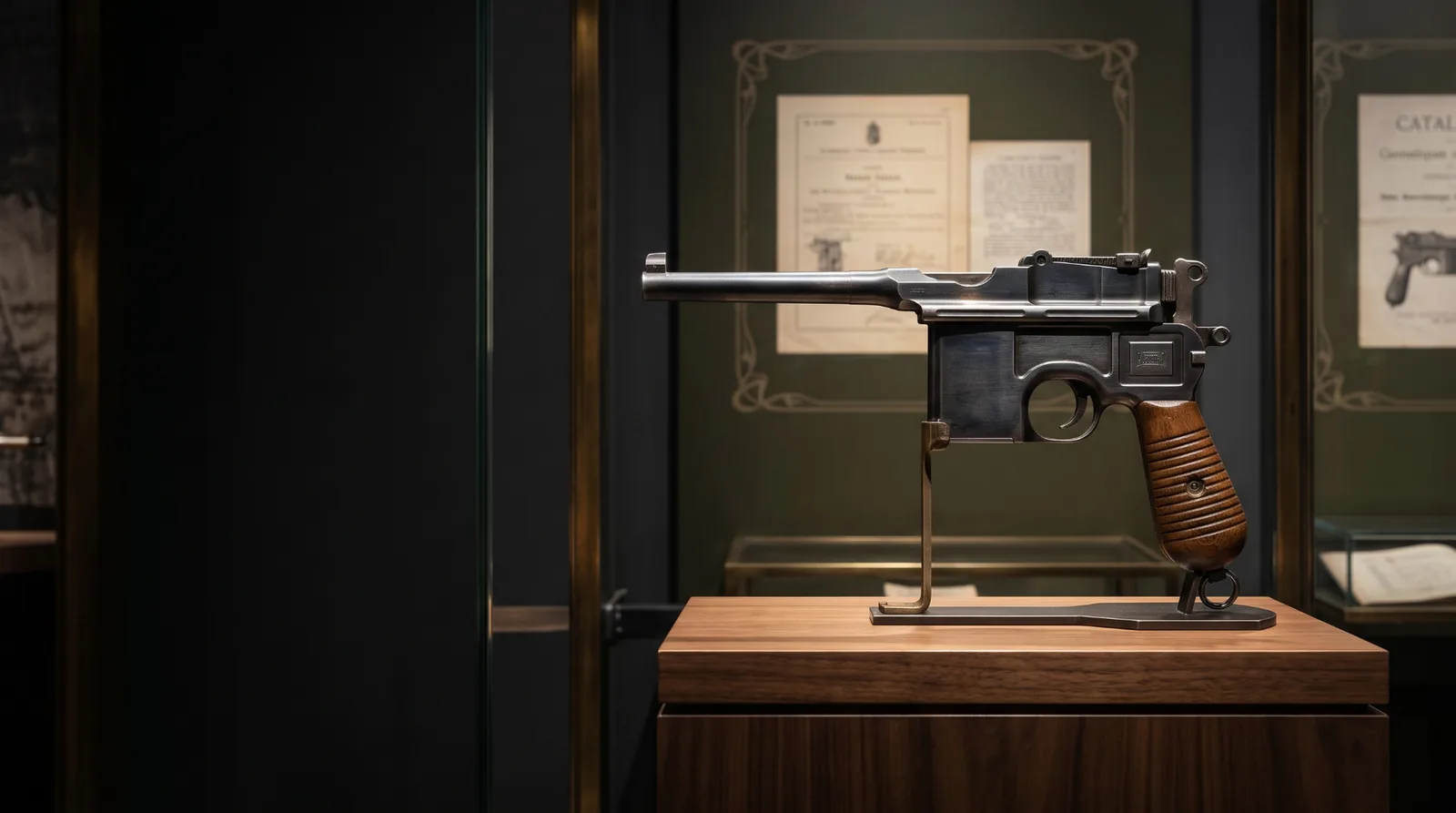
Mauser C96 is a pistols history rooted in Germany. First associated with 1896, the design belongs to the wider story of historic service pistols. Its history is best understood through the people, institutions and events behind its name—not as a present-day product listing.
01 / THE ORIGIN
The C96 appeared when self-loading pistols were still experimental objects in many markets. Its distinctive appearance made it one of the most recognizable early designs, but its actual history begins with late-nineteenth-century industrial development.
02 / THE HISTORICAL JOURNEY
The pistol traveled through military, commercial, and export channels. Later cultural appearances in cinema and fiction may be better known than the complicated variations that collectors encounter in real archives.
03 / NAMES, VARIANTS & IDENTITY
“Broomhandle” is a common nickname for the C96 family; it is not a separate Mauser model designation.
Names also encountered in historical catalogs and searches include C96; Broomhandle Mauser; Mauser 1896. These terms are useful starting points, not proof that two photographed objects share the same maker, date, or military provenance. When reading about a particular surviving specimen, look for a documented institutional collection number, manufacturer record, or contemporary source.
04 / WHY THIS MODEL MATTERS
A careful C96 biography separates early engineering history, international sales, national service, and twentieth-century popular culture. Its nickname says little about a specific specimen’s date.
The broader context is the history of historic service pistols. Political institutions, supply contracts, and public memory often determine which firearms remain famous and which survive mainly through specialist archives. These distinctions matter more than modern rankings or unsupported claims of superiority.
THE RESEARCH DOSSIER
The distinctive early self-loading pistol across imperial and colonial histories. This supplemental research section separates sourced historical context from model-family interpretation and questions requiring object-level proof.
01 / A recognizable shape from the 1890s
The Mauser C96 belongs to the first generation of commercially consequential self-loading pistols in the late nineteenth century. Its long, almost architectural profile and distinctive grip made it visually recognizable well beyond its original market. That visual identity should not obscure its historical role: manufacturers were testing new relationships between industrial precision, ammunition technology and the commercial promise of self-loading handguns. The C96 is therefore part of the same technological and social transition that changed how officers, civilian buyers and state institutions understood sidearms at the turn of the century.
02 / Private purchase and imperial service
The National Army Museum records a C96 specimen and notes that the design was carried by some British officers who privately purchased pistols for campaigns in Sudan and South Africa. Its account identifies Winston Churchill's use of a Mauser during the 1898 Omdurman campaign. That is a powerful example of how one specific historical association can become far more famous than a model's broader service patterns. A privately acquired officer's sidearm is not the same thing as a standard British Army issue weapon; precise writing needs to preserve that distinction.
03 / International circulation and model changes
The C96 appeared in many national and commercial settings, encouraging a complex mixture of model names and later variants. A popular label such as “broomhandle” refers to the distinctive grip but does not identify a particular factory date. Wartime, export and commercial variants deserve separate documented treatments where source material supports them. The strongest museum records include manufacturing features, dated accession histories and contextualized photographs, rather than generic claims that every surviving C96 took part in a notable conflict.
04 / A cultural afterlife that should be labeled
The Mauser's silhouette entered filmmaking, genre fiction and later visual design, turning an industrial artifact into a widely recognized cultural shape. Cultural influence is a legitimate historical topic, but a prop inspired by a C96 is not itself evidence of an original military C96 variant. AllGuns keeps the object history anchored in museum sources and treats later screen associations as reception history. This distinction helps readers separate actual firearm provenance from fictional or speculative imagery.
Evidence note. Manufacturer sources establish corporate chronology, while museum catalog entries document particular objects. Historical journalism provides context. The linked records do not verify the provenance or exact construction of our AI illustrations.
THE HISTORICAL TIMELINE
Earliest major introduction or designation associated with this record
The defining historical setting for the model's service and reputation
Variants, national service histories, and museum documentation add important context
Preserved as part of military, sporting or industrial-design history
COMMON HISTORY QUESTIONS
What country did the Mauser C96 originate in?
The design's principal origin is Germany. This is an origin label, not a claim that every later example was manufactured in the same country.
When was the Mauser C96 introduced?
1896 is the principal milestone used for this record. Prototype dates, military adoption, production, and later models may differ; always check which event a secondary source is dating.
What other names are associated with it?
Common search terms include C96; Broomhandle Mauser; Mauser 1896. They may encompass nicknames, related service designations, or model-family references; consult primary documentation before equating specific variants.
EXPLORE CONNECTED HISTORIES
These neighboring biographies help place the model in a broader national or industrial context, without implying they are mechanically identical:
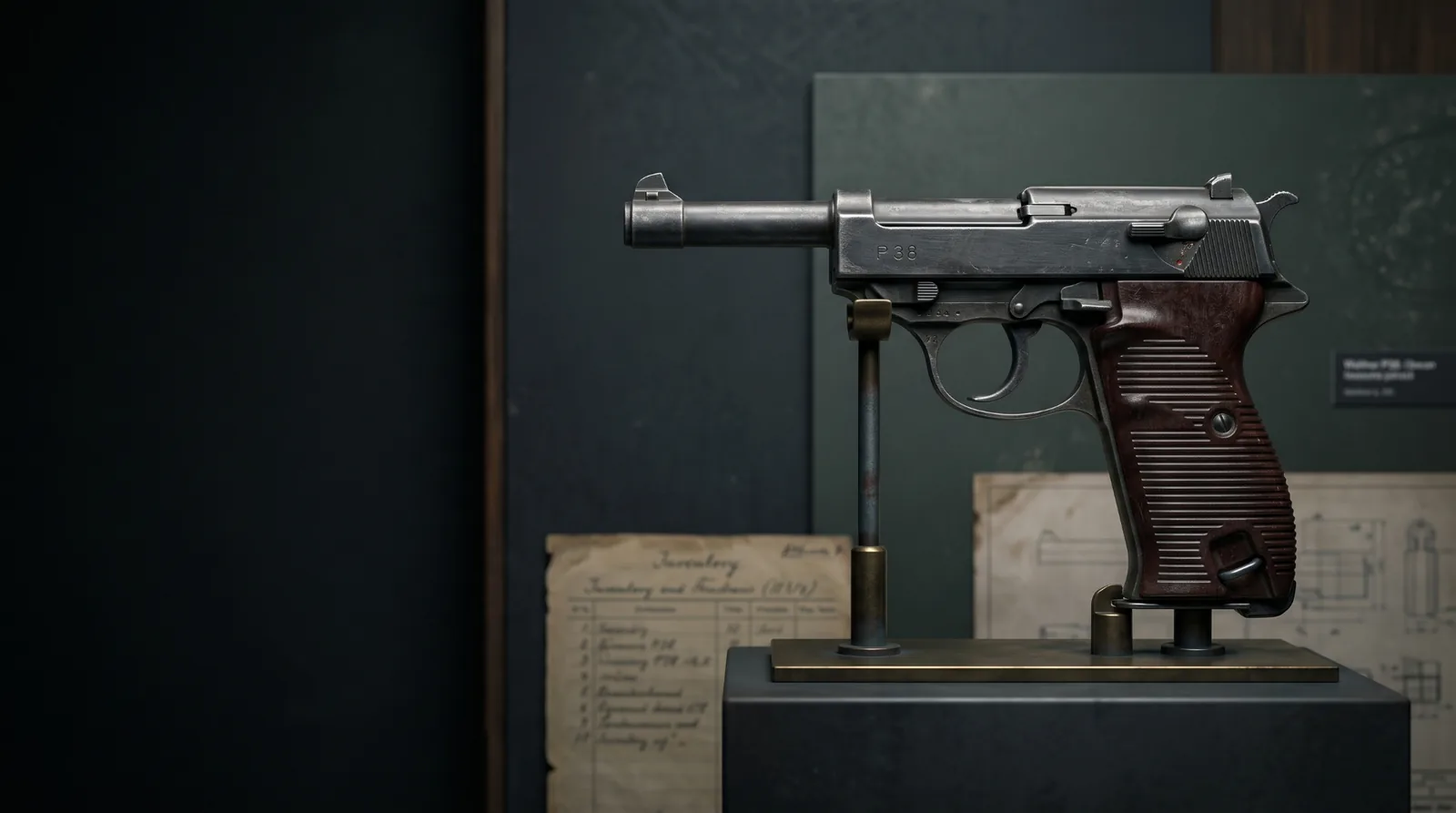
- Walther P38 — Germany
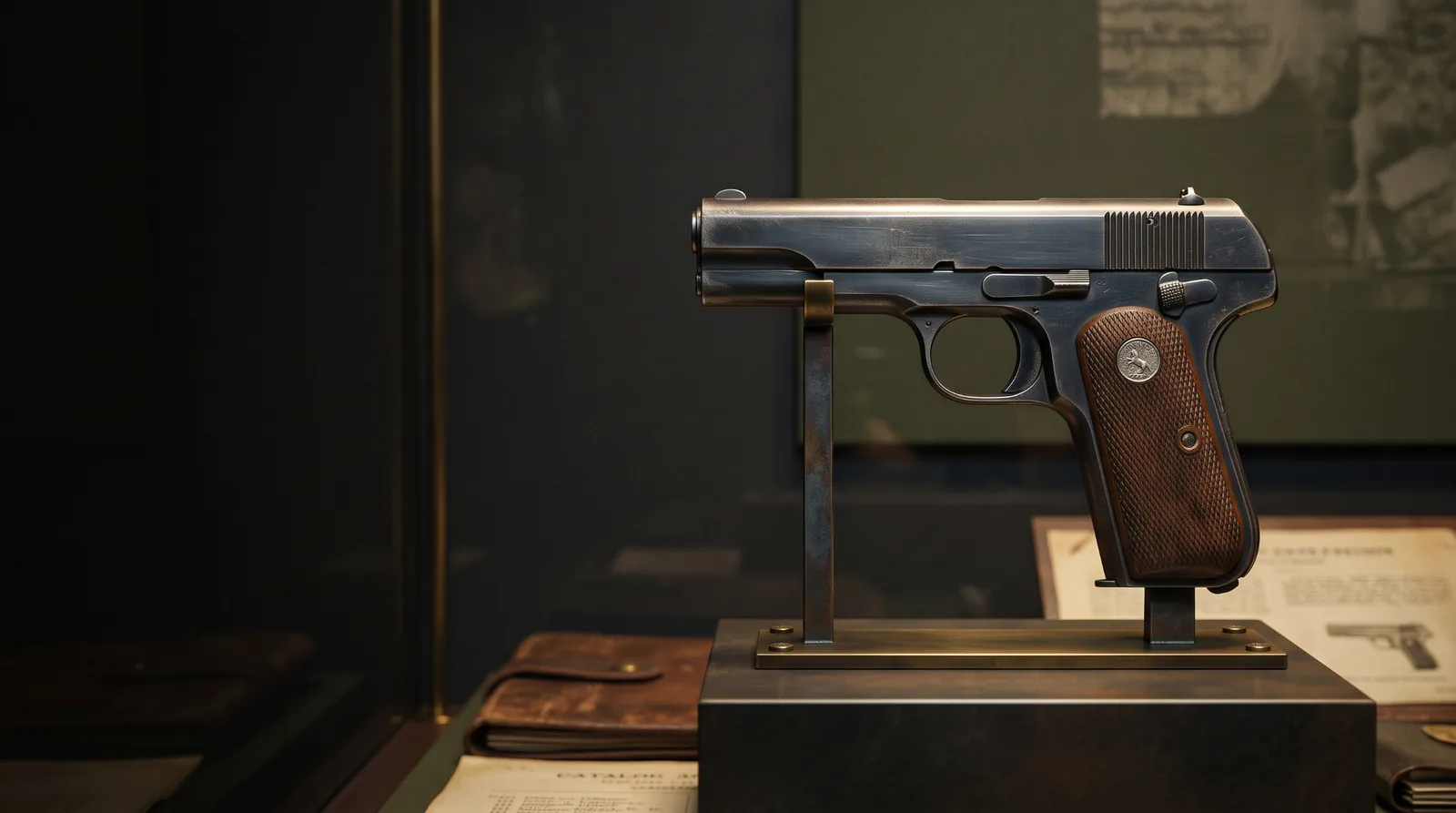
- Colt Model 1903 Pocket Hammerless — United States
SOURCES & FURTHER READING
These links are editorial starting points. Where a linked source concerns a wider model family, a particular example or variant requires its own verification. This page is a historical overview, not an instruction manual.
2 model-focused research references documented in the November 2026 editorial pass. Sources are cited for the claims and time periods described, not as proof of every surviving variant. Review the editorial standards.
- Royal Armouries — First World War small arms ↗RESEARCHMuseum treatment of Mauser and early self-loading pistols
- National Army Museum — Mauser C96 object ↗RESEARCHMuseum object with early colonial-war associations
- Historical source: www.americanrifleman.org ↗READING
REFERENCE DOSSIER EXPANDED: NOVEMBER 21, 2026 · HISTORICAL RESEARCH · NO SALES OR OPERATING GUIDANCE.