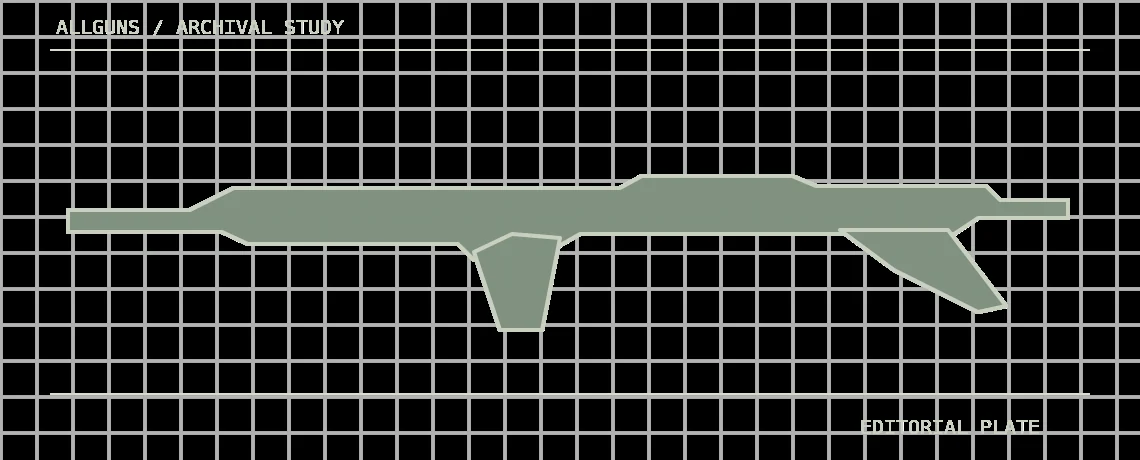
The Gewehr 98 sits at the center of one of the most influential rifle families of the industrial age. Its significance reaches beyond German service into export markets, licensed designs, and civilian sporting traditions.
01 / THE ORIGIN
Paul Mauser’s late-19th-century engineering culminated in the Model 1898 action, adopted by the German army as the Gewehr 98. Germany’s rapid industrial development and competing European military requirements framed the rifle’s arrival.
02 / THE JOURNEY
The Gewehr 98 served in the First World War, while Mauser-derived systems appeared in many countries with distinct national markings and modifications. The later Karabiner 98k became a separate, famous branch of the same broad family. Collectors often encounter the 1898 system through a bewildering range of national histories.
03 / THE LEGACY
“Mauser 98” can mean an original military rifle, a family of actions, or a later sporting tradition. The biography of the original Gewehr 98 is therefore inseparable from the industrial standard that outlived its first uniform.
THE HISTORICAL TIMELINE
German adoption
First World War service
Later 98-family designs rise
An enduring historical benchmark
SOURCES & READING
These are starting points for independent research. Where sources cover a broader family, model-specific details should be checked against period records.
- Royal Armouries collections ↗REFERENCE
- Library of Congress military-rifle guide ↗REFERENCE
LAST EDITORIAL REVIEW: NOVEMBER 2026 · HISTORICAL SUMMARY · NO BUY/SELL CONTENT.