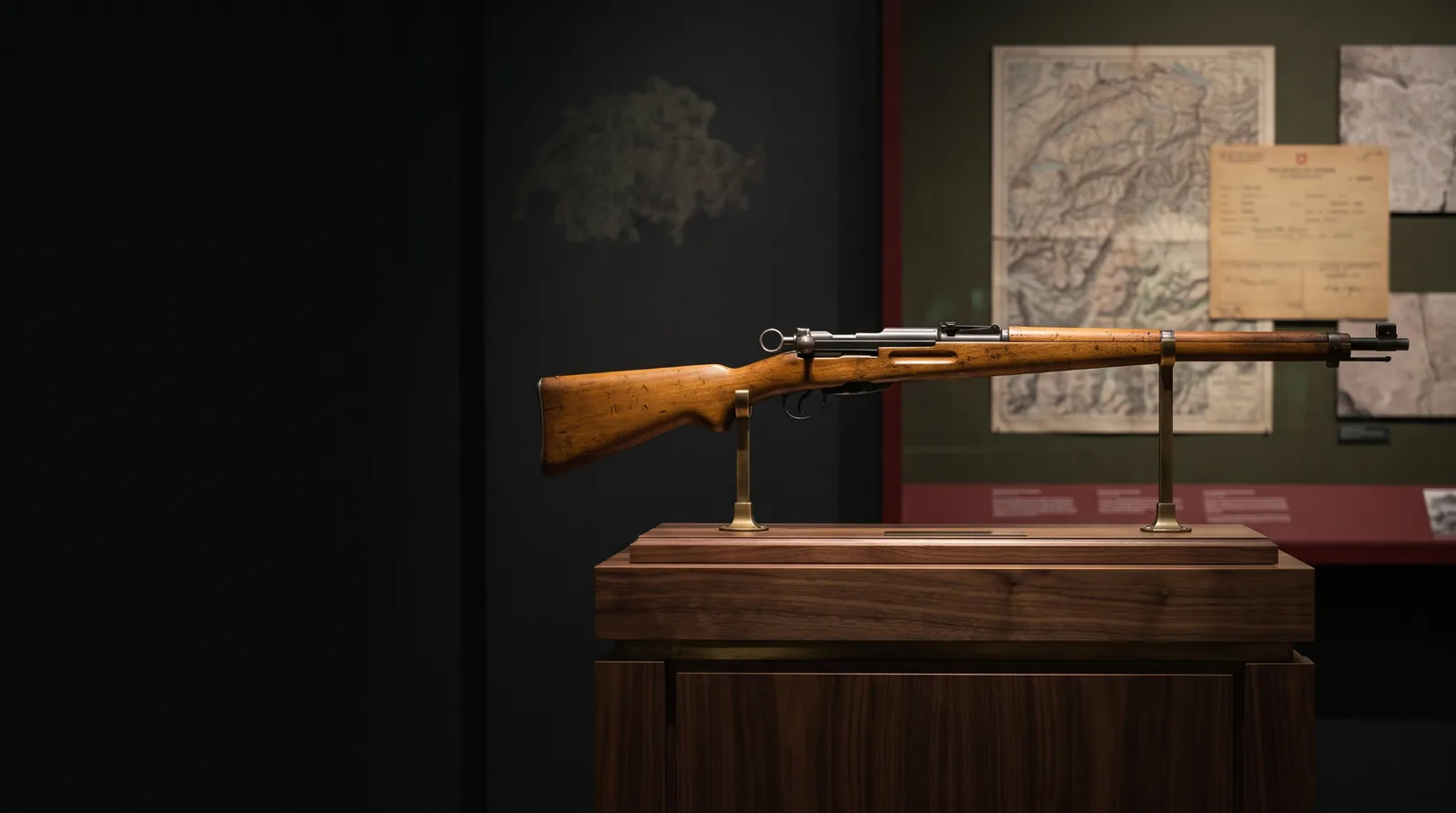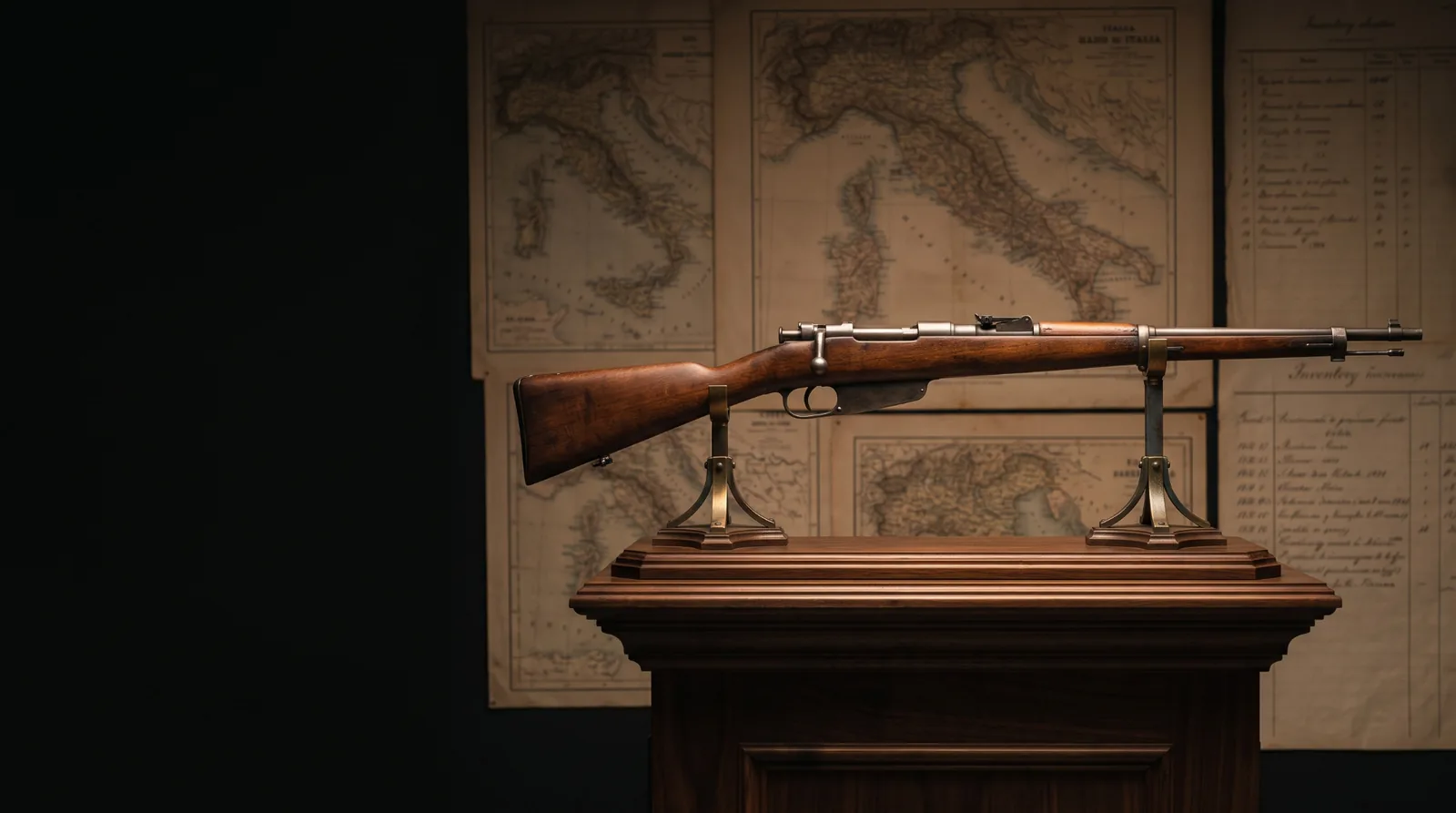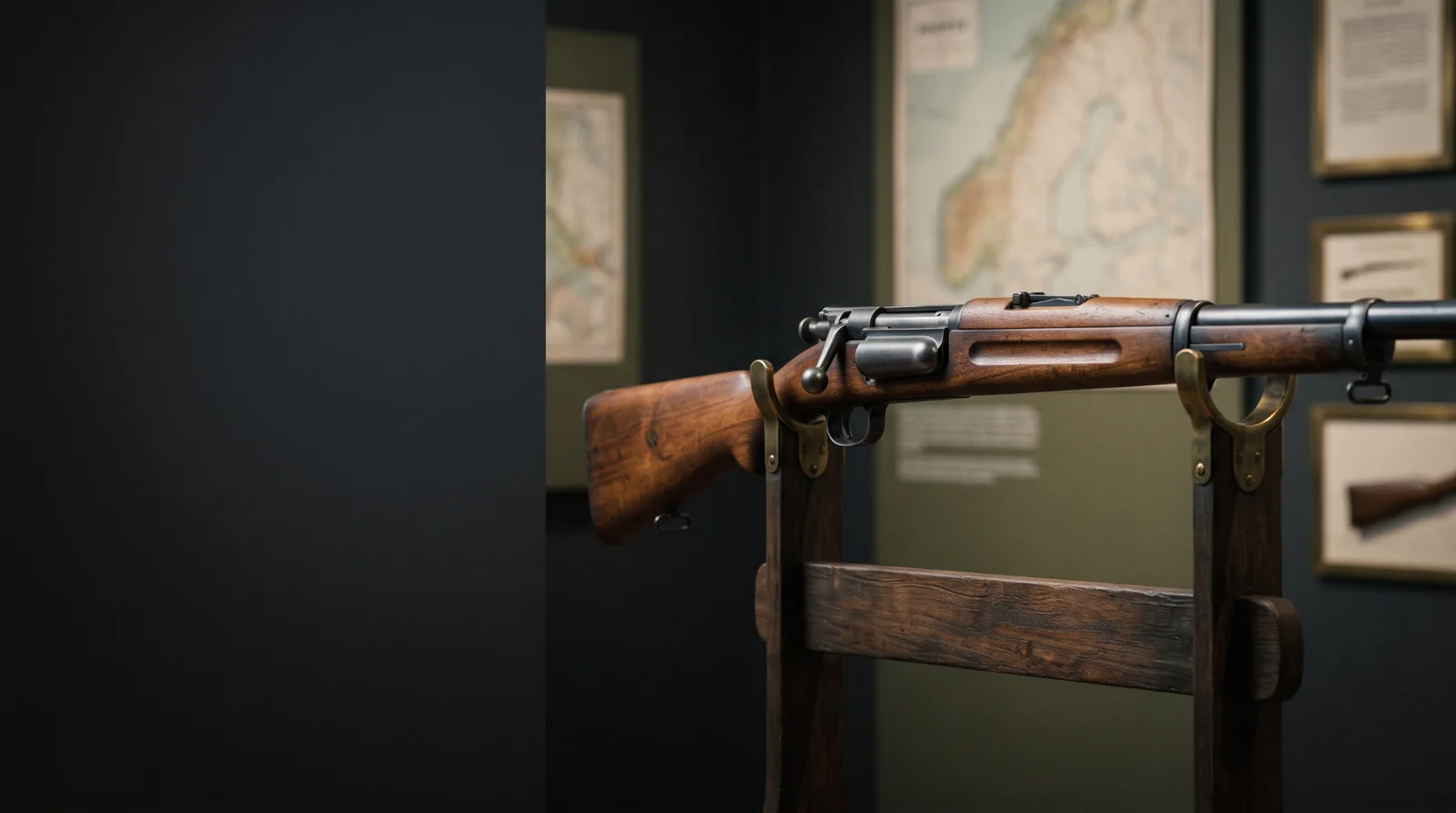
Krag–Jørgensen is a rifles history rooted in Norway. First associated with 1894, the design belongs to the wider story of national service rifles. Its history is best understood through the people, institutions and events behind its name—not as a present-day product listing.
01 / THE ORIGIN
Norwegian designers Ole Herman Johannes Krag and Erik Jørgensen gave their names to a rifle family adopted in different forms by more than one nation. It is an unusual example of a smaller country’s design entering wider international military history.
02 / THE HISTORICAL JOURNEY
Norwegian, Danish, and United States service experiences are separate chapters. Their models should be compared through their procurement and arsenal records instead of treated as the same standardized issue rifle.
03 / NAMES, VARIANTS & IDENTITY
The U.S. Krag and Norwegian Krag are related by design lineage but differ in adoption history and model designation.
Names also encountered in historical catalogs and searches include Krag Jorgensen; Norwegian Krag; U.S. Krag. These terms are useful starting points, not proof that two photographed objects share the same maker, date, or military provenance. When reading about a particular surviving specimen, look for a documented institutional collection number, manufacturer record, or contemporary source.
04 / WHY THIS MODEL MATTERS
The Krag–Jørgensen challenges national shorthand in firearm collecting. A name may travel between countries while exact models and production choices do not.
The broader context is the history of national service rifles. Political institutions, supply contracts, and public memory often determine which firearms remain famous and which survive mainly through specialist archives. These distinctions matter more than modern rankings or unsupported claims of superiority.
THE RESEARCH DOSSIER
A Norwegian-origin rifle adopted and adapted beyond Scandinavia. This supplemental research section separates sourced historical context from model-family interpretation and questions requiring object-level proof.
01 / The design’s Norwegian origin
The Krag–Jørgensen family originated in Norway in the late nineteenth century and illustrates how national arms histories can travel beyond the borders of the original designers. Its compound name refers to the Norwegian design partnership, but the name covers a family whose military and manufacturing histories differ across countries. The Australian War Memorial catalogs a Norwegian Model 1894 and describes the type's role in Norwegian infantry service. That object-level evidence is a stronger foundation than a generic claim that the Krag belonged to just one nation's army.
02 / Why there is no single “Krag” record
Denmark, Norway and the United States are all central to the international Krag story, but they adopted related patterns in different circumstances. The National Firearms Museum specifically notes how the Norwegian 1894 story intersects with earlier Danish and U.S. military interest. A production or service year for one national pattern cannot simply be placed in an infobox for every Krag–Jørgensen. For a reference website, a model-family history should direct readers to distinct Norwegian, Danish and U.S. subpages as evidence accumulates, while warning against treating a museum photograph as a universal specimen.
03 / Industrial exchange as the real theme
The Krag is historically revealing because its spread occurred amid national competitions, licensed or contract manufacture and the late-nineteenth-century transition in infantry arms. The questions that matter are which government selected a particular model, where its examples were made and how it compared within its country's procurement debate. The origin country's name remains important, but manufacturing marks and institutional documents may tell a more complicated story. This makes the rifle an ideal case for the geographic filters in AllGuns: design origin and service destination are not the same metadata field.
04 / A museum record’s added value
A particular M1894 with a recorded accession history has a different evidentiary status from a stylized AI image. The museum sources linked below support the national context and existence of preserved specimens, but do not establish the markings or provenance of the page's illustration. As more records are added, the Krag page should develop into a set of separately sourced national variant histories rather than one ever-longer summary. That approach improves both historical accuracy and long-tail search quality.
Evidence note. Manufacturer sources establish corporate chronology, while museum catalog entries document particular objects. Historical journalism provides context. The linked records do not verify the provenance or exact construction of our AI illustrations.
THE HISTORICAL TIMELINE
Earliest major introduction or designation associated with this record
The defining historical setting for the model's service and reputation
Variants, national service histories, and museum documentation add important context
Preserved as part of military, sporting or industrial-design history
COMMON HISTORY QUESTIONS
What country did the Krag–Jørgensen originate in?
The design's principal origin is Norway. This is an origin label, not a claim that every later example was manufactured in the same country.
When was the Krag–Jørgensen introduced?
1894 is the principal milestone used for this record. Prototype dates, military adoption, production, and later models may differ; always check which event a secondary source is dating.
What other names are associated with it?
Common search terms include Krag Jorgensen; Norwegian Krag; U.S. Krag. They may encompass nicknames, related service designations, or model-family references; consult primary documentation before equating specific variants.
EXPLORE CONNECTED HISTORIES
These neighboring biographies help place the model in a broader national or industrial context, without implying they are mechanically identical:
- Swiss K31 — Switzerland
- Carcano Model 91 — Italy
SOURCES & FURTHER READING
These links are editorial starting points. Where a linked source concerns a wider model family, a particular example or variant requires its own verification. This page is a historical overview, not an instruction manual.
2 model-focused research references documented in the November 2026 editorial pass. Sources are cited for the claims and time periods described, not as proof of every surviving variant. Review the editorial standards.
- National Firearms Museum — Norwegian M1894 Krag ↗RESEARCHMuseum account of Scandinavian and U.S. contexts
- Australian War Memorial — Norwegian Krag M1894 ↗RESEARCHObject record and Norwegian service context
- Historical source: americanhistory.si.edu ↗READING
REFERENCE DOSSIER EXPANDED: NOVEMBER 21, 2026 · HISTORICAL RESEARCH · NO SALES OR OPERATING GUIDANCE.