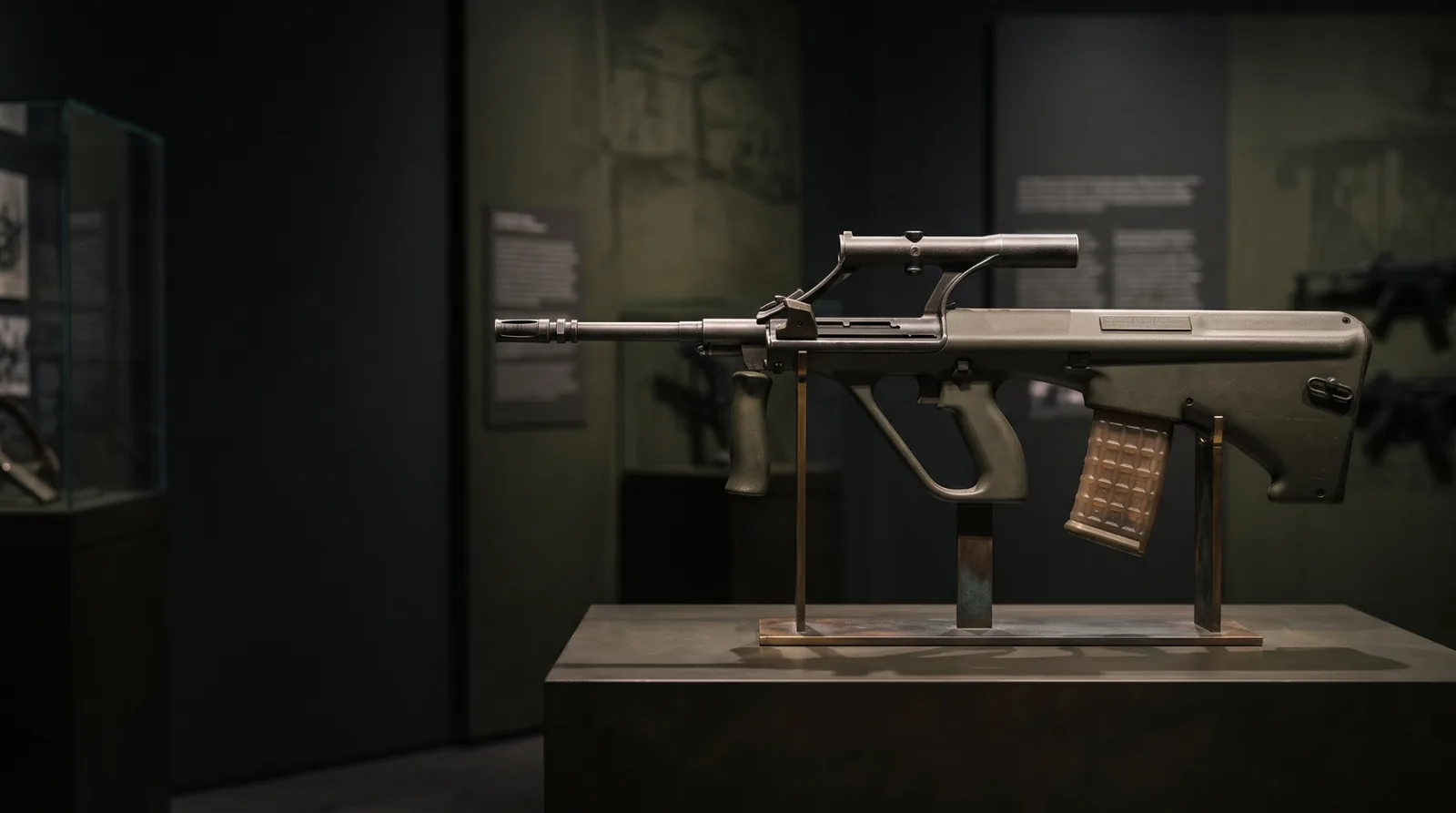
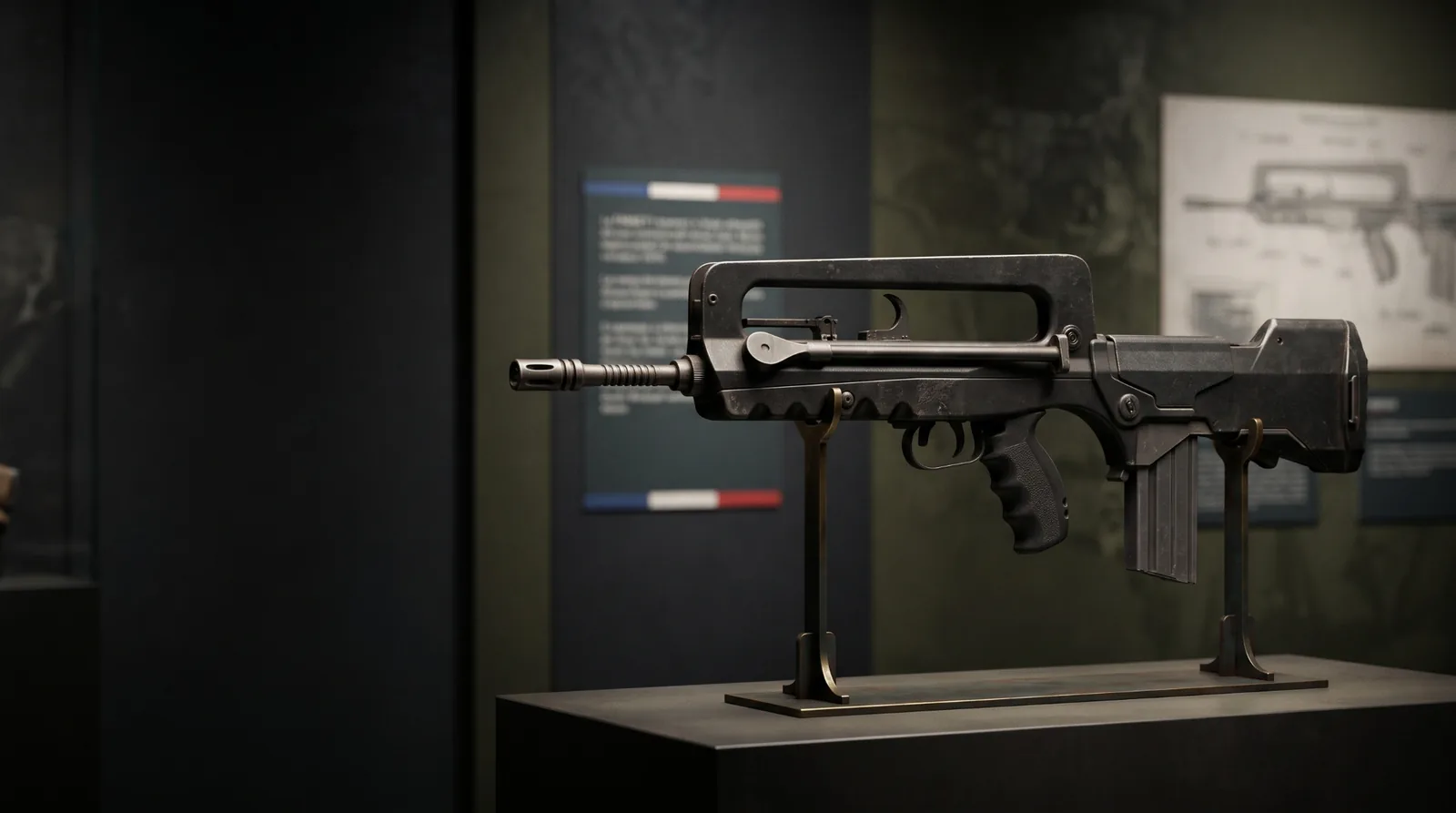
SA80 / L85A1 is a rifles history rooted in United Kingdom. First associated with 1985, the design belongs to the wider story of bullpup rifles. Its history is best understood through the people, institutions and events behind its name—not as a present-day product listing.
01 / THE ORIGIN
The SA80 program was shaped by decades of British experimentation and the move toward a new service rifle family. The L85A1 entered service during a period when many nations were weighing compact layouts and evolving logistics.
02 / THE HISTORICAL JOURNEY
Early criticism and later modernization became central to the public story. The distinction between L85A1, L85A2 and later updates is part of the historical record, not a minor collector detail.
03 / NAMES, VARIANTS & IDENTITY
SA80 names a broader program; L85A1 and L85A2 identify different stages of the rifle’s service history.
Names also encountered in historical catalogs and searches include SA80; L85; L85A1; L85A2. These terms are useful starting points, not proof that two photographed objects share the same maker, date, or military provenance. When reading about a particular surviving specimen, look for a documented institutional collection number, manufacturer record, or contemporary source.
04 / WHY THIS MODEL MATTERS
Its biography teaches a broader lesson about procurement: a weapon’s reputation can change as institutions invest in revisions, training, and support. Historical explanation is more useful than a simple good-or-bad verdict.
The broader context is the history of bullpup rifles. Political institutions, supply contracts, and public memory often determine which firearms remain famous and which survive mainly through specialist archives. These distinctions matter more than modern rankings or unsupported claims of superiority.
THE RESEARCH DOSSIER
The British SA80 program and the difference between L85A1 and later models. This supplemental research section separates sourced historical context from model-family interpretation and questions requiring object-level proof.
01 / SA80 is a program; L85A1 is a designation
The name SA80 refers to a British small-arms program, not an unchanging individual firearm. The L85A1 is a particular service-rifle version of that program. The National Army Museum notes that SA80 versions have served as standard British combat arms since 1985 and catalogs individual L85A1 objects from the late 1980s and around 1990. That institution's language provides a better framework than an online summary that mixes every SA80 variant into one specification. The original L85A1 belongs to the procurement and design decisions of the 1980s; later A2 and A3 histories must be distinguished from it.
02 / Why the early controversies matter
The SA80's public reputation has long included criticism of early service reliability and later revisions. A proper encyclopedia article should not merely repeat a nickname or claim that the rifle was “fixed”: the reader needs a chronological distinction between original procurement, early field reports, investigation and later institutional changes. Documentation of a surviving L85A1 is strong evidence for the early configuration, but a modern photograph of an updated rifle cannot establish details of the 1980s original. For contentious performance claims, the preferred future sources are dated official tests, parliamentary inquiries and published institutional repair records.
03 / Industrial and organizational histories intersect
The SA80 story also contains a British manufacturing and government-contracting history. Discussions of why its layout was selected are inseparable from broader arguments about domestic production, service standards and equipment modernization in the late Cold War. These are historical questions, not recommendations about present-day use. An editor should track institutional entities and dates with the same care as model changes. A factory or contractor name appearing in one decade does not automatically identify the maker of every surviving specimen in the family.
04 / Museum images and evidence limits
The National Army Museum's separate accession records demonstrate the ideal distinction between a model biography and an individual object. One entry refers to a 1988 L85A1; another describes a 1990-era example with a sight. They can be compared without assuming that a modern illustrative image documents either accession. AllGuns therefore retains a neutral archive graphic for this page until a model-accurate, properly attributed image is available. That choice is preferable to showing the wrong rifle merely to fill a visual slot.
Evidence note. Manufacturer sources establish corporate chronology, while museum catalog entries document particular objects. Historical journalism provides context. The linked records do not verify the provenance or exact construction of our AI illustrations.
THE HISTORICAL TIMELINE
Earliest major introduction or designation associated with this record
The defining historical setting for the model's service and reputation
Variants, national service histories, and museum documentation add important context
Preserved as part of military, sporting or industrial-design history
COMMON HISTORY QUESTIONS
What country did the SA80 / L85A1 originate in?
The design's principal origin is United Kingdom. This is an origin label, not a claim that every later example was manufactured in the same country.
When was the SA80 / L85A1 introduced?
1985 is the principal milestone used for this record. Prototype dates, military adoption, production, and later models may differ; always check which event a secondary source is dating.
What other names are associated with it?
Common search terms include SA80; L85; L85A1; L85A2. They may encompass nicknames, related service designations, or model-family references; consult primary documentation before equating specific variants.
EXPLORE CONNECTED HISTORIES
These neighboring biographies help place the model in a broader national or industrial context, without implying they are mechanically identical:
SOURCES & FURTHER READING
These links are editorial starting points. Where a linked source concerns a wider model family, a particular example or variant requires its own verification. This page is a historical overview, not an instruction manual.
3 model-focused research references documented in the November 2026 editorial pass. Sources are cited for the claims and time periods described, not as proof of every surviving variant. Review the editorial standards.
- National Army Museum — L85A1 rifle, c.1990 ↗RESEARCHAdditional individual accession
- National Army Museum — L85A1 with optic ↗RESEARCHSecond accession with variant-specific description
- National Army Museum — L85A1 SA80, 1988 specimen ↗RESEARCHMuseum catalog of a specific British service rifle
- Historical source: www.forgottenweapons.com ↗READING
REFERENCE DOSSIER EXPANDED: NOVEMBER 21, 2026 · HISTORICAL RESEARCH · NO SALES OR OPERATING GUIDANCE.