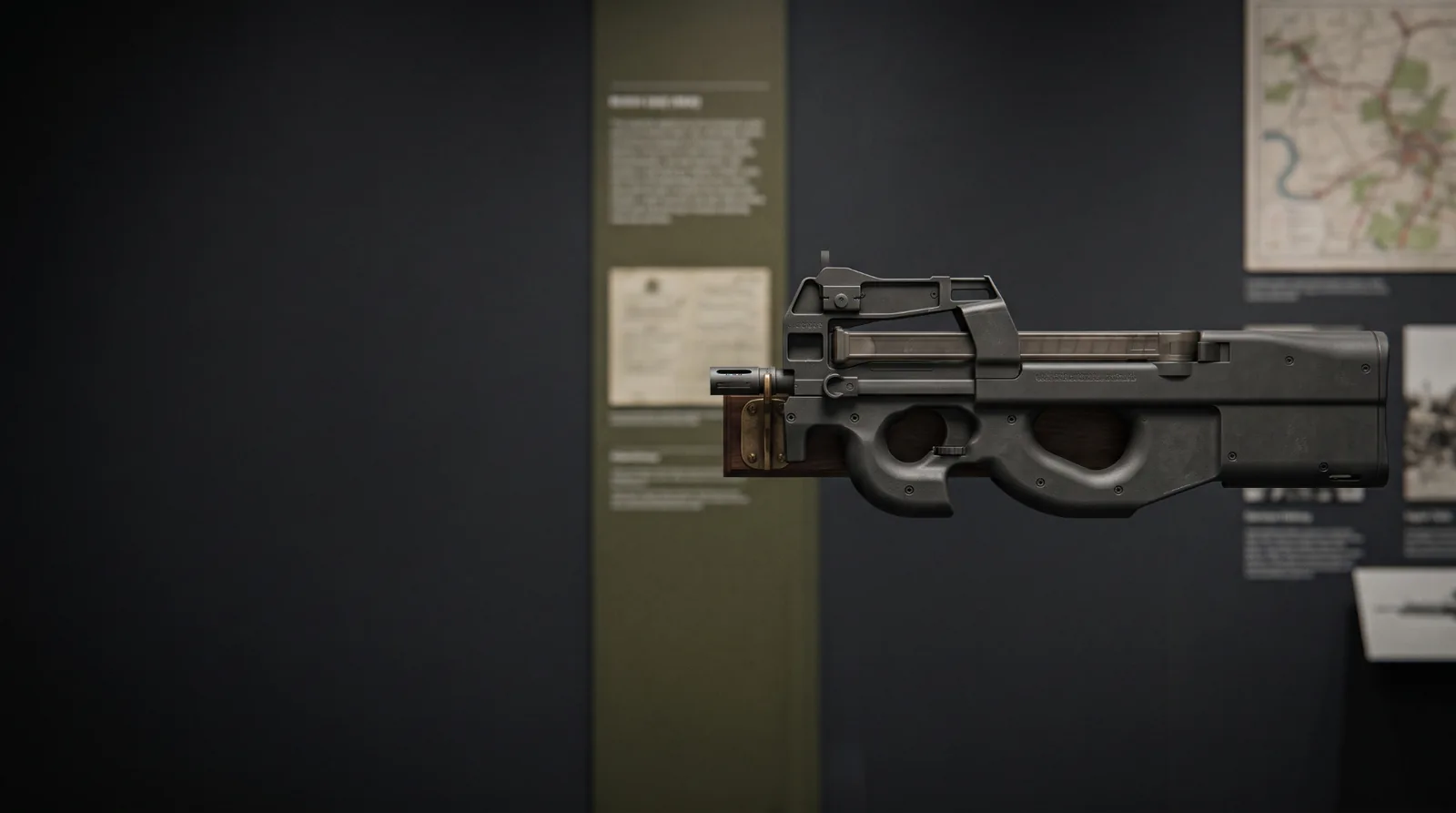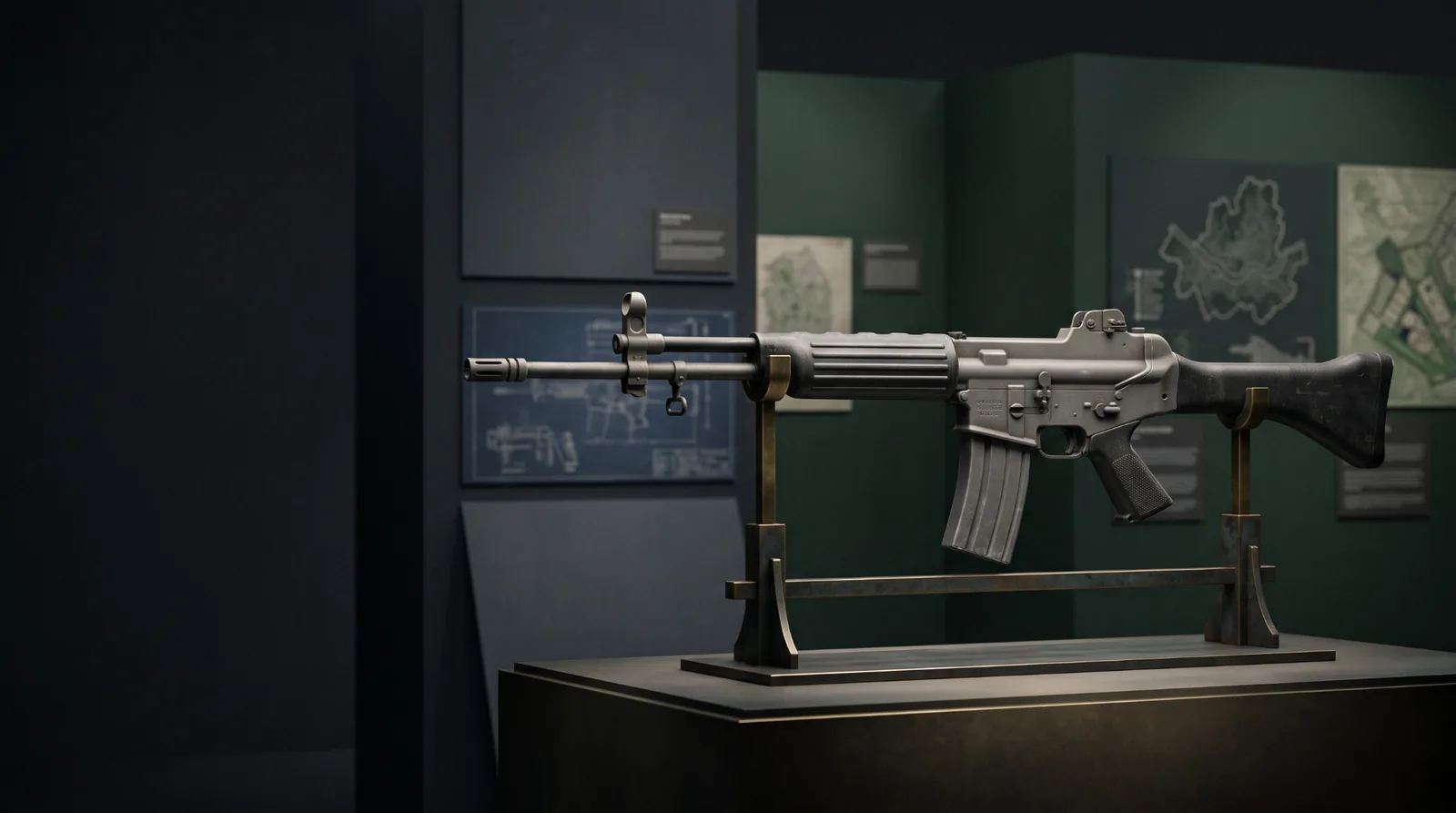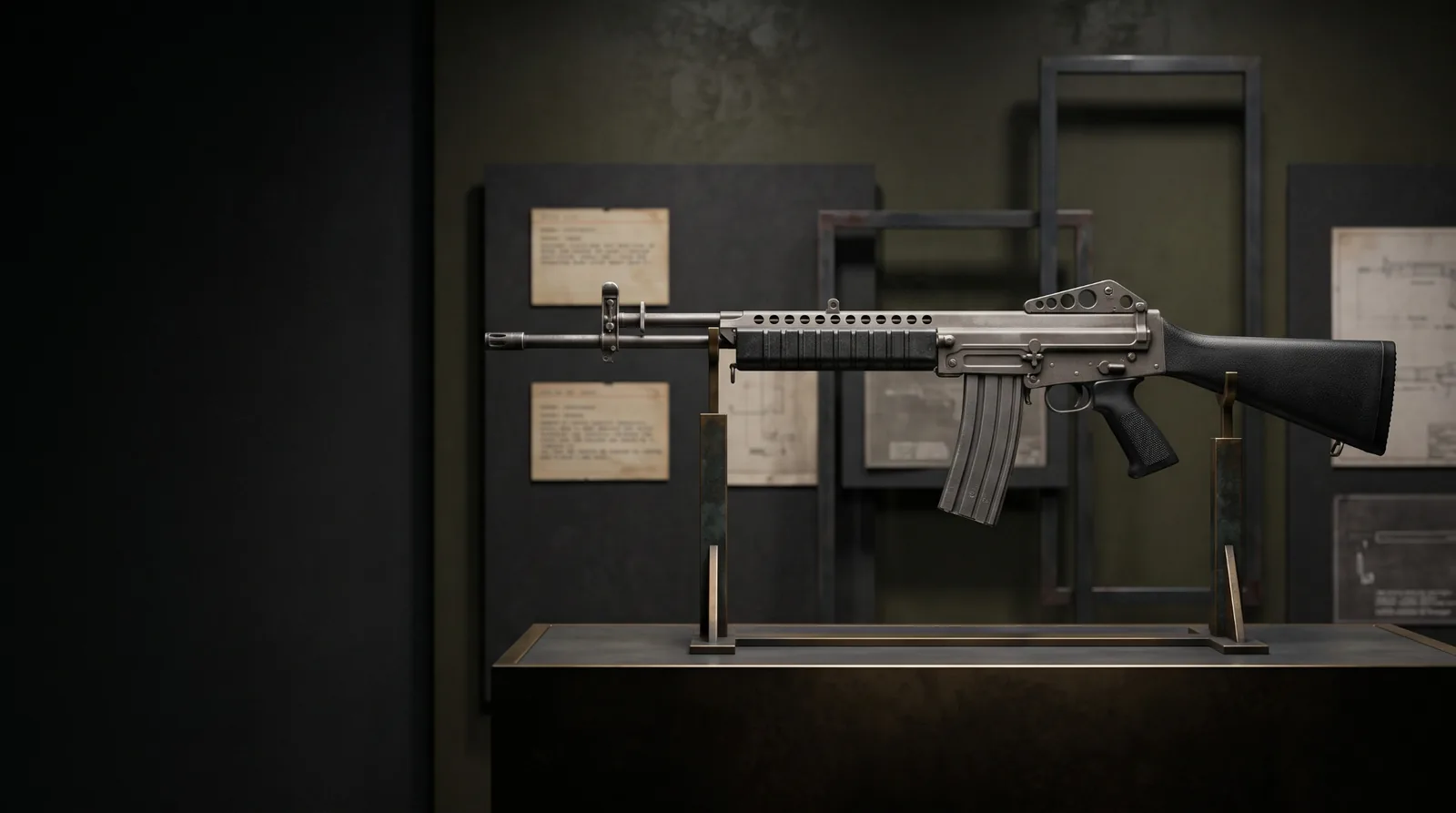
Stoner 63 is a rifles history rooted in United States. First associated with 1963, the design belongs to the wider story of unusual military designs. Its history is best understood through the people, institutions and events behind its name—not as a present-day product listing.
01 / THE ORIGIN
Eugene Stoner and his collaborators pursued an ambitious modular small-arms concept in the early 1960s. The Stoner 63 was a family of related configurations rather than a single conventional rifle story.
02 / THE HISTORICAL JOURNEY
Its limited service and experimental associations gave it a devoted place in military-design histories, particularly where innovative systems encountered conservative procurement institutions. Later retrospectives can overstate how fully the concept was adopted.
03 / NAMES, VARIANTS & IDENTITY
“Stoner 63” often refers to a system; identifying a precise rifle, carbine or other configuration requires more specific documentation.
Names also encountered in historical catalogs and searches include Stoner 63A; Stoner system; Mk 23. These terms are useful starting points, not proof that two photographed objects share the same maker, date, or military provenance. When reading about a particular surviving specimen, look for a documented institutional collection number, manufacturer record, or contemporary source.
04 / WHY THIS MODEL MATTERS
The attraction of the Stoner 63 is the gap between a bold industrial idea and the narrower history of actual military issue. A museum biography should be candid about both.
The broader context is the history of unusual military designs. Political institutions, supply contracts, and public memory often determine which firearms remain famous and which survive mainly through specialist archives. These distinctions matter more than modern rankings or unsupported claims of superiority.
Read the expanded historical research file →
THE HISTORICAL RESEARCH FILE
The Stoner 63 illustrates the limits of a model name: an ambitious American weapons system whose distinct configurations must not be merged in archival captions.
01 / From a model to a “system”
The Stoner 63 was developed around the idea of a related small-arms system rather than a single immutable silhouette. Its inventor's name became a shorthand for a family that could appear in several historically documented configurations. This makes it especially vulnerable to inaccurate labeling by image-generation tools and casual web pages. The Smithsonian's National Museum of American History identifies a Stoner Model 63 light machine gun in its collection; that is evidence of a particular museum specimen, not proof that every Stoner 63 seen in popular imagery has identical service history. [1]
The biography should therefore explain why a museum object's full catalogue label matters. “Stoner 63” without the accompanying configuration may be insufficient for historical comparison, even when the broad family name is recognizable.
02 / Experiment, limited adoption and historical memory
The system belongs to the American 1960s period of experimentation and specialized military requirements. Accounts of its Vietnam-era presence frequently emphasize individual units and particular configurations, which must be treated differently from an Army-wide general standardization claim. Historical use by specialist organizations does not establish general service issue. Nor should an exhibition or demonstration photograph be treated as evidence of a contract for national replacement of other infantry arms. [1]
The distinction has important SEO value: searches for Stoner 63 history, Stoner 63A, light-machine-gun configuration or Stoner system often point at overlapping but not identical topics. Clear section headings and image captions serve those readers far better than repetitive claims about novelty.
03 / What the museum record establishes
A good reference page links directly to the Smithsonian accession, labels the accession precisely and explains what it does not tell us: the entire production run, the military history of every related configuration, and the fate of every surviving example. Those would require military evaluation reports, manufacturer correspondence and object-specific provenance. Photographs borrowed from online discussion can be useful research clues, but their status as evidence depends on the underlying collection, date and caption. [1]
The Stoner belongs with the M16 and other Cold War-era American service-rifle experiments as a story about institutional choice. AllGuns should avoid describing historic configurations as modification instructions; the educational question is why the Army selected some programs and confined others to specialist histories.
QUICK REFERENCE QUESTIONS
Was the Stoner 63 a single configuration?
No. The Stoner 63 name covered a family of documented configurations.
Does a Smithsonian Stoner 63 record establish army-wide issue?
No. A museum object record identifies a specimen, not the scale of military adoption.
THE NEXT ARCHIVAL QUESTION
Locate period evaluation reports and configuration-specific service records rather than extrapolating from a surviving museum example.
Editorial status: sourced historical research draft, not a completed archival verification of all marks, factory totals or service claims. Generated museum artwork is illustrative and not evidence of an authenticated surviving specimen.
THE HISTORICAL TIMELINE
Earliest major introduction or designation associated with this record
The defining historical setting for the model's service and reputation
Variants, national service histories, and museum documentation add important context
Preserved as part of military, sporting or industrial-design history
COMMON HISTORY QUESTIONS
What country did the Stoner 63 originate in?
The design's principal origin is United States. This is an origin label, not a claim that every later example was manufactured in the same country.
When was the Stoner 63 introduced?
1963 is the principal milestone used for this record. Prototype dates, military adoption, production, and later models may differ; always check which event a secondary source is dating.
What other names are associated with it?
Common search terms include Stoner 63A; Stoner system; Mk 23. They may encompass nicknames, related service designations, or model-family references; consult primary documentation before equating specific variants.
EXPLORE CONNECTED HISTORIES
These neighboring biographies help place the model in a broader national or industrial context, without implying they are mechanically identical:
SOURCES & FURTHER READING
These links are editorial starting points. Where a linked source concerns a wider model family, a particular example or variant requires its own verification. This page is a historical overview, not an instruction manual.
2 external reading sources currently listed. This biography is a historical research overview; these links are research starting points and may cover a wider model family. They are not a claim that every detail has been independently verified. Our editorial method.
- Historical source: www.forgottenweapons.com ↗READING
- Additional institutional or historical reference ↗READING
- Smithsonian National Museum of American History — Stoner 63 ↗DOCUMENTED SOURCEEvidence scope: Museum accession documents a named Stoner 63 light machine gun.
EDITORIAL EXPANSION: NOVEMBER 2026 · HISTORICAL STUDY · NO SALES, TRANSFERS OR MODIFICATION GUIDANCE.